




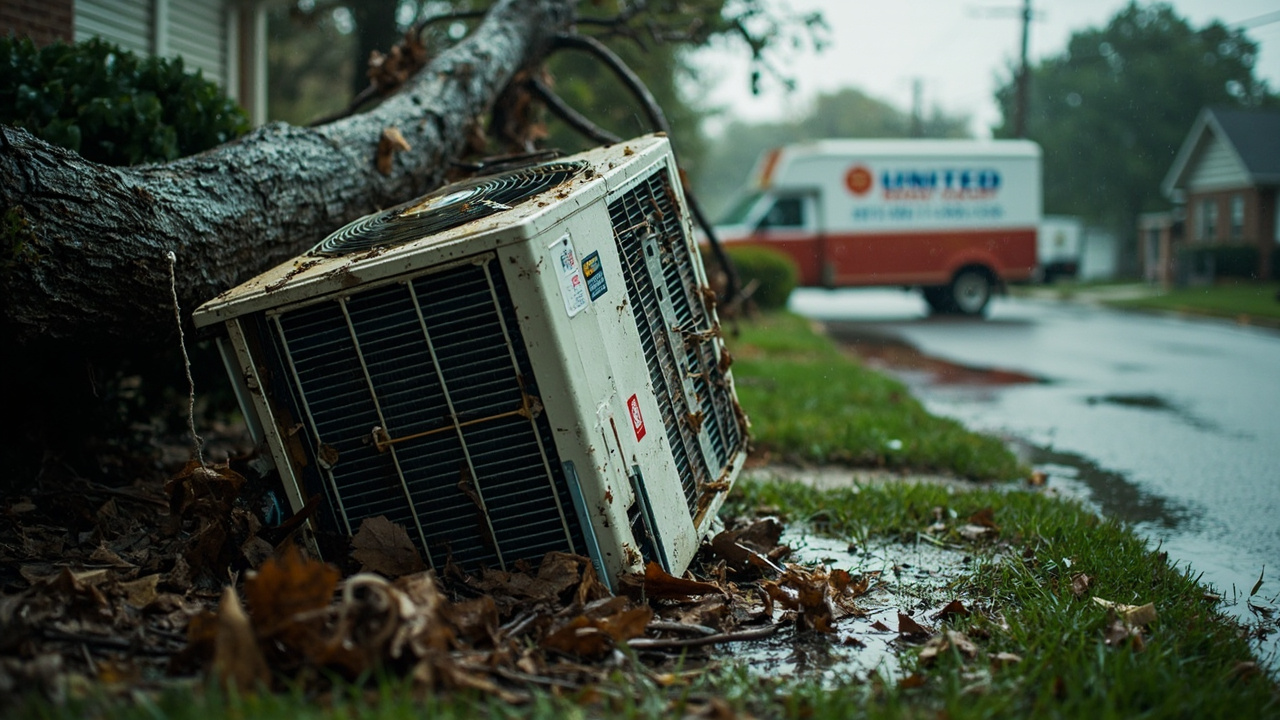

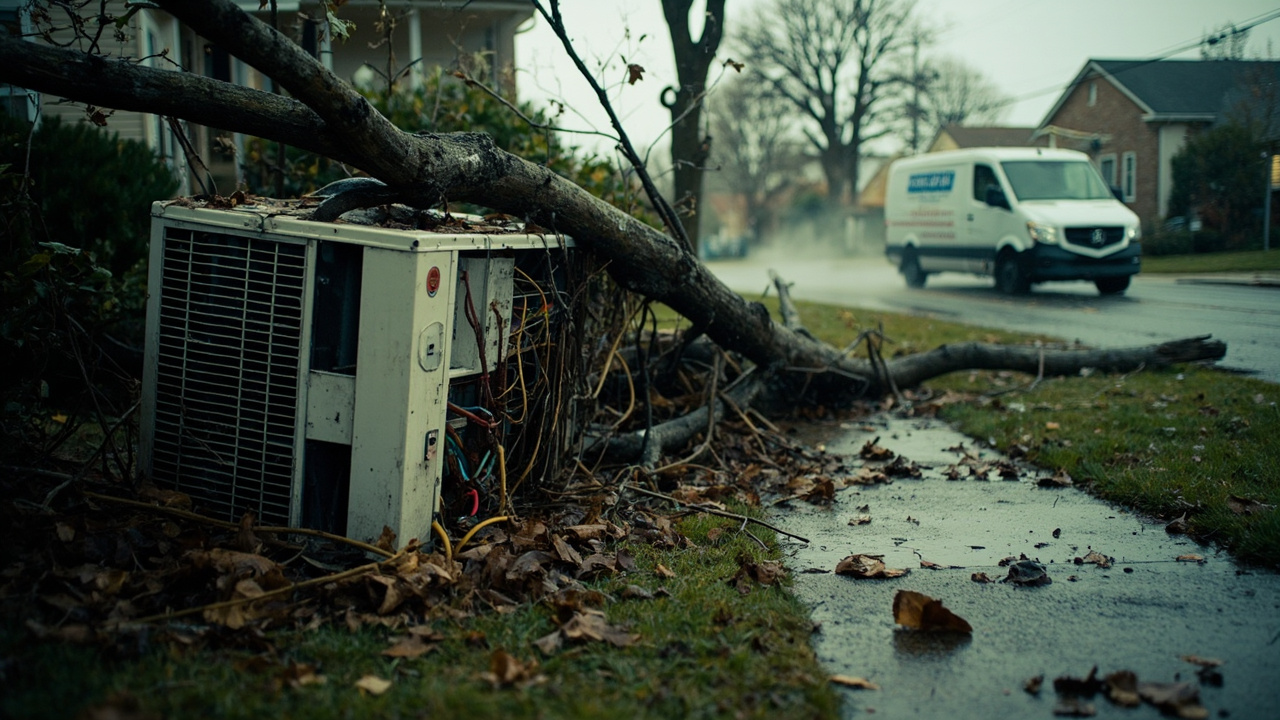
Kansas City sits at the convergence of warm Gulf moisture and cold Canadian air masses, creating the atmospheric instability that fuels severe thunderstorms and tornadoes from April through June. The metro area experiences an average of 40 to 50 thunderstorm days annually, with peak hail activity in May when updrafts are strong enough to suspend ice pellets until they grow large enough to cause structural damage. Outdoor HVAC components, especially condenser coils and fan assemblies, are exposed and unprotected. Unlike roofs or siding, which can be inspected visually after a storm, refrigerant leaks and electrical shorts inside the unit often go unnoticed until the system fails days or weeks later. Emergency HVAC storm repair addresses both the visible damage and the hidden failures that compromise system integrity.
Kansas City enforces the International Mechanical Code with local amendments that require specific installation standards for HVAC systems in flood-prone zones near the Blue River and Missouri River floodplains. Many older homes in neighborhoods like Westport and the East Side have air handlers installed in basements or crawlspaces that flood during heavy rain events. United HVAC Kansas City understands these local code requirements and installs replacement equipment on elevated platforms or relocates units to compliant areas when storm damage makes reinstallation in the original location impractical. Choosing a contractor familiar with Jackson County building inspectors and local permitting processes prevents delays and ensures your heating and cooling storm damage repair meets the standards required for occupancy and insurance compliance.