




Menu

Geothermal Heating & Cooling in Kansas City – Cut Energy Bills by Up to 70% Year-Round

Ground source heat pumps tap into Kansas City's stable subsurface temperatures to deliver efficient heating and cooling without burning fossil fuels or cycling refrigerant through outdoor coils exposed to extreme weather.

Slider Image 1
Slider Image 2
Slider Image 3
Slider Image 4
Slider Image 5
Slider Image 7
Slider Image 8
Slider Image 9
Slider Image 10
Slider Image 11

Why Kansas City's Climate Demands a Smarter HVAC Solution

Kansas City swings hard between seasons. Summers push past 95 degrees with heavy humidity. Winters drop below 20 degrees, and ice storms can knock out power for days. Your conventional HVAC system works against these extremes, cycling constantly, burning energy, and breaking down under load.

Geothermal heating and cooling systems bypass this fight entirely. Ground source heat pumps use the earth's constant subsurface temperature, typically 55 to 60 degrees year-round in the Kansas City metro, as a thermal battery. In summer, the system dumps heat into the ground instead of battling hot air with an outdoor condenser. In winter, it extracts warmth from the earth instead of generating heat from scratch.

The geology matters here. Kansas City sits on layers of limestone and shale with good thermal conductivity. Clay soil, common throughout Jackson and Clay counties, holds moisture well and improves heat transfer for horizontal loop fields. This makes geothermal HVAC systems especially effective in neighborhoods from Brookside to Gladstone.

You avoid the inefficiency of air-source heat pumps that lose capacity when outdoor temps drop. You sidestep furnace cycling and the carbon monoxide risks of combustion appliances. Geoexchange systems deliver consistent indoor comfort without the energy waste and mechanical wear that defines traditional forced-air systems in climates with wide temperature swings.

If your current system runs nonstop in July or struggles to keep up in January, you are paying for a design that fights Kansas City's weather instead of using it.

Why Kansas City's Climate Demands a Smarter HVAC Solution
How Ground-Coupled Heat Pumps Operate in Kansas City Homes

How Ground-Coupled Heat Pumps Operate in Kansas City Homes

A geothermal heat pump moves thermal energy between your home and the ground through a closed-loop piping system filled with water or a water-antifreeze mix. The loop field is buried either horizontally in trenches four to six feet deep or vertically in boreholes drilled 150 to 400 feet down, depending on your lot size and soil conditions.

Inside your home, the heat pump unit contains a compressor, heat exchanger, and reversing valve. In cooling mode, it absorbs heat from your indoor air and transfers it to the circulating fluid, which carries it underground where the earth absorbs it. In heating mode, the process reverses. The fluid collects warmth from the ground and delivers it to the heat pump, which concentrates and distributes it through your ductwork or radiant floor system.

United HVAC Kansas City designs loop fields based on your home's heating and cooling load, calculated from square footage, insulation levels, window area, and local climate data. We account for soil thermal properties and moisture content, which vary between the West Bottoms, where sandy loam drains quickly, and areas near the Blue River, where clay retains water and improves heat exchange.

We use high-density polyethylene pipe with heat-fused joints to eliminate leak points. The ground loop requires no maintenance and lasts 50-plus years. The indoor heat pump unit has fewer moving parts than a conventional furnace and AC combination, reducing failure points. You eliminate the outdoor condenser that clogs with cottonwood seeds, freezes over in ice storms, and breaks down after a decade of exposure to Kansas City weather.

The system integrates with your existing ductwork in most cases, or we can design a new distribution system optimized for the lower supply air temperatures that ground-coupled heat pumps produce.

What Installing Geothermal Looks Like from Start to Finish

Geothermal Heating & Cooling in Kansas City – Cut Energy Bills by Up to 70% Year-Round
01

Load Calculation and Site Assessment

We measure your home's thermal envelope and run Manual J load calculations to determine exact heating and cooling requirements. Our team evaluates your property for loop field placement, testing soil composition, checking for underground utilities, and confirming setback requirements. This data determines whether horizontal trenching or vertical drilling makes sense for your lot. We pull permits and coordinate with utility locators before any excavation begins.
02

Loop Field Installation

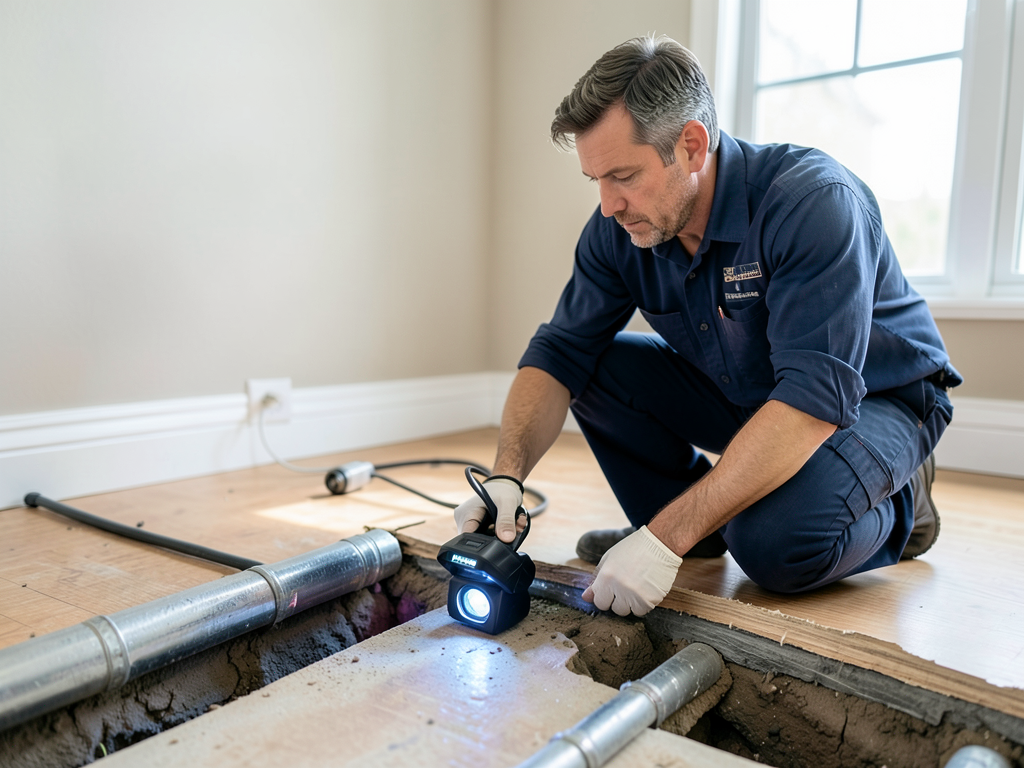
We excavate trenches or drill boreholes depending on your site design. Horizontal loops require trenches at least four feet deep to stay below the frost line. Vertical loops use drilling rigs to reach depths where temperatures stabilize year-round. We install high-density polyethylene piping with heat-fused connections, pressure-test the entire loop system, and backfill carefully to ensure good soil contact. The loop connects to a manifold inside your mechanical room, ready for the heat pump hookup.
03

Heat Pump Installation and System Commissioning

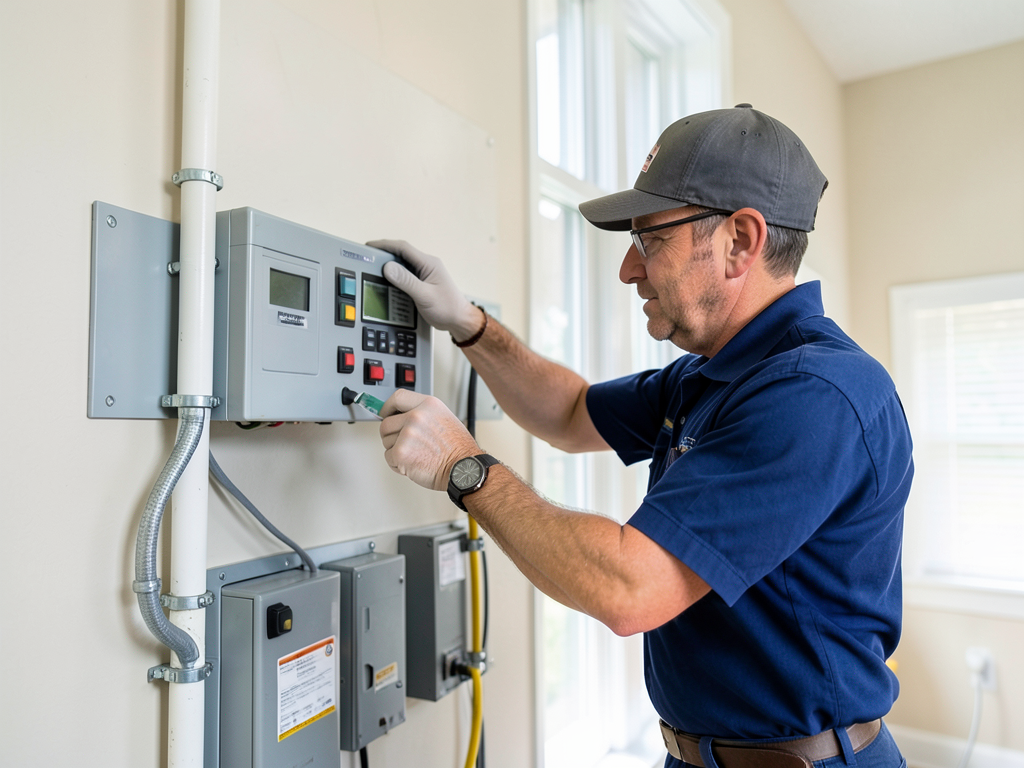
The geothermal heat pump unit mounts indoors, connected to your existing ductwork or new distribution system. We wire the unit to a dedicated circuit, connect the ground loop piping, and fill the system with fluid. After purging air from the lines, we start the unit and verify refrigerant charge, airflow rates, and loop temperatures. We program the thermostat, test both heating and cooling modes, and walk you through system operation and maintenance requirements before final sign-off.

Why Kansas City Properties Need Local Geothermal Expertise

Geothermal systems fail when installers guess at load calculations, skip soil testing, or use generic loop designs that ignore local geology. You cannot import a system spec from Phoenix and expect it to work in Kansas City. The soil, climate data, and building codes are different.

United HVAC Kansas City uses site-specific thermal conductivity testing and local climate data from Kansas City International Airport to size loop fields accurately. We account for the clay-heavy soils common in Northland neighborhoods and the limestone bedrock that shows up when drilling in older parts of the city. We know that horizontal loops in Overland Park require different spacing than those in Liberty because soil drainage and moisture retention vary.

We work with Kansas City-area drilling contractors who understand local water table depths and rock formations. We coordinate with Evergy for any utility incentive programs and ensure installations meet International Ground Source Heat Pump Association standards.

Many HVAC contractors avoid geothermal because they lack the training to design loop fields or the relationships with drilling subcontractors to execute installations correctly. They default to conventional systems because that is what they know, even when those systems cost you thousands more in energy bills over their lifespan.

We have installed ground source heat pumps in historic homes near the Country Club Plaza, new construction in Lee's Summit, and commercial buildings downtown. We understand the permitting process in Kansas City, Missouri, and surrounding counties. We size backup electric resistance heat correctly for the rare extreme cold snaps when ground loop capacity might need support.

Choosing a contractor who treats geothermal as an add-on service guarantees problems. Loop fields installed too shallow freeze in winter. Undersized systems run constantly and never meet load. Oversized systems short-cycle and waste energy. You need a team that designs these systems daily and knows how Kansas City's soil and climate affect performance.

What to Expect from Your Geothermal System Installation

Installation Timeline and Property Impact

Most residential geothermal installations take three to five days, depending on loop field complexity and property access. Horizontal loop fields require more excavation and take longer to install than vertical boreholes. We restore landscaping, reseed disturbed areas, and haul away excavation spoils. Drilling rigs need clear access to your yard, typically 10 to 12 feet of width. We schedule around weather to avoid working in saturated soil conditions that complicate backfilling. Your existing HVAC system stays operational until we complete the final cutover, so you maintain heating and cooling throughout the installation.

Energy Efficiency and Operating Costs

Geothermal heat pumps achieve 400% to 600% efficiency, meaning they move four to six units of heat for every unit of electricity consumed. This compares to 95% efficiency for high-efficiency furnaces and 300% efficiency for air-source heat pumps. Your energy bills drop immediately. Most Kansas City homeowners see 40% to 70% reductions in heating and cooling costs compared to conventional systems. You eliminate natural gas service fees if you convert fully to geothermal. The only operating cost is electricity to run the heat pump compressor and circulation pumps, and even that drops because the system works less to maintain comfort.

System Longevity and Durability

Ground loops last 50-plus years because they sit underground, protected from weather, UV exposure, and physical damage. The heat pump unit typically lasts 20 to 25 years, roughly double the lifespan of conventional furnaces and air conditioners. You avoid the constant repairs that plague outdoor condensers exposed to hail, wind, and temperature extremes. The indoor heat pump requires basic filter changes and periodic refrigerant checks. No combustion components means no flue maintenance, no burner cleaning, and no carbon monoxide concerns. The system runs quieter because there is no outdoor fan unit cycling on and off in your yard.

Maintenance and Service Requirements

Geothermal systems need less maintenance than conventional HVAC because they have fewer exposed components. You change filters regularly, same as any forced-air system. We recommend annual inspections to check refrigerant charge, verify loop pressure, and clean the heat exchanger. The ground loop requires no maintenance after installation. If you add a desuperheater to preheat domestic water using waste heat from the system, we inspect that connection annually. Most service calls relate to thermostat settings or minor electrical issues, not mechanical failures. We offer maintenance plans that include priority scheduling and annual system checks to keep your geothermal heat pump running at peak efficiency.

Frequently Asked Questions

You Have Questions,
We Have Answers

What is the downside of geothermal heating? +

The upfront cost is the primary downside. Installing geothermal in Kansas City runs significantly higher than conventional HVAC systems due to excavation and ground loop installation. You need adequate yard space for horizontal loops or budget for vertical drilling if your property is smaller. Clay soil common in the Kansas City metro can complicate installation and increase labor costs. The system also requires a backup heat source during extreme cold snaps, which occasionally hit the region. If you sell your home before recouping costs through energy savings, you may not see full financial return.

Is geothermal heating and cooling worth it? +

Yes, for Kansas City homeowners planning to stay long-term. You will cut heating and cooling costs by 30 to 60 percent compared to traditional systems. The region's temperature extremes, hot humid summers and occasional sub-zero winters, make geothermal efficiency shine. Federal tax credits now cover 30 percent of installation costs through 2032. Ground temperatures below Kansas City stay consistent year-round at 50 to 60 degrees, giving geothermal systems ideal operating conditions. Most homeowners break even within 7 to 12 years, then enjoy decades of low operating costs.

How much does it cost to put geothermal in a 2000 sq ft house? +

Budget between $20,000 and $40,000 for a complete geothermal installation in a 2,000 square foot Kansas City home. The range depends on your soil conditions, loop type, and existing ductwork. Horizontal loops cost less but require more yard space. Vertical loops need drilling but work on smaller lots common in older Kansas City neighborhoods. Clay soil throughout the metro can increase excavation time and labor costs. The 30 percent federal tax credit reduces your net cost significantly. Get three local quotes to understand your property's specific requirements and costs.

How does the 30% tax credit work for geothermal? +

The federal Residential Clean Energy Credit gives you 30 percent back on total geothermal installation costs through 2032. You claim the credit on IRS Form 5695 when filing taxes. This covers equipment, labor, excavation, and ground loop installation. If your Kansas City geothermal system costs $30,000, you receive a $9,000 tax credit. You must own the home and use it as your primary residence. The credit has no cap and you can carry forward unused portions to future tax years if your tax liability is too low in year one.

Why is my electric bill so high with geothermal? +

Your bill spikes when the system runs in auxiliary heat mode during Kansas City's coldest days. Geothermal heat pumps lose efficiency below 30 degrees, forcing backup electric resistance heat to kick in. Check if your thermostat is set correctly and not calling for aux heat unnecessarily. Poorly insulated ductwork in unconditioned spaces wastes energy. An undersized system runs constantly, driving up consumption. Kansas City's humidity swings also affect system runtime. Have a qualified technician verify your loop pressure, refrigerant charge, and heat pump operation to identify inefficiencies causing excessive electricity use.

What is the biggest problem with geothermal heating? +

Loop leaks cause the biggest headaches. If antifreeze solution leaks from buried ground loops, you face expensive excavation to locate and repair the damage. Kansas City's freeze-thaw cycles and shifting clay soil increase stress on buried pipes over time. Repairing underground loops requires digging up portions of your yard, disrupting landscaping and adding thousands in repair costs. Quality installation with proper pipe fusion and pressure testing prevents most issues. Choose certified installers experienced with local soil conditions. Regular maintenance and monitoring loop pressure catches small problems before they become expensive failures.

What is the life expectancy of a geothermal system? +

The indoor heat pump unit lasts 20 to 25 years with proper maintenance. The buried ground loop system lasts 50 years or more in Kansas City soil conditions. High-density polyethylene pipes resist corrosion and remain stable underground. Your loop outlives multiple heat pump replacements. Plan to replace the heat pump around year 20, similar to replacing a furnace or air conditioner. Regular filter changes, annual inspections, and monitoring refrigerant levels extend equipment life. The system's longevity helps offset high upfront costs, giving you decades of reliable heating and cooling.

Does geothermal reduce the electric bill? +

Yes, dramatically. Kansas City homeowners typically cut electricity costs by 30 to 60 percent compared to electric resistance heat or standard air conditioners. Geothermal systems move heat rather than create it, using one unit of electricity to transfer three to five units of heating or cooling. You eliminate natural gas bills if replacing a furnace. During mild spring and fall months common in Kansas City, your system barely runs, further reducing costs. Savings vary based on home insulation, system size, and your previous heating fuel. Most local installations pay for themselves through energy savings within 10 years.

What size yard do I need for geothermal? +

Horizontal loops need 1,500 to 3,000 square feet of open yard space for a typical Kansas City home. Installers dig trenches 4 to 6 feet deep in parallel runs. Vertical loops work on smaller lots, requiring only 400 to 600 square feet, because drilling goes 150 to 400 feet straight down. Many older Kansas City neighborhoods have smaller lots where vertical drilling makes more sense despite higher costs. Your soil type and existing landscaping affect layout options. Clay soil common in the metro holds heat well, improving system efficiency regardless of loop configuration.

Is geothermal worth it in 2025? +

Yes, especially in Kansas City with the 30 percent federal tax credit available through 2032. Rising electricity and natural gas rates increase your long-term savings. New heat pump technology improves cold-weather performance during Kansas City winters. Equipment costs have stabilized while efficiency ratings continue improving. If you plan to stay in your home 10-plus years, you will see positive return on investment. The combination of energy savings, tax incentives, and decades-long equipment life makes 2025 an excellent time to install geothermal in the Kansas City metro area.

Kansas City's Soil Composition and Climate Make Geothermal Systems Highly Effective

Kansas City sits in a transition zone between humid continental and humid subtropical climates, with hot summers, cold winters, and significant seasonal temperature swings. This makes geothermal heating and cooling especially valuable because the earth's subsurface temperature stays constant while outdoor air fluctuates wildly. The clay-rich soil common throughout the metro, particularly in areas north of the Missouri River and in Jackson County, retains moisture well and provides excellent thermal conductivity for horizontal ground loops. Limestone bedrock beneath much of the urban core allows for efficient vertical borehole installations where lot sizes limit horizontal trenching. The geology here supports both loop field types without the complications of rocky or sandy soils that require oversized installations.

Kansas City building codes follow the International Energy Conservation Code with local amendments that encourage high-efficiency HVAC systems in new construction and major renovations. United HVAC Kansas City works directly with inspectors in Kansas City, Missouri, Overland Park, Lee's Summit, and surrounding municipalities to ensure geothermal installations meet or exceed code requirements. We pull permits, coordinate inspections, and provide documentation for any available utility rebates or tax incentives. Choosing a local contractor means you get someone who understands the permitting process, knows the inspectors, and designs systems that pass review the first time without delays or rework.

HVAC Services in The Kansas City Area

View our service area and business location on the map below. We are proud to serve the entire Kansas City metro area, providing expert heating and cooling services to both residential and commercial clients. If you need a reliable HVAC partner, we are conveniently located to respond quickly to your needs, ensuring your indoor comfort is always our top priority.

Address:
United HVAC Kansas City, 1425 Agnes Ave, Kansas City, MO, 64127

Additional Services We Offer

Our news updates

Latest Articles & News from The Blogs

Comparing Mitsubishi and Daikin ductless systems for local homes When Kansas City homeowners face the decision between Mitsubishi and Daikin…

Comparing Mitsubishi and Daikin ductless systems for local homes

Comparing Mitsubishi and Daikin ductless systems for local homes When Kansas City homeowners face the decision between Mitsubishi and Daikin…

Protecting your piano and acoustic guitars from Kansas City humidity swings

Protecting Your Piano and Acoustic Guitars from Kansas City Humidity Swings\n\nYour musical instruments are more than just objects. They are…

Specialized Climate Control Tips for Indoor Gardeners and Hobbyists in the West Bottoms

Specialized Climate Control Tips for Indoor Gardeners and Hobbyists in the West Bottoms The West Bottoms industrial district faces unique…

Contact Us

Call United HVAC Kansas City at (816) 473-9177 for a free geothermal system consultation. We will assess your property, calculate your heating and cooling load, and show you exactly how much you can save by switching to ground source heat pumps.