




Menu

Gas Furnace Leak Repair in Kansas City – 24/7 Emergency Response Within 60 Minutes

When you smell gas or suspect a furnace leak, you need trained technicians on-site immediately. United HVAC Kansas City dispatches certified professionals around the clock to fix gas leak in furnace emergencies before they escalate into fires, explosions, or carbon monoxide poisoning.

Slider Image 1
Slider Image 2
Slider Image 3
Slider Image 4
Slider Image 5
Slider Image 7
Slider Image 8
Slider Image 9
Slider Image 10
Slider Image 11

Why Gas Furnace Leaks Are Dangerous in Kansas City Homes

A gas leak in your furnace is not a maintenance issue. It is a life-threatening emergency.

Kansas City winters demand constant furnace operation. When temperatures drop into the teens and single digits, your system runs for hours without stopping. That continuous stress exposes weak points in gas lines, valve seats, and heat exchanger seams. Age compounds the problem. Many homes in neighborhoods like Brookside and Waldo still run furnaces installed in the 1990s, when manufacturing tolerances were looser and materials less durable.

Natural gas is odorless. The mercaptan additive that smells like rotten eggs is your only warning. If you detect that smell near your furnace, basement, or vents, you are already breathing a flammable mixture. Static electricity, pilot lights, or even a light switch can ignite it.

Carbon monoxide is the silent threat. A cracked heat exchanger or leaking valve can release this colorless, odorless poison into your ductwork. You feel dizzy, nauseous, or tired. You assume it is the flu. By the time you realize the danger, you may not be conscious enough to act.

Kansas City's older housing stock increases the risk. Homes built before 1980 often lack modern venting standards. Poorly sealed ductwork in crawl spaces and basements allows gas to accumulate in living areas. Clay soil shifts under foundations, stressing rigid gas lines and creating micro-fractures that worsen over time.

If you suspect a furnace gas line leak repair is needed, turn off the gas at the meter, evacuate the home, and call (816) 473-9177 from outside. Do not flip switches, use your phone indoors, or try to locate the source yourself. Gas heater leak repair requires professional equipment and training.

Why Gas Furnace Leaks Are Dangerous in Kansas City Homes
How We Locate and Repair Gas Leaks in Furnaces Safely

How We Locate and Repair Gas Leaks in Furnaces Safely

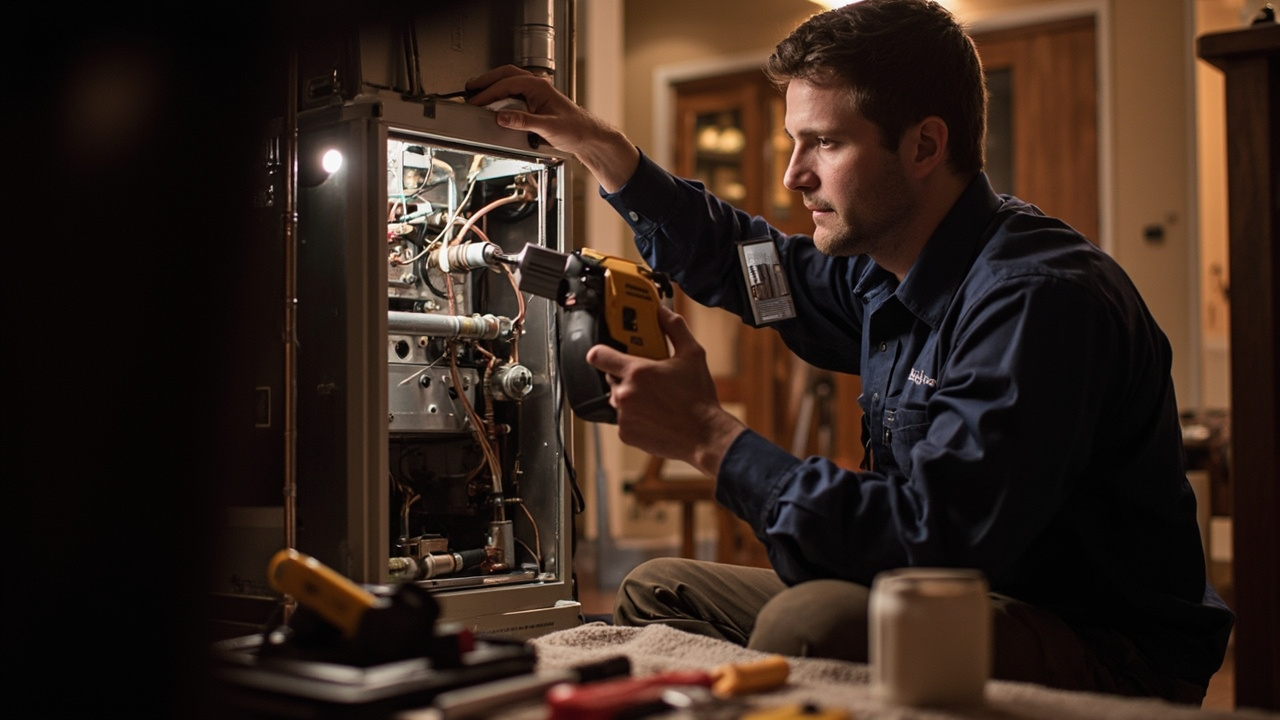
Emergency furnace gas leak service begins the moment you call. Our dispatch confirms your address and sends the nearest certified technician. We arrive prepared with combustible gas detectors, pressure testing equipment, and replacement parts for the most common failure points in residential furnaces.

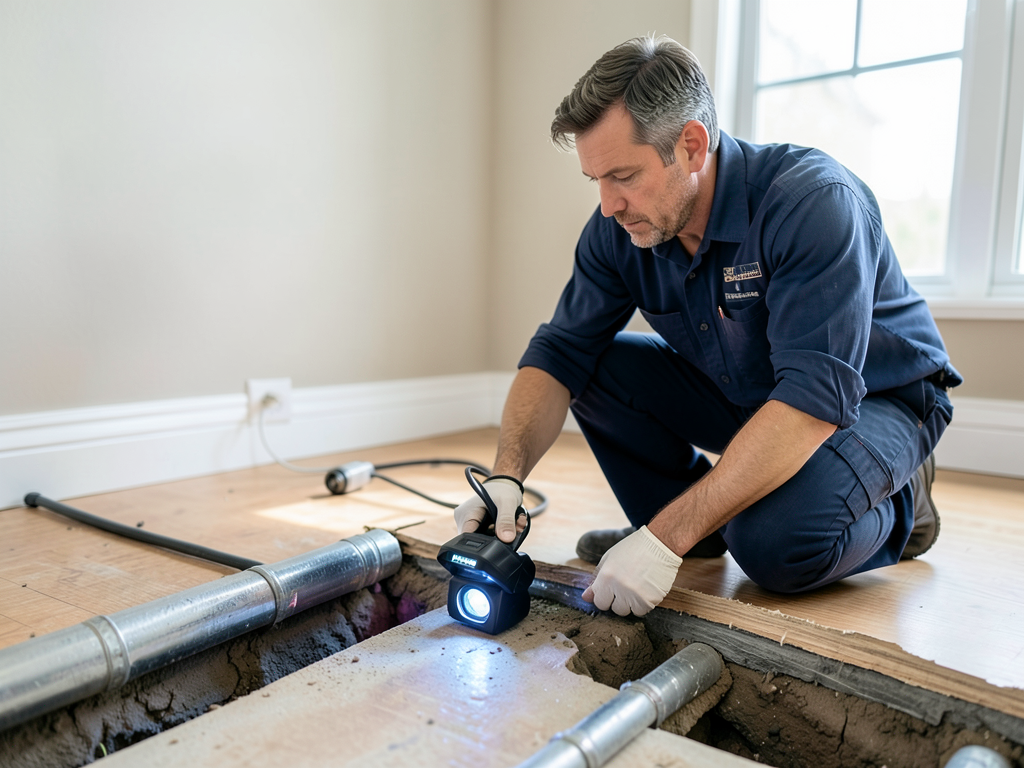
The first step is containment. We verify the gas is off at the meter and ventilate the home. We use handheld LEL meters to measure lower explosive limits in every room, basement, and crawl space. This tells us whether the concentration is safe for repair work or requires full evacuation and utility company involvement.

Next is isolation. We disconnect the furnace from the gas supply and pressurize the system with nitrogen. Pressure drop over 15 minutes indicates a leak. We then use electronic sniffers and soapy water solution to pinpoint the exact location. Common failure points include the union joint at the gas valve, threaded connections on the manifold, and internal cracks in the heat exchanger itself.

Heat exchanger cracks are the most dangerous. These allow combustion gases to mix with breathable air. We inspect with a borescope camera, checking for rust perforation, stress fractures along bends, and fatigue cracks near weld seams. If the exchanger is compromised, we do not patch it. We replace the furnace. A patched exchanger will fail again, and the liability is not worth your family's safety.

For line leaks, we cut out the damaged section and install black iron pipe with new threaded fittings. We never use flexible connectors on permanent installations. We pressure test at 150% of operating pressure, hold for 30 minutes, and retest after restoring gas flow. Only then do we relight the pilot and verify combustion efficiency with a flue gas analyzer.

What Happens During an Emergency Gas Leak Call

Gas Furnace Leak Repair in Kansas City – 24/7 Emergency Response Within 60 Minutes
01

Immediate Safety Assessment

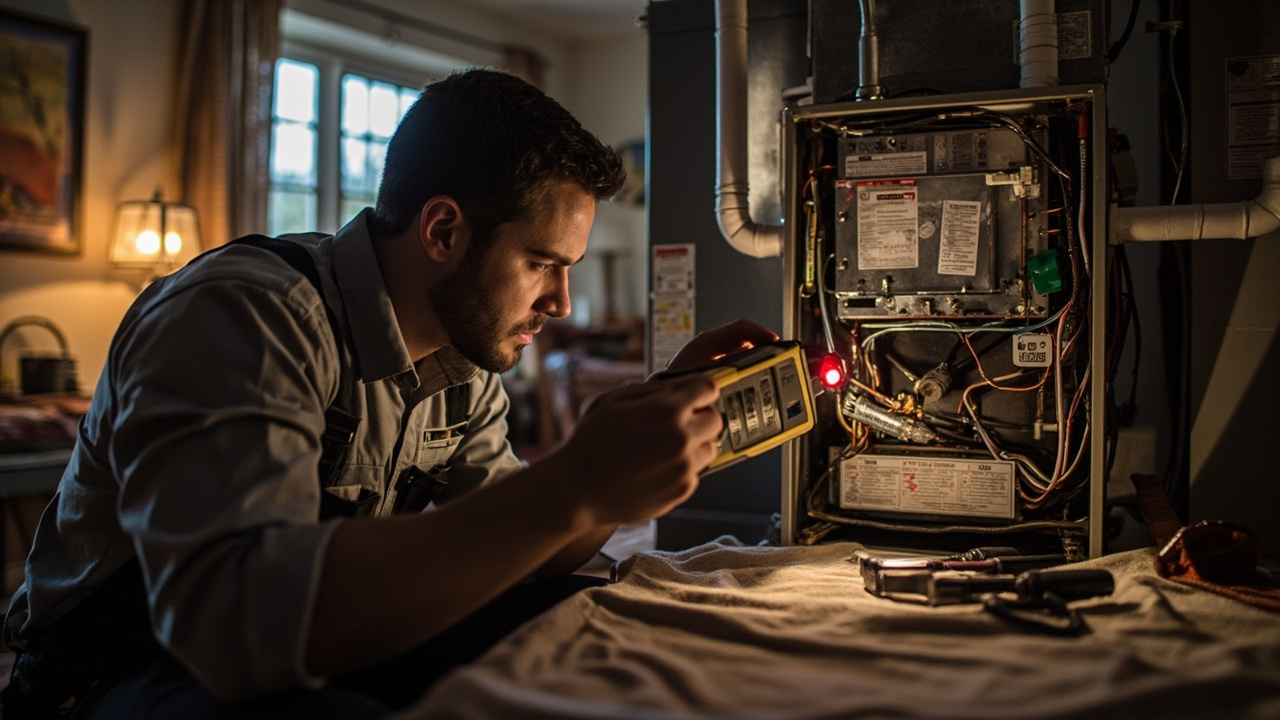
Our technician arrives within 60 minutes and conducts a room-by-room gas concentration scan using calibrated LEL detectors. We establish whether the environment is safe for repair or requires full evacuation and utility coordination. You stay outside until we verify breathable air quality and eliminate ignition sources throughout the home.
02

Leak Detection and Diagnosis

We isolate the furnace, pressurize the gas line with nitrogen, and use electronic sniffers to locate the exact failure point. Common culprits include corroded unions, cracked heat exchangers, and loosened manifold connections. We inspect internal components with borescope cameras and determine whether the system can be repaired or requires replacement to meet safety standards.
03

Repair and Safety Verification

We replace damaged sections with code-compliant black iron pipe, pressure test at 150% operating pressure, and verify zero leakage over 30 minutes. After restoring gas flow, we test combustion efficiency, check carbon monoxide output, and confirm proper draft pressure. You receive documentation of all repairs and a written safety certification before we leave the property.

Why Kansas City Residents Choose United HVAC for Gas Leak Emergencies

Gas leak emergencies do not wait for business hours. You need a company that answers the phone at 2 a.m. and sends a qualified technician, not an answering service that takes a message.

United HVAC Kansas City operates 24/7 dispatch with technicians on call throughout Jackson, Clay, and Platte counties. We do not subcontract emergency calls. The person who answers your call works for us. The technician who arrives at your door carries our credentials and drives our truck.

Our technicians hold active certifications in combustion analysis, gas piping, and HVAC systems. They train annually on leak detection protocols and work daily with the same furnace brands installed in Kansas City homes. When you call about a Bryant, Lennox, or Carrier furnace, we have seen that model hundreds of times. We know the weak points, the recall history, and the correct repair procedures.

Kansas City's building codes require licensed professionals for all gas line work. Unlicensed handymen and general contractors cannot legally touch your gas piping. We pull permits for every gas line modification, schedule inspections with the city, and provide documentation that satisfies insurance requirements. If you file a claim related to gas damage, your insurer will ask for proof of licensed repair. We provide that.

Local expertise matters. We understand that homes in the Historic Northeast have galvanized gas lines prone to internal corrosion. We know that mid-century ranch homes in Prairie Village often lack adequate combustion air supply. We recognize that newer developments in Olathe use flexible CSST lines that require specialized leak detection techniques. A technician from out of state does not bring that knowledge.

You also get transparency. We explain what failed, why it failed, and what options you have. If your furnace is beyond economical repair, we tell you. If a simple valve replacement solves the problem, we do not upsell a new system.

What to Expect When You Call for Gas Furnace Leak Repair

Emergency Response Time

We dispatch a technician within minutes of your call. Most emergency furnace gas leak service calls in Kansas City receive on-site arrival within 60 minutes, depending on traffic and your location. We prioritize active gas leaks over all other service calls. You receive a text with your technician's name, photo, and estimated arrival time. If we encounter delays, we update you immediately. Our goal is to eliminate the danger as quickly as possible while maintaining strict safety protocols.

On-Site Safety Inspection

Your technician begins with a comprehensive gas concentration scan using calibrated lower explosive limit detectors. We check every room, closet, basement, and crawl space to map the leak source and verify safe working conditions. You receive a verbal explanation of what we find and what steps we will take. We show you the problem areas, explain the failure mechanism, and outline repair options before beginning work. If the situation requires utility company involvement or full evacuation, we coordinate that process and stay until the home is secure.

Completed Repair and Testing

Once the repair is complete, we conduct pressure testing at 150% of operating pressure and hold for 30 minutes to verify zero leakage. We restore gas flow, relight the furnace, and use a flue gas analyzer to confirm proper combustion efficiency and safe carbon monoxide levels. You receive written documentation of all work performed, parts replaced, and test results. We walk you through the completed repair, answer questions, and explain what to monitor in the coming weeks. Your furnace is not considered safe until it passes every verification test.

Follow-Up and Prevention

Gas leaks often indicate broader system neglect. After completing emergency repairs, we recommend a full furnace inspection to identify other potential failure points before they become dangerous. We check heat exchanger integrity, inspect burner assemblies, test safety controls, and evaluate venting systems. You are under no obligation to proceed with additional work, but knowing the full condition of your furnace helps you make informed decisions. We also provide guidance on annual maintenance schedules and carbon monoxide detector placement to prevent future emergencies.

Frequently Asked Questions

You Have Questions,
We Have Answers

How much does it cost to fix a gas leak in a furnace? +

Gas furnace leak repair costs in Kansas City range from $150 to $800, depending on the leak source and severity. A faulty valve or loose connection might cost $150 to $300 to fix. Cracked heat exchangers, common in older furnaces exposed to Kansas City's freeze-thaw cycles, can run $500 to $800 or require full replacement. Emergency after-hours service typically adds $100 to $200. Most techs charge a diagnostic fee first. Never delay repairs to save money. A gas leak poses immediate safety risks to your home and family.

Can I fix a furnace leak myself? +

No. Never attempt to fix a gas furnace leak yourself. Gas leaks require licensed HVAC technicians with specialized tools and training. You risk explosion, carbon monoxide poisoning, or making the leak worse. Kansas City building codes require certified professionals for all gas appliance work. If you smell gas, evacuate immediately, call 911 from outside, then contact a licensed emergency HVAC service. Do not turn lights on or off, use phones inside, or try to locate the leak yourself. Your safety depends on professional intervention.

Whose responsibility is it to fix a gas leak? +

The property owner is legally responsible for fixing gas leaks in Kansas City. If you own the home, you must arrange and pay for repairs. Landlords must address tenant-reported gas leaks immediately, usually within 24 hours under Missouri habitability laws. The gas utility company owns and maintains lines up to the meter. Beyond the meter, all piping and appliances fall under homeowner responsibility. If a faulty furnace install caused the leak, the installer may share liability. Always get repairs done fast regardless of fault.

Who do you call if your furnace is leaking? +

Call a licensed HVAC contractor immediately if your furnace is leaking gas. If you smell gas or hear hissing, evacuate first, then call 911 and your gas utility company from outside. They will shut off gas to your home. After securing the scene, contact a 24/7 emergency HVAC service in Kansas City to diagnose and repair the leak. Do not re-enter until professionals clear the area. Gas leaks demand immediate action. Hesitation puts your family and property at serious risk.

Does homeowners insurance cover furnace leaks? +

Sometimes. Homeowners insurance in Kansas City may cover sudden, accidental gas leaks and resulting damage, like fire or explosion. Policies typically exclude gradual leaks from lack of maintenance or wear and tear. A cracked heat exchanger from age usually falls under excluded maintenance issues. If a storm or covered peril caused the leak, you have better odds. Review your policy and call your agent fast. Document everything with photos. Even if denied, get the leak fixed immediately for safety.

What is the $5000 rule for HVAC? +

The $5,000 rule suggests replacing your furnace if repair costs exceed $5,000 or if the repair cost multiplied by the furnace age in years exceeds $5,000. For example, a $500 repair on a 12-year-old furnace equals $6,000, signaling replacement makes more financial sense. This rule helps Kansas City homeowners avoid pouring money into aging equipment. Gas leaks from cracked heat exchangers in older furnaces often trigger this decision. Consult a trusted HVAC tech to compare repair versus replacement costs and efficiency gains.

Can you stay in a house with a small gas leak? +

Absolutely not. Evacuate immediately if you smell gas, even a small amount. Natural gas is odorless, so utilities add mercaptan, that rotten egg smell, as a warning. Small leaks can accumulate quickly in enclosed spaces, especially basements common in Kansas City homes. Gas is explosive and displaces oxygen, causing asphyxiation. Do not use phones, lights, or electronics inside. Leave doors open as you exit. Call 911 and your gas company from outside. Do not re-enter until professionals clear your home.

What is the most expensive part to fix on a furnace? +

The heat exchanger is the most expensive furnace component to replace, costing $500 to $1,200 for parts and labor in Kansas City. This metal chamber transfers heat from combustion gases to your home's air. Cracks develop from age, corrosion, or thermal stress from Kansas City's temperature swings. A cracked heat exchanger leaks carbon monoxide and combustion gases, creating serious safety hazards. Most HVAC techs recommend full furnace replacement if the exchanger fails, especially on units over 15 years old, since repair costs approach new equipment prices.

Is it okay to smell a little gas from a furnace? +

No. You should never smell gas from a properly functioning furnace. Any gas odor signals a leak or incomplete combustion. Natural gas smells like rotten eggs due to added mercaptan. Even faint odors require immediate action. Shut off your furnace, evacuate, and call for help from outside. Some homeowners confuse dusty or musty smells during first seasonal use with gas, but if it smells sulfuric or chemical, treat it as an emergency. Kansas City's humid climate can intensify furnace odors, but gas smell always means danger.

Are gas leaks covered by insurance? +

Gas leaks receive limited insurance coverage in Kansas City. Policies typically cover sudden, accidental leaks and resulting damage like fire or explosions. Gradual leaks from poor maintenance, aging equipment, or normal wear usually face denial. If a covered peril like storm damage caused the leak, you have better coverage odds. Liability coverage may apply if your leak damages a neighbor's property. Review your policy exclusions carefully. File claims fast and document everything. Regardless of insurance, fix gas leaks immediately to protect your family and property from catastrophic harm.

How Kansas City's Freeze-Thaw Cycles Stress Gas Lines and Furnace Components

Kansas City experiences dramatic temperature swings throughout winter. A 40-degree afternoon can drop to 10 degrees overnight. That cycling causes metal gas pipes to expand and contract repeatedly, loosening threaded joints and fatiguing weld seams. Homes built on clay soil face additional stress. The ground shifts as moisture levels change, pulling on buried gas lines and creating micro-cracks that worsen over years. Older neighborhoods like Midtown and the Plaza District have galvanized pipes installed decades ago, now corroded internally and prone to sudden failure. These conditions make regular inspections and proactive gas heater leak repair critical for Kansas City homeowners.

Kansas City enforces strict natural gas codes under the International Fuel Gas Code and local amendments. All gas line work requires permits, inspections, and licensed contractors. Unlicensed repairs void homeowner insurance and create liability if a leak causes injury or property damage. United HVAC Kansas City maintains active HVAC contractor licenses, pulls permits for every gas line modification, and schedules inspections with the city to ensure full code compliance. We also coordinate with Spire Energy when utility-side issues contribute to furnace problems, ensuring you are not stuck between two companies pointing fingers while your home remains unsafe.

HVAC Services in The Kansas City Area

View our service area and business location on the map below. We are proud to serve the entire Kansas City metro area, providing expert heating and cooling services to both residential and commercial clients. If you need a reliable HVAC partner, we are conveniently located to respond quickly to your needs, ensuring your indoor comfort is always our top priority.

Address:
United HVAC Kansas City, 1425 Agnes Ave, Kansas City, MO, 64127

Additional Services We Offer

Our news updates

Latest Articles & News from The Blogs

Essential HVAC Safety Tips for Families with Toddlers and Crawling Babies in Lenexa\n\nDoes your crawling baby seem magnetically drawn to…

Essential HVAC Safety Tips for Families with Toddlers and Crawling Babies in Lenexa

Essential HVAC Safety Tips for Families with Toddlers and Crawling Babies in Lenexa\n\nDoes your crawling baby seem magnetically drawn to…

Why Your Master Bedroom Is Always the Hardest Room to Cool in Your Olathe Two Story

Your Olathe two-story home was built for comfort, but your master bedroom still feels like a sauna while the downstairs…

How Shifting Kansas City Clay Soil Can Actually Damage Your Underground Ductwork

How Shifting Kansas City Clay Soil Can Actually Damage Your Underground Ductwork Kansas City’s expansive clay soil shifts dramatically with…

Contact Us

If you smell gas or suspect a leak, evacuate immediately and call (816) 473-9177 from outside your home. Our technicians are on call 24/7 and arrive within 60 minutes to stop the leak, eliminate the danger, and restore safe heating.