








Menu

Building Automation Systems in Kansas City – Reduce Operating Costs and Prevent Unplanned Downtime

Integrated Building Management Systems and Commercial HVAC Controls that monitor energy consumption, detect equipment failure before it happens, and maintain precise environmental conditions across your Kansas City facility.

Slider Image 1
Slider Image 2
Slider Image 3
Slider Image 4
Slider Image 5
Slider Image 7
Slider Image 8
Slider Image 9
Slider Image 10
Slider Image 11

Why Outdated Control Systems Cost Kansas City Businesses Thousands Annually

Kansas City's extreme temperature swings create constant stress on commercial HVAC equipment. Summer heat routinely exceeds 95 degrees while winter lows drop below 15 degrees. This seasonal volatility forces older systems to run harder, consume more energy, and fail more frequently.

Facilities without integrated Building Management Systems face three critical inefficiencies. First, manual monitoring cannot detect performance degradation until complete failure occurs. A compressor running at 70 percent efficiency wastes energy for months before someone notices reduced cooling capacity. Second, legacy pneumatic controls and standalone thermostats cannot coordinate ventilation with occupancy patterns or outdoor air conditions. You condition空 air when buildings sit empty. Third, reactive maintenance costs three to five times more than predictive maintenance. Emergency service calls, expedited parts, and business interruption compound the financial impact.

Commercial properties in the Crossroads Arts District and Crown Center face additional complexity. Mixed-use buildings require zone-level control for retail spaces, office suites, and residential units operating on different schedules. Historic structures downtown need retrofit solutions that preserve architectural integrity while meeting modern energy codes. Energy Management Systems provide the real-time data and automated control necessary to eliminate waste, extend equipment life, and maintain tenant comfort without constant manual intervention.

Building Control Systems integrate Direct Digital Controls across all mechanical equipment. This creates a single platform for monitoring refrigeration, air handling units, boilers, chillers, and ventilation fans. You see exactly how each component performs and where energy dollars disappear.

Why Outdated Control Systems Cost Kansas City Businesses Thousands Annually
How Integrated Direct Digital Controls Deliver Operational Intelligence

How Integrated Direct Digital Controls Deliver Operational Intelligence

Modern Building Automation Systems replace guesswork with data. Sensors throughout your facility monitor temperature, humidity, CO2 levels, equipment runtime, and energy consumption. This information feeds into a centralized controller that adjusts operation based on actual conditions rather than fixed schedules.

United HVAC Kansas City designs Commercial HVAC Controls around your operational priorities. We map your occupancy patterns, production schedules, and critical processes to create control sequences that maintain conditions where they matter while reducing consumption in unoccupied zones. A distribution center needs different setpoints in shipping bays versus office areas. A medical facility requires tighter humidity control in surgical suites than in administrative wings.

Direct Digital Controls communicate using BACnet or Modbus protocols. This allows integration with access control systems, lighting controls, and fire alarm panels. When your security system detects the last employee leaving, the Building Management System can automatically switch to unoccupied mode. When a fire alarm activates, smoke dampers close and exhaust fans activate without human intervention.

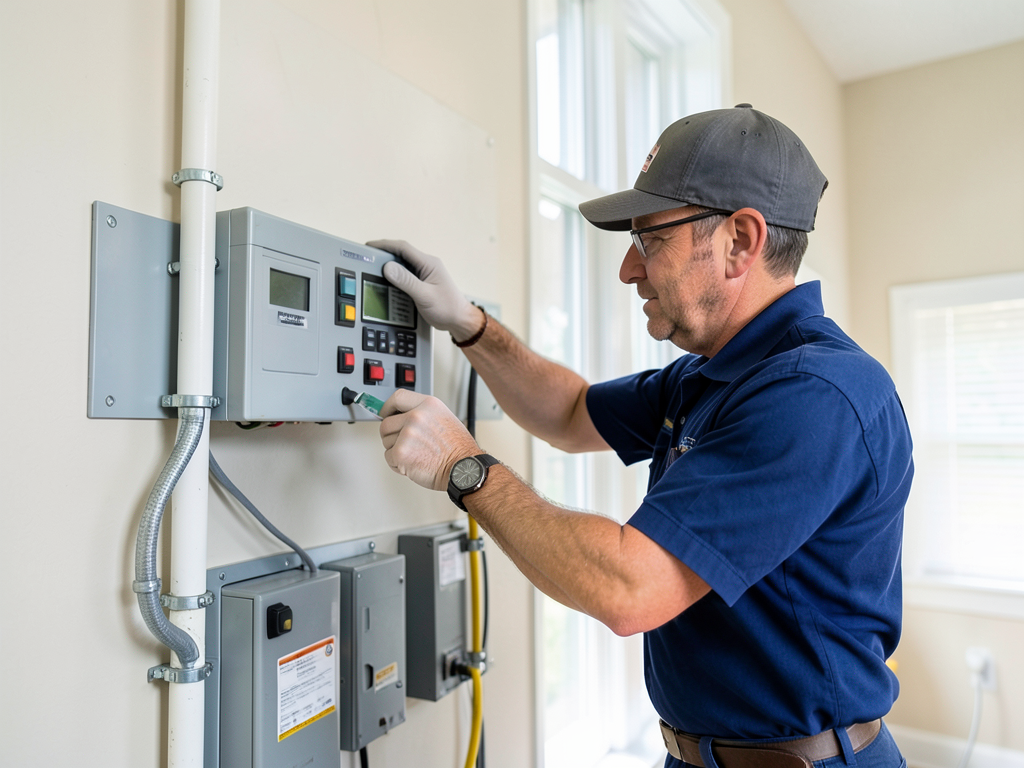
We install field controllers at each piece of equipment and network them back to a head-end workstation. You get graphical dashboards showing real-time status, historical trends, and alarm notifications. When a variable frequency drive begins drawing excessive current or a heat exchanger shows declining efficiency, the system alerts your maintenance team before failure occurs.

Energy Management Systems track utility consumption by system, zone, or tenant. You identify which rooftop units consume the most electricity, which zones require the most heating, and which operational changes produce measurable savings. This data justifies capital improvements and validates contractor performance.

What Happens During Building Automation Implementation

Building Automation Systems in Kansas City – Reduce Operating Costs and Prevent Unplanned Downtime
01

Facility Assessment and Load Analysis

We document your existing mechanical systems, electrical capacity, and control infrastructure. Our team reviews architectural plans, identifies communication pathways, and calculates heating and cooling loads for each zone. We interview facility managers to understand operational challenges, comfort complaints, and maintenance pain points. This assessment defines which equipment gets integrated and what performance metrics matter most for your operation.
02

System Design and Programming

We engineer the control architecture and write custom programming sequences. The design specifies controller locations, sensor types, network topology, and user interface requirements. Programming defines temperature setpoints, occupancy schedules, equipment staging, alarm thresholds, and optimization routines. We configure trend logs to capture performance data and create graphics that display system status in intuitive formats. The programming accounts for Kansas City weather patterns and seasonal load variations.
03

Commissioning and Operator Training

After installation, we verify that each control sequence performs as designed under actual operating conditions. We test sensors for accuracy, calibrate actuators, and confirm network communication. Your staff receives hands-on training covering system navigation, setpoint adjustment, alarm response, and report generation. We provide documentation including as-built drawings, programming code, and troubleshooting guides. You gain full operational control without dependency on outside vendors for routine adjustments.

Why Kansas City Facility Managers Choose Local Building Automation Expertise

Building Automation Systems require ongoing support. Equipment fails, programming needs modification, and operators need refresher training. United HVAC Kansas City maintains a local service team with response times measured in hours rather than days.

We understand Kansas City's commercial building stock. Many properties downtown were built between 1920 and 1960 with steam heat and gravity ventilation. Retrofit automation in these structures requires creative solutions that work within existing mechanical rooms and limited electrical capacity. We have installed Building Management Systems in renovated warehouses in the West Bottoms, mid-century office towers along the Country Club Plaza, and new construction in the Berkley Riverfront development.

Our technicians hold factory certifications for major control platforms including Johnson Controls, Honeywell, and Schneider Electric. We program in multiple protocols so you are not locked into proprietary systems that only one contractor can service. When you need to add a rooftop unit or reconfigure space for a new tenant, we modify programming without requiring complete system replacement.

Kansas City enforces the International Energy Conservation Code with amendments requiring economizer controls, demand-controlled ventilation, and energy monitoring. We design systems that meet these requirements while providing documentation for plan review and inspections. Compliance is built into the installation rather than discovered during final inspection.

Commercial HVAC Controls deliver measurable return on investment. Clients typically see 15 to 30 percent reduction in energy consumption within the first year. Maintenance costs decline because predictive monitoring catches problems early. Tenant satisfaction improves because temperature and humidity stay consistent. These benefits compound over the system's 15 to 20 year operational life.

What to Expect When Implementing Building Controls

Project Timeline and Phasing

Implementation timelines depend on building size and system complexity. A single building with five rooftop units takes two to three weeks from design to commissioning. Multi-building campuses with central plants require eight to twelve weeks. We phase installation to minimize disruption. Controllers get mounted and wired during business hours, then programming and cutover happen during evenings or weekends when occupancy is low. You maintain climate control throughout the process. Critical facilities like data centers and healthcare buildings require hot-cutover procedures that transition control without any loss of conditioning.

Initial System Configuration and Optimization

After installation, we monitor system performance for 30 to 60 days and make adjustments based on actual operating data. Temperature sensors might need calibration. Occupancy schedules get refined based on actual usage patterns. Equipment staging sequences are tuned to minimize compressor short-cycling and reduce demand charges. We review trend data weekly during this optimization period to identify anomalies and verify that energy savings match projections. This fine-tuning phase ensures the system operates efficiently under real-world conditions rather than theoretical design assumptions.

System Performance and Reporting

Energy Management Systems generate reports showing consumption trends, equipment runtime, and alarm history. You receive monthly summaries comparing current performance against baseline data and identifying opportunities for additional savings. The system logs every temperature setpoint change, every occupancy override, and every equipment start and stop. This creates accountability for energy management and provides documentation for utility rebate programs. Graphical dashboards display facility status at a glance. Facility managers access the system remotely from any web browser to check conditions or adjust settings without driving to the property.

Ongoing Support and System Updates

Building Automation Systems require periodic maintenance including sensor calibration, software updates, and database backups. We offer service agreements that include quarterly preventive maintenance, unlimited technical support, and priority response for control failures. As your facility changes, we modify programming to accommodate new equipment, space reconfigurations, or operational requirements. Software updates add new features and maintain compatibility with evolving communication protocols. We archive your programming code and drawings offsite so critical documentation never gets lost during staff turnover or facility ownership changes.

Frequently Asked Questions

You Have Questions,
We Have Answers

What are building automation systems? +

Building automation systems are centralized networks that control and monitor HVAC, lighting, security, and other mechanical systems in commercial facilities. These systems use sensors, controllers, and software to optimize energy use, maintain comfort, and reduce operational costs. In Kansas City, where temperature swings from humid summers to freezing winters stress equipment, automation systems adjust heating and cooling in real time based on occupancy and weather conditions. This reduces energy waste and extends equipment life. Building automation systems connect disparate systems into one interface, giving facility managers complete control over building performance and enabling predictive maintenance before failures occur.

What are the top 5 BMS systems? +

The top building management systems include Johnson Controls Metasys, Siemens Desigo, Honeywell Enterprise Buildings Integrator, Schneider Electric EcoStruxure, and Tridium Niagara. Each platform offers different strengths. Johnson Controls dominates large commercial installations. Siemens excels in industrial integration. Honeywell provides strong security features. Schneider focuses on energy analytics. Tridium Niagara uses open protocols for flexibility. Kansas City facilities often choose systems based on existing infrastructure and integration needs. The best system depends on building size, complexity, and whether you prioritize energy management, security integration, or vendor-neutral flexibility. Compatibility with existing equipment matters more than brand recognition.

What is the best building automation system? +

The best building automation system depends on your facility requirements, not brand popularity. For Kansas City commercial properties, the ideal system integrates seamlessly with existing HVAC equipment, handles extreme seasonal temperature variations, and provides actionable energy data. Open protocol systems like Tridium Niagara offer flexibility when working with mixed equipment brands. Proprietary systems like Johnson Controls or Siemens deliver deeper integration if you standardize on one manufacturer. Evaluate systems based on scalability, local service availability, cybersecurity features, and total cost of ownership. The best system solves your specific operational challenges while reducing energy costs and minimizing downtime in Kansas City's demanding climate.

What is a typical BMS system? +

A typical building management system consists of three layers: field devices, controllers, and user interface. Field devices include sensors measuring temperature, humidity, and occupancy, plus actuators controlling dampers and valves. Controllers process sensor data and execute control logic based on programmed sequences. The user interface allows operators to monitor systems and adjust setpoints. In Kansas City commercial buildings, typical systems manage rooftop HVAC units, VAV boxes, boiler plants, and lighting schedules. The system continuously adjusts equipment based on occupancy patterns and outdoor conditions. Most systems communicate via BACnet or Modbus protocols, connecting equipment from multiple manufacturers into one coordinated network.

What are the 4 types of automation systems? +

The four automation system types are pneumatic, electric, direct digital control, and web-based systems. Pneumatic systems use compressed air and are obsolete but still exist in older Kansas City buildings. Electric systems use analog controls and thermostats. Direct digital control systems use microprocessors and precise digital signals for improved accuracy. Web-based systems represent current technology, offering remote access through internet connectivity. Kansas City facilities built before 2000 often have pneumatic or electric controls that waste energy. Upgrading to DDC or web-based systems cuts energy costs significantly. Modern systems provide granular control, trending data, and remote diagnostics that older technologies cannot match.

What is BMS in simple words? +

A building management system is software that runs your building like an operating system runs a computer. It controls heating, cooling, lights, and security from one central dashboard. The system reads data from sensors throughout your facility and automatically adjusts equipment to maintain comfort while minimizing energy use. When outdoor temperatures drop in Kansas City winters, the system shifts to heating mode and adjusts based on which spaces are occupied. It tracks equipment runtime to schedule maintenance before breakdowns occur. You access everything through a computer or phone. BMS turns manual tasks into automatic processes, reducing labor costs and preventing human error.

Who is the leader in building automation? +

Johnson Controls, Siemens, and Honeywell lead the building automation market globally based on market share and installed base. Johnson Controls maintains the largest footprint in commercial buildings. Siemens dominates industrial and healthcare applications. Honeywell excels in security integration. Schneider Electric grows rapidly in energy management. For Kansas City commercial properties, the leader depends on your industry sector. Healthcare facilities often choose Siemens or Johnson Controls. Office buildings lean toward Honeywell or Schneider. The relevant question is not who leads globally but which provider offers strong local service support, integration with your existing systems, and expertise in your building type and operational requirements.

What are the three types of BMS? +

The three BMS types are proprietary, open protocol, and hybrid systems. Proprietary systems use manufacturer-specific hardware and software, offering deep integration but locking you into one vendor. Open protocol systems use standards like BACnet or LonWorks, allowing equipment from different manufacturers to communicate. Hybrid systems combine both approaches. Kansas City facilities with mixed equipment brands benefit from open protocol flexibility. Proprietary systems work well when standardizing on one manufacturer for simplified service. Hybrid systems offer the best of both, using open protocols for basic functions while leveraging proprietary features for advanced capabilities. Your choice impacts long-term flexibility and service costs.

What is SCADA vs BMS? +

SCADA monitors and controls industrial processes across large geographic areas, while BMS manages commercial building systems at single sites. SCADA handles water treatment plants, electrical grids, and manufacturing facilities requiring remote monitoring. BMS focuses on HVAC, lighting, and security in office buildings, hospitals, and retail centers. SCADA prioritizes data acquisition and remote control over wide networks. BMS emphasizes energy optimization and occupant comfort. In Kansas City, water utilities use SCADA to monitor pumping stations across the metro. Commercial buildings use BMS for facility management. Both collect data and control equipment, but they serve different scales and purposes with distinct priorities.

How much does a building automation system cost? +

Building automation system costs range from three to seven dollars per square foot for new installations, depending on system complexity and integration depth. A 50,000 square foot Kansas City office building typically invests between 150,000 and 350,000 dollars. Costs vary based on number of control points, existing infrastructure, cybersecurity requirements, and desired features. Retrofit installations cost more due to integration challenges with legacy equipment. However, energy savings typically recover costs within three to five years through reduced utility bills and lower maintenance expenses. Request detailed proposals that specify hardware, software licensing, installation labor, training, and ongoing support costs to compare total ownership costs accurately.

How Kansas City's Temperature Extremes Demand Responsive Building Controls

Kansas City experiences 40 to 50 days annually with temperatures exceeding 90 degrees and 15 to 25 days below 20 degrees. This range stresses commercial HVAC equipment through constant load variation. Building Automation Systems maintain efficiency across this spectrum by continuously adjusting equipment staging, ventilation rates, and economizer operation based on outdoor conditions. Direct Digital Controls prevent simultaneous heating and cooling, a common problem in buildings with legacy pneumatic controls. When outdoor temperatures allow free cooling, the system maximizes outside air intake and reduces compressor runtime. This responsiveness cuts energy consumption during shoulder seasons when conditions change rapidly.

Kansas City's commercial building codes reference ASHRAE 90.1 energy standards requiring specific control capabilities for buildings over 10,000 square feet. United HVAC Kansas City designs Building Management Systems that satisfy these requirements including zone-level temperature control, automatic schedules, and demand-controlled ventilation. Our familiarity with local inspection procedures ensures projects pass mechanical and electrical inspections without delays. We work regularly with Kansas City's Development Services Department and understand their documentation requirements. Choosing a local contractor means your Building Control Systems meet code requirements the first time.

HVAC Services in The Kansas City Area

View our service area and business location on the map below. We are proud to serve the entire Kansas City metro area, providing expert heating and cooling services to both residential and commercial clients. If you need a reliable HVAC partner, we are conveniently located to respond quickly to your needs, ensuring your indoor comfort is always our top priority.

Address:
United HVAC Kansas City, 1425 Agnes Ave, Kansas City, MO, 64127

Additional Services We Offer

Our news updates

Latest Articles & News from The Blogs

Comparing Mitsubishi and Daikin ductless systems for local homes When Kansas City homeowners face the decision between Mitsubishi and Daikin…

Comparing Mitsubishi and Daikin ductless systems for local homes

Comparing Mitsubishi and Daikin ductless systems for local homes When Kansas City homeowners face the decision between Mitsubishi and Daikin…

Protecting your piano and acoustic guitars from Kansas City humidity swings

Protecting Your Piano and Acoustic Guitars from Kansas City Humidity Swings\n\nYour musical instruments are more than just objects. They are…

Specialized Climate Control Tips for Indoor Gardeners and Hobbyists in the West Bottoms

Specialized Climate Control Tips for Indoor Gardeners and Hobbyists in the West Bottoms The West Bottoms industrial district faces unique…

Contact Us

Find out how much energy your building wastes with outdated controls. United HVAC Kansas City provides detailed assessments showing potential savings and system integration options. Call (816) 473-9177 to schedule an evaluation of your commercial HVAC infrastructure.