




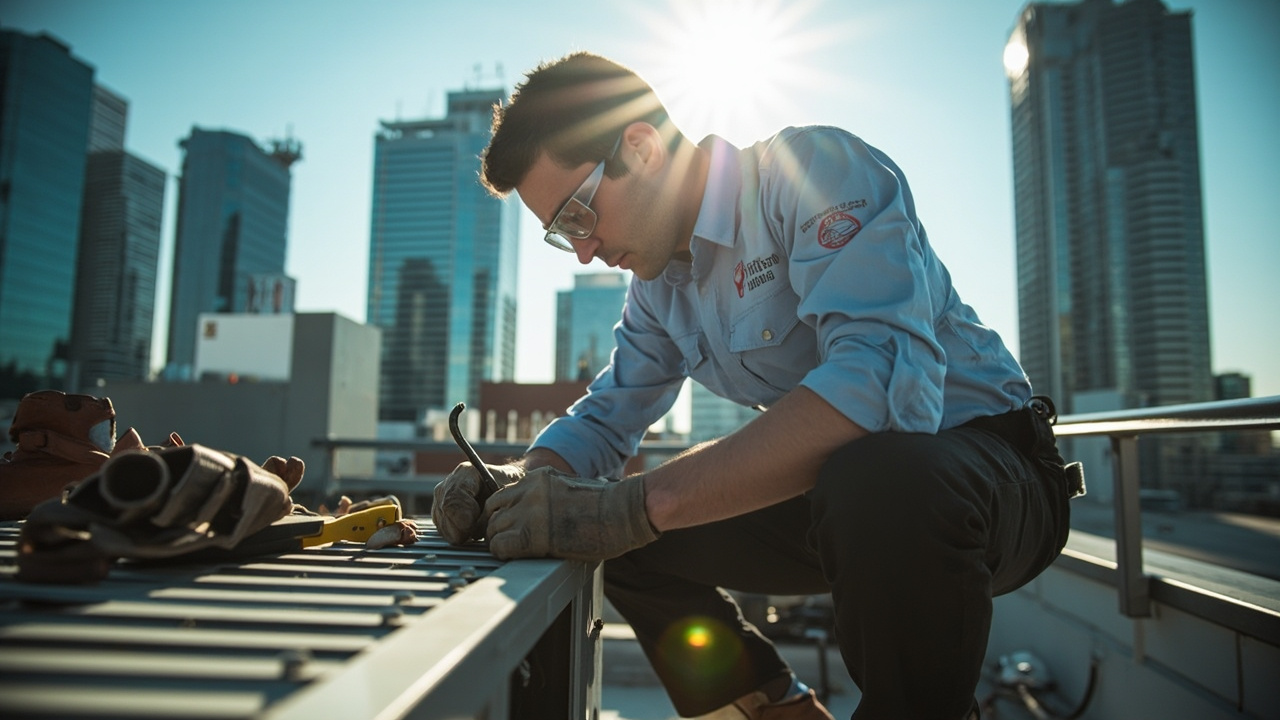

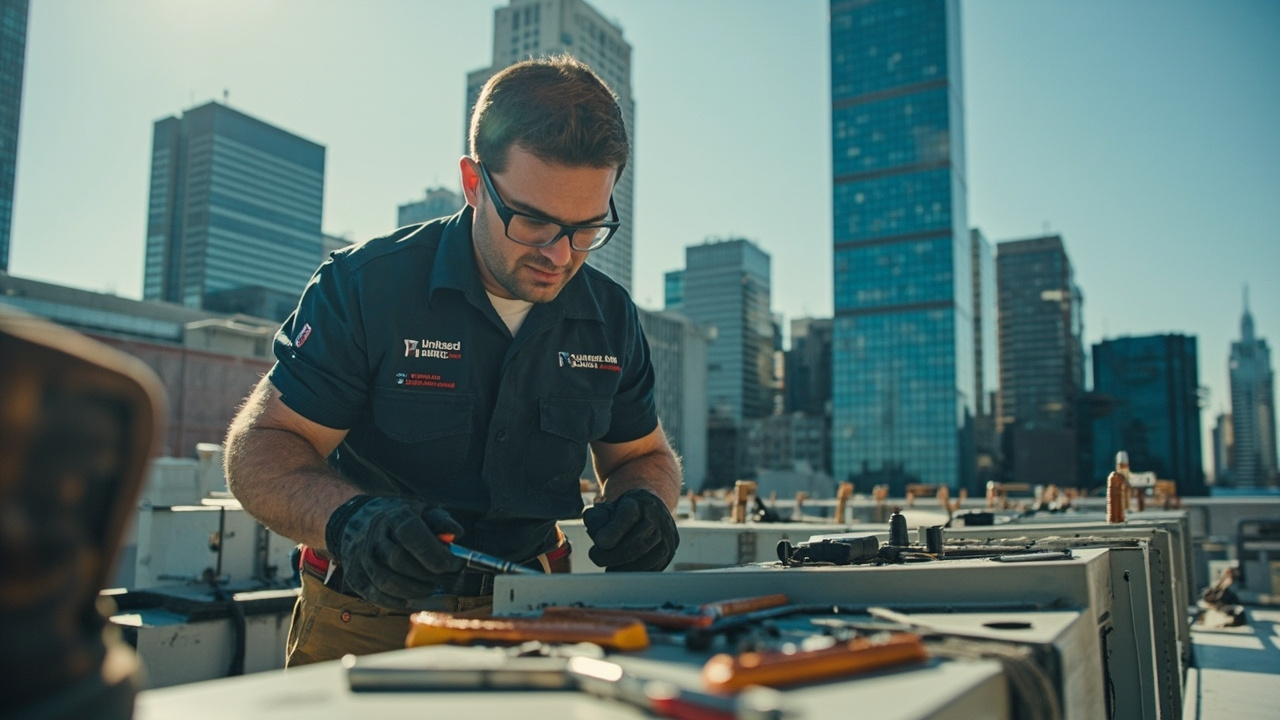
Kansas City experiences temperature swings exceeding 80 degrees between winter lows near 10 degrees and summer peaks above 95 degrees. This extreme thermal cycling causes expansion and contraction in refrigerant lines, electrical connections, and ductwork joints that would remain stable in milder climates. Commercial rooftop units face additional stress from Kansas City's severe thunderstorms, which deliver high winds, hail, and rapid pressure changes that damage condenser fins, loosen electrical connections, and allow water infiltration into control panels. The region's humidity levels, which frequently exceed 70 percent during summer months, force commercial cooling systems to remove moisture and reduce temperature simultaneously. This dual load increases compressor runtime, accelerates refrigerant breakdown, and promotes corrosion on evaporator coils. Buildings near the Missouri River or in the West Bottoms face even higher humidity infiltration.
Commercial building codes in Kansas City require specific ventilation rates that affect HVAC system sizing and operation. The city's mix of historic buildings and modern construction creates unique retrofit challenges that demand local expertise. United HVAC Kansas City technicians understand which older buildings downtown have inadequate electrical service for modern high-efficiency units and which HVAC configurations comply with current commercial building codes. Our familiarity with local supply houses, building inspectors, and mechanical permit requirements means faster repairs and proper code compliance. We maintain relationships with commercial parts distributors throughout the Kansas City metro who provide after-hours access for emergency component needs, reducing your downtime when failures occur outside business hours.