





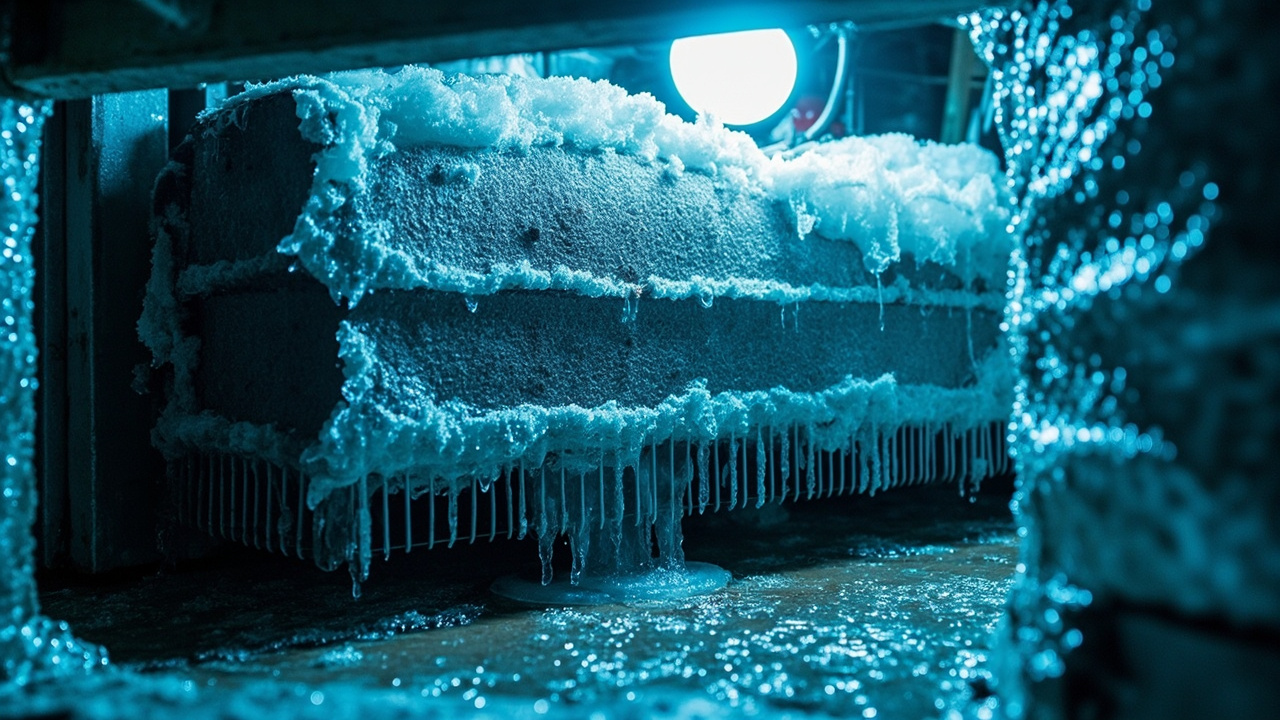

Kansas City sits at the confluence of the Kansas and Missouri Rivers, which creates persistently high humidity levels during summer months. Outdoor humidity regularly exceeds 70 percent between June and September. Indoor humidity follows outdoor trends unless you run a whole-home dehumidifier. High indoor humidity increases the latent load on your evaporator coil. The coil must condense more water vapor from the air, which lowers the coil surface temperature. When airflow is even slightly restricted, the coil temperature drops below freezing, and the condensation freezes instead of draining. This creates a feedback loop where ice blocks airflow, which causes more ice formation. In drier climates, the same airflow restriction might reduce capacity without causing freezing. In Kansas City, frozen cooling coils are a direct result of our climate.
United HVAC Kansas City has serviced residential and commercial systems across the metro for years. We understand the building practices and system types common to each neighborhood. We know that homes in Brookside often have original 1960s ductwork that was undersized even when new. We know that newer construction in Lee's Summit and Blue Springs often uses flex duct runs that exceed recommended length limits. We understand that commercial buildings in the Crossroads and River Market districts face unique challenges with rooftop units exposed to full sun and reflected heat from surrounding buildings. Local expertise matters because the solution to an iced-up evaporator coil in a 1920s bungalow is different from the solution in a 2015 split-level.