
The Best Ways to Heat and Cool a New Carriage House or ADU in the Westside
Building a new carriage house or accessory dwelling unit in Kansas City’s Westside means facing unique HVAC challenges. The Westside’s historic character and dense urban layout demand heating and cooling systems that are efficient, quiet, and compact. You need solutions that handle both the summer humidity and winter cold without breaking your budget or violating local building codes. Why historic Brookside homes need specialized high velocity AC systems.
Whether you’re converting a garage or constructing a backyard cottage, the right HVAC system makes all the difference in comfort and long-term value. This guide covers the best options for Westside ADUs, including mini-split systems, compact heat pumps, and smart zoning solutions that work in small spaces. Smart Thermostat Benefits.
Understanding ADU Heating and Cooling Requirements in the Westside
ADUs in the Westside typically range from 400 to 800 square feet, making traditional HVAC systems oversized and inefficient. The compact footprint means every BTU counts, and you need precise temperature control without the noise or bulk of conventional equipment.
The Westside’s older infrastructure presents additional challenges. Many lots have limited outdoor space for condensers, and historic preservation guidelines may restrict exterior modifications. You also need systems that can handle the area’s clay soil conditions, which can cause foundation settling that affects equipment mounting.
Local building codes require proper permits for all HVAC work in ADUs. The Kansas City Mechanical Code mandates specific ventilation rates and energy efficiency standards for small residential units. Working with a contractor familiar with Westside zoning ensures your system meets all requirements. Energy Department heat pump guide.
Top 3 HVAC Options for Kansas City ADUs
Ductless Mini-Split Systems (The Gold Standard)
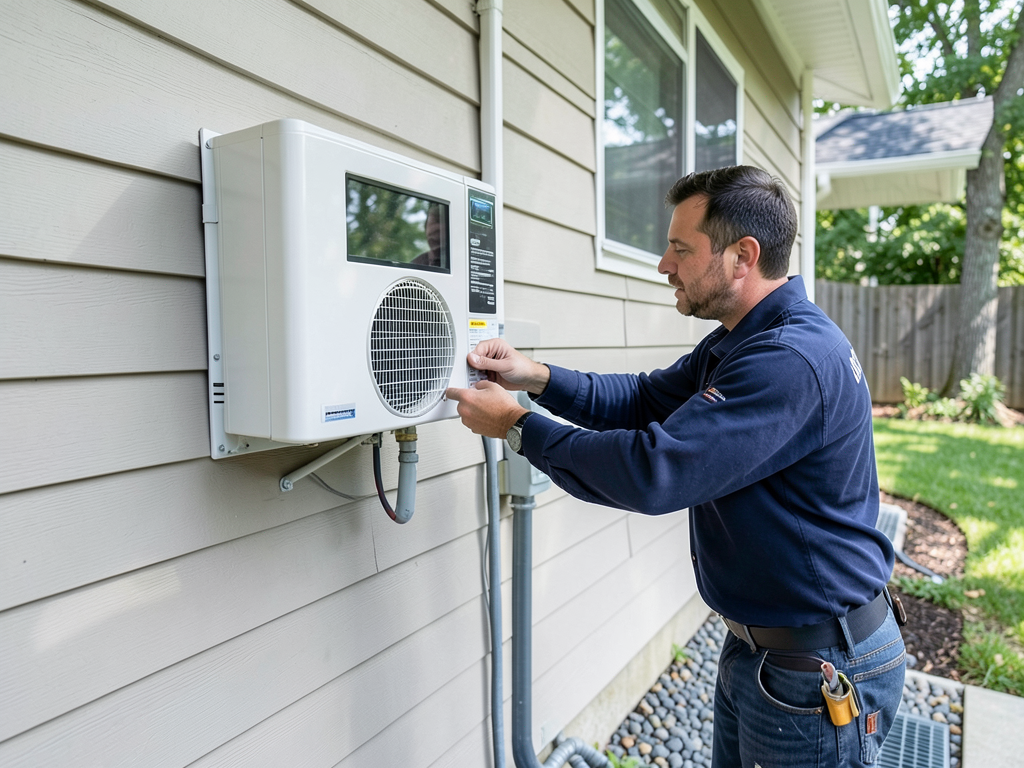
Ductless mini-splits dominate the ADU market for good reason. These systems provide heating and cooling without ductwork, making them perfect for small spaces. The indoor units mount on walls or ceilings, while the outdoor condenser requires minimal clearance.
Modern mini-splits use inverter technology to adjust capacity based on demand, achieving SEER2 ratings of 20+ for exceptional efficiency. They handle Kansas City’s temperature extremes, operating effectively down to -15°F for heating and up to 115°F for cooling.
Installation is straightforward: mounting brackets secure to wall studs, refrigerant lines run through small holes, and condensate drains connect to existing plumbing. Most Westside ADUs need only one or two indoor heads for complete coverage.
Vertical Terminal Air Conditioners (VTACs)
VTACs offer another excellent option for ADUs with limited wall space. These through-the-wall units combine heating and cooling in a single package, with the compressor and heat exchanger in one cabinet that mounts in an exterior wall.
The units work well in Westside’s older buildings where interior wall space is at a premium. They provide 7,000 to 12,000 BTU cooling capacity, enough for most ADUs. The heat pump versions offer electric heating down to about 35°F, with electric resistance backup for colder weather.
VTACs require a dedicated 240V circuit and proper exterior wall support. The units include built-in filters and can integrate with smart thermostats for remote control.
Extending Your Existing Home’s HVAC (Pros and Cons)
Extending your main home’s HVAC to the ADU seems convenient but often creates problems. The additional load can overwhelm an existing system, leading to poor performance in both buildings. Ductwork modifications require cutting into walls and ceilings, potentially damaging historic features.
Cost savings are minimal since you still need permits, additional equipment, and professional modifications. The extended system may not provide adequate zoning, leaving the ADU too hot or cold when the main house has different needs.
However, if your main system has excess capacity and proper zoning controls, extension can work. This approach requires a professional Manual J load calculation to verify compatibility.
Climate Considerations: Solving the KC Humidity & Freeze Factor
Kansas City’s climate creates unique HVAC demands. Summer humidity often exceeds 70%, requiring systems with strong dehumidification capabilities. The clay soil in the Westside holds moisture, increasing indoor humidity levels that can lead to mold growth.
Winter temperatures regularly drop below freezing, with occasional sub-zero snaps. Your heating system must provide reliable warmth even when outdoor temperatures hit -10°F. The freeze-thaw cycles common in the Midwest can stress outdoor equipment and affect refrigerant line performance. How to find a reliable air conditioning repair technician in Overland Park.
Spring and fall bring rapid temperature swings. A system with good modulating capacity handles these transitions smoothly, avoiding the temperature swings that occur with single-stage equipment.
Look for systems with enhanced dehumidification modes that can remove moisture without overcooling. This feature is crucial in the Westside’s older buildings, where poor insulation can create condensation problems.
Kansas City Building Codes and Permitting for ADU HVAC
The Kansas City Mechanical Code requires permits for all new HVAC installations in ADUs. You must submit plans showing equipment locations, duct layouts if applicable, and electrical connections. The code mandates minimum ventilation rates of 0.35 air changes per hour for residential spaces.
Energy efficiency standards require minimum SEER2 ratings of 14 for cooling and 8.2 HSPF for heat pumps. The International Energy Conservation Code (IECC) 2021 applies to all new construction, including ADUs, requiring specific insulation levels and air sealing.
Local zoning ordinances in the Westside may restrict outdoor equipment placement. Units must maintain minimum setbacks from property lines and cannot block emergency egress windows. Some historic districts require equipment screening or approval from preservation boards. Local HVAC experts for boiler maintenance and repair near the Country Club Plaza.
Manual J load calculations are mandatory for permit approval. These calculations determine exact heating and cooling requirements based on your ADU’s size, orientation, insulation levels, and window area. Guessing leads to oversized or undersized equipment and permit rejection.
Cost Breakdown and Local Rebates
Ductless mini-split installation for a typical Westside ADU costs between $3,500 and $6,000, including equipment and labor. Higher-end systems with advanced filtration and Wi-Fi controls run $7,000 to $9,000. VTAC units cost $2,500 to $4,000 installed.
Evergy offers rebates of $300 to $500 for high-efficiency heat pumps meeting SEER2 minimums. Spire Energy provides similar incentives for qualifying equipment. These rebates require professional installation and documentation submission.
Federal tax credits through 2026 cover 30% of equipment costs up to $2,000 for Energy Star certified heat pumps. Local utility programs may offer additional incentives for smart thermostats and high-efficiency systems.
Maintenance costs average $150 to $250 annually for professional servicing. This includes cleaning coils, checking refrigerant levels, and testing electrical connections. Regular maintenance prevents costly repairs and maintains efficiency. EPA refrigerant handling requirements.
Case Study: Recent ADU HVAC Installation in the Westside
A homeowner on Summit Street recently converted a 600-square-foot garage into an ADU rental unit. The space had no existing ductwork, and exterior modifications were restricted by historic district guidelines.. Read more about How to Keep Your New Lee’s Summit Sunroom Comfortable Throughout the Winter.
We installed a Mitsubishi multi-zone mini-split system with one outdoor condenser and two indoor heads. The system provides 18,000 BTU cooling and 20,000 BTU heating capacity. Installation took two days, with minimal exterior impact since the condenser mounted on an existing concrete pad.
The system achieved a 22 SEER2 rating, qualifying for a $400 Evergy rebate. The homeowner reports 30% lower utility costs compared to window units previously used for temporary cooling. The quiet operation and precise temperature control have improved tenant satisfaction significantly.
This project demonstrates how proper system selection and professional installation create comfortable, efficient ADUs even in challenging historic neighborhoods.
Frequently Asked Questions
What size HVAC system do I need for a 500-square-foot ADU?
Most 500-square-foot ADUs need 9,000 to 12,000 BTU cooling capacity. A professional Manual J calculation provides exact requirements based on your specific building characteristics and orientation.
Can I install HVAC equipment myself to save money?
No. Kansas City requires licensed HVAC contractors for all new installations. DIY work violates building codes and may create safety hazards with electrical connections and refrigerant handling.
How long does ADU HVAC installation take?
Most installations complete in one to three days. Mini-split systems typically install faster than ducted systems since they require minimal interior modifications.
Will my ADU HVAC work during power outages?
Standard systems require electricity. Consider a small generator or battery backup if power reliability is a concern in your area.
What maintenance do ADU HVAC systems need?
Annual professional maintenance includes coil cleaning, refrigerant level checks, and electrical testing. Homeowners should clean or replace filters every 1-3 months depending on usage.
Choosing the Right Contractor for Your Westside ADU
Selecting an HVAC contractor familiar with Westside ADUs makes a significant difference. Look for NATE certification, experience with historic properties, and knowledge of local permitting requirements.
Ask potential contractors about their experience with mini-split installations and their familiarity with Kansas City’s climate challenges. Request references from similar projects in the area and verify their licensing and insurance coverage.
A good contractor provides detailed proposals including equipment specifications, installation timelines, and permit requirements. They should explain energy efficiency ratings and help you understand available rebates and incentives.
Quality installation affects system performance more than equipment brand. Poor installation can reduce efficiency by 30% or more, leading to higher utility bills and premature equipment failure.
Consider contractors who offer maintenance agreements. Regular professional service extends equipment life and maintains warranty coverage. Some contractors provide priority service and discounts for agreement customers.
The right HVAC system transforms your Westside ADU from a basic structure into a comfortable, efficient living space. With proper planning and professional installation, you can enjoy year-round comfort while meeting all local requirements and maximizing energy efficiency.
Call (816) 473-9177 today to schedule your ADU HVAC consultation. Our Westside specialists will evaluate your specific needs and provide detailed recommendations for your new carriage house or accessory dwelling unit.
{
“@context”: “https://schema.org”,
“@type”: “BlogPosting”,
“headline”: “The Best Ways to Heat and Cool a New Carriage House or ADU in the Westside”,
“description”: “Discover the best HVAC systems for Westside ADUs and carriage houses. Learn about ductless mini-splits, local codes, and energy rebates in Kansas City’s unique climate.”,
“wordCount”: 1617,
“datePublished”: “2026-04-13T11:26:00.000Z”,
“dateModified”: “2026-04-13T11:26:00.000Z”,
“inLanguage”: “en-US”,
“mainEntityOfPage”: {
“@type”: “WebPage”,
“@id”: “https://unitedhvackansascity.com”
},
“publisher”: {
“@type”: “LocalBusiness”,
“name”: “United HVAC Kansas City”,
“url”: “https://unitedhvackansascity.com”
},
“author”: {
“@type”: “Organization”,
“name”: “United HVAC Kansas City”,
“url”: “https://unitedhvackansascity.com”
},
“image”: {
“@type”: “ImageObject”,
“url”: “https://unitedhvackansascity.com/wp-content/uploads/2026/03/the-best-ways-to-heat-and-cool-a-new-carriage-hous-1.png”
}
}
{
“@context”: “https://schema.org”,
“@type”: “HVACBusiness”,
“name”: “United HVAC Kansas City”,
“url”: “https://unitedhvackansascity.com”,
“address”: {
“@type”: “PostalAddress”,
“addressLocality”: “Kansas City”
},
“areaServed”: {
“@type”: “City”,
“name”: “Kansas City”
}
}
{
“@context”: “https://schema.org”,
“@type”: “FAQPage”,
“mainEntity”: [
{
“@type”: “Question”,
“name”: “What size HVAC system do I need for a 500-square-foot ADU?”,
“acceptedAnswer”: {
“@type”: “Answer”,
“text”: “Most 500-square-foot ADUs need 9,000 to 12,000 BTU cooling capacity. A professional Manual J calculation provides exact requirements based on your specific building characteristics and orientation.”
}
},
{
“@type”: “Question”,
“name”: “Can I install HVAC equipment myself to save money?”,
“acceptedAnswer”: {
“@type”: “Answer”,
“text”: “No. Kansas City requires licensed HVAC contractors for all new installations. DIY work violates building codes and may create safety hazards with electrical connections and refrigerant handling.”
}
},
{
“@type”: “Question”,
“name”: “How long does ADU HVAC installation take?”,
“acceptedAnswer”: {
“@type”: “Answer”,
“text”: “Most installations complete in one to three days. Mini-split systems typically install faster than ducted systems since they require minimal interior modifications.”
}
},
{
“@type”: “Question”,
“name”: “Will my ADU HVAC work during power outages?”,
“acceptedAnswer”: {
“@type”: “Answer”,
“text”: “Standard systems require electricity. Consider a small generator or battery backup if power reliability is a concern in your area.”
}
},
{
“@type”: “Question”,
“name”: “What maintenance do ADU HVAC systems need?”,
“acceptedAnswer”: {
“@type”: “Answer”,
“text”: “Annual professional maintenance includes coil cleaning, refrigerant level checks, and electrical testing. Homeowners should clean or replace filters every 1-3 months depending on usage.”
}
}
]
}
{
“@context”: “https://schema.org”,
“@type”: “BreadcrumbList”,
“itemListElement”: [
{
“@type”: “ListItem”,
“position”: 1,
“name”: “Home”,
“item”: “https://unitedhvackansascity.com”
},
{
“@type”: “ListItem”,
“position”: 2,
“name”: “Blog”,
“item”: “https://unitedhvackansascity.com/blog”
},
{
“@type”: “ListItem”,
“position”: 3,
“name”: “The Best Ways to Heat and Cool a New Carriage House or ADU in the Westside”
}
]
}
{
“@context”: “https://schema.org”,
“@type”: “Service”,
“serviceType”: “HVAC”,
“provider”: {
“@type”: “LocalBusiness”,
“name”: “United HVAC Kansas City”,
“url”: “https://unitedhvackansascity.com”
},
“areaServed”: {
“@type”: “City”,
“name”: “Kansas City”
},
“description”: “Discover the best HVAC systems for Westside ADUs and carriage houses. Learn about ductless mini-splits, local codes, and energy rebates in Kansas City’s unique climate.”
}