
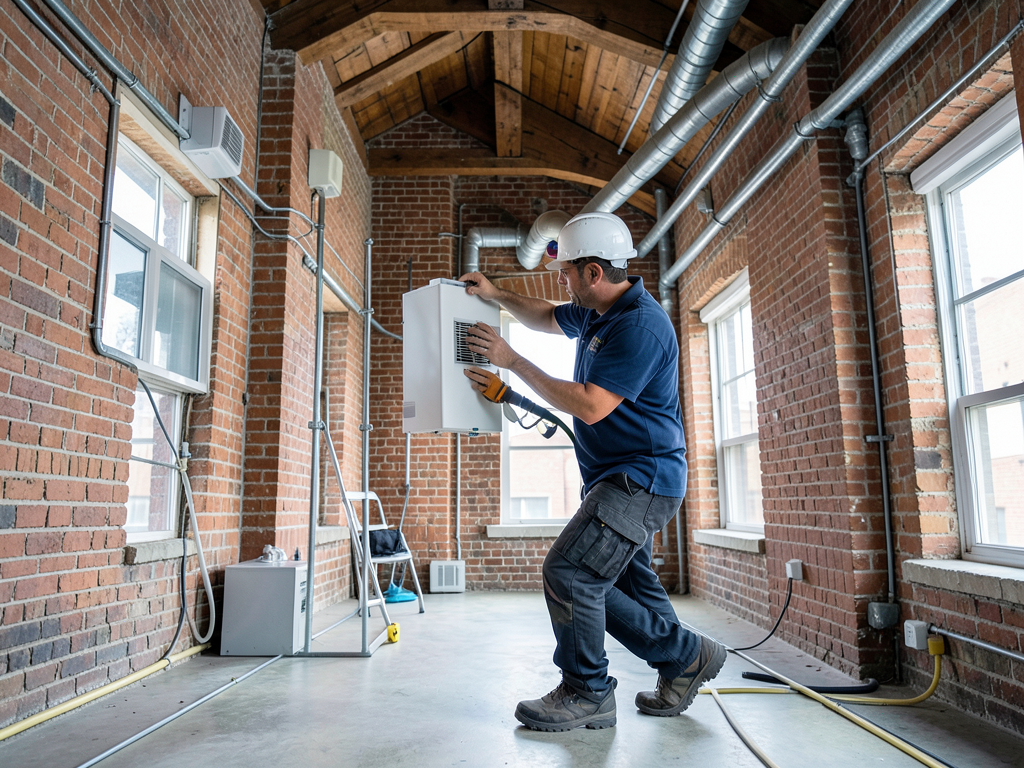
Managing Soaring Utility Bills in Your Garment District Industrial Loft
Your Garment District loft was built for garment manufacturing not modern comfort. Those 14-foot ceilings that once held industrial looms now trap hot air in summer and let precious warmth escape in winter. The massive factory windows that flood your space with natural light also create massive thermal loads that force your HVAC system to work overtime. If your utility bills keep climbing despite moderate thermostat settings you are experiencing the classic loft efficiency trap that affects thousands of historic industrial spaces across downtown Kansas City. Why historic Brookside homes need specialized high velocity AC systems.
The good news is that you do not have to choose between preserving your loft’s character and achieving comfortable energy-efficient living. With the right combination of targeted upgrades and smart system design we can dramatically reduce your monthly utility costs while maintaining the industrial charm that makes your space unique. Let me show you exactly how loft-specific HVAC solutions can transform your comfort and your bottom line. Smart Thermostat Benefits.
The Unique Challenges of Loft Climate Control
Industrial lofts in the Garment District face three fundamental thermal challenges that standard homes never encounter. First the stack effect in spaces with ceilings over 12 feet creates a chimney-like draft where warm air rises and escapes through upper windows or skylights while cold air rushes in from lower levels. This constant air movement forces your HVAC system to heat the entire air column instead of just the occupied space.
Second those beautiful exposed brick walls and concrete floors have almost no R-value compared to modern insulation. A typical loft wall assembly might have an effective R-value of 3 to 5 while current building codes require R-13 to R-19 for exterior walls. That means you are losing heat through your walls at three to four times the rate of a modern home.
Third the thermal bridging from steel beams and columns creates cold spots that make certain areas feel drafty even when your thermostat reads a comfortable temperature. These metal elements conduct heat directly to the exterior creating localized discomfort that no amount of thermostat adjustment can fix. Local HVAC experts for boiler maintenance and repair near the Country Club Plaza.
Top HVAC Solutions for Kansas City Lofts
Standard residential HVAC systems are not designed for the unique geometry and thermal characteristics of industrial lofts. Here are the most effective solutions that actually work in the Garment District’s climate.
Ductless Mini-Split Systems offer the most flexibility for loft applications. These systems allow you to create independent temperature zones for different areas of your space. A typical loft setup might include one outdoor unit serving three to four indoor heads positioned strategically to address hot spots near windows and cold spots near exterior walls. The inverter-driven compressors adjust their output based on demand rather than cycling on and off like traditional systems.
High-Velocity HVAC Systems use small flexible ducts that can be routed through existing wall cavities without major demolition. These systems deliver conditioned air at high velocity creating better mixing and reducing the stratification that plagues loft spaces. The key advantage is that they can be installed with minimal impact to your exposed brick and industrial finishes.
Zoned Forced Air Systems with smart dampers and multiple thermostats can work well if you already have existing ductwork. The critical factor is proper zoning design that accounts for solar gain patterns and thermal mass differences throughout your space. A well-designed zoned system can reduce energy consumption by 30 to 40 percent compared to a single thermostat controlling the entire area.
Thermodynamics 101 Managing Stratification
Heat naturally rises and in a loft with 14-foot ceilings that means the air temperature at the ceiling can be 8 to 12 degrees warmer than at floor level. This stratification effect forces your heating system to work much harder than necessary because it is trying to maintain comfort at the thermostat level while wasting energy heating unused upper airspace.
The solution starts with strategic return air placement. Instead of a single return near the floor you need multiple returns at different heights to capture stratified air layers. Ceiling-mounted returns can pull down the hot air that accumulates above and redistribute it through the system.
Ceiling fans set to winter mode can also help break up stratification. When fans rotate clockwise at low speed they gently push warm air down the walls without creating uncomfortable drafts. This simple addition can reduce heating costs by 10 to 15 percent in loft spaces.
Another effective strategy is using displacement ventilation where cool air is introduced at floor level and allowed to naturally rise as it warms. This creates a gentle vertical air movement that maintains comfort without the energy waste of traditional mixing ventilation.
Local Efficiency Incentives and Rebates
Kansas City residents have access to several utility rebate programs that can significantly offset the cost of loft efficiency upgrades. Evergy offers rebates up to $900 for high-efficiency heat pump installations and up to $500 for smart thermostat upgrades. These rebates apply to both ducted and ductless systems that meet minimum efficiency requirements. Evergy Energy Efficiency Rebates.
The federal Energy Efficient Home Improvement Credit allows you to claim 30 percent of the cost of qualifying HVAC upgrades including heat pumps mini-splits and smart home energy management systems. For a typical loft upgrade this could mean $1500 to $3000 in tax credits depending on your total investment. Federal Energy Efficiency Guidelines.
Missouri’s Property Assessed Clean Energy (PACE) program offers financing for energy efficiency improvements with repayment through your property tax bill. This allows you to spread the cost of major upgrades over 10 to 20 years while immediately benefiting from reduced utility bills.
Local utility Evergy also provides free home energy audits that include thermal imaging to identify specific problem areas in your loft. These audits can reveal hidden air leaks thermal bridges and insulation gaps that you might not notice but that are costing you money every month.
Seasonal Maintenance Checklist for Urban Lofts
Urban loft environments create unique maintenance challenges that require specific attention throughout the year. The dense downtown air carries more particulates and pollutants that can clog filters and reduce system efficiency much faster than in suburban areas.
Spring Maintenance should focus on preparing your cooling system for summer humidity. Clean or replace all filters even if they look clean to the naked eye. Urban dust can be much finer than suburban dust and can pass through standard filters. Check condensate drains for algae growth which is more common in humid environments.
Summer Maintenance requires monitoring humidity levels which should stay between 40 and 60 percent for comfort and wood floor preservation. Many loft spaces need supplemental dehumidification even when the temperature feels comfortable. Clean evaporator coils which collect urban grime much faster than suburban systems.
Fall Maintenance prepares your heating system for winter operation. Test heat strips or auxiliary heat which may not have been used since last winter. Check for unusual odors when first activating heating which can indicate dust accumulation on heat exchangers.
Winter Maintenance focuses on preventing frozen pipes in areas with limited insulation. Check for drafts around windows and doors which are more noticeable in loft spaces with high ceilings. Monitor carbon monoxide levels if you have any gas appliances since urban air quality can affect combustion efficiency.
Cost-Benefit Analysis of Loft Efficiency Upgrades
Understanding the return on investment for different efficiency strategies helps you prioritize upgrades based on your specific situation and budget. Here is how various improvements typically perform in Garment District lofts.
| Upgrade Type | Typical Cost Range | Annual Energy Savings | Payback Period | Best For |
|---|---|---|---|---|
| Smart Thermostat Installation | $200 – $400 | $150 – $250 | 1 – 2 years | Quick wins any loft |
| Ductless Mini-Split System | $4,000 – $12,000 | $400 – $800 | 5 – 8 years | Heating/cooling replacement |
| Attic/Ceiling Insulation | $1,500 – $3,500 | $250 – $450 | 4 – 6 years | Heat loss prevention |
| High-Velocity HVAC System | $8,000 – $15,000 | $350 – $650 | 6 – 10 years | Preserving historic finishes |
| Window Film Treatment | $500 – $2,000 | $100 – $200 | 3 – 5 years | Solar heat gain reduction |
These numbers assume typical Kansas City energy rates and a Garment District loft of 1500 to 2500 square feet. Your actual savings will depend on your specific usage patterns and the current efficiency of your existing system.
Smart Technology Integration for Loft Efficiency
Modern smart home technology can dramatically improve loft efficiency by addressing the unique challenges of multi-zone temperature control and high-ceiling spaces. The key is choosing systems that actually solve loft-specific problems rather than generic smart home gadgets.
Multi-zone smart thermostats with remote sensors can monitor temperatures in different areas of your loft and adjust heating and cooling accordingly. This prevents the common problem of overheating upper floors while lower areas remain cold. Look for systems that support at least six sensors for adequate coverage of a typical loft space.
Occupancy sensors can automatically adjust temperatures based on which areas of your loft are actually in use. Since many lofts serve as both living and working spaces this can prevent heating or cooling large areas when only a small portion is occupied.
Smart vents that automatically open and close based on room temperature can help balance your system without the cost of a full zoning installation. These work best in conjunction with a smart thermostat that can coordinate the overall system operation.
Energy monitoring systems that track HVAC usage patterns can help you identify specific times when your system is working hardest and why. This data can reveal opportunities for behavioral changes or targeted upgrades that might not be obvious otherwise.
Common Mistakes That Drive Up Loft Utility Bills
Many loft owners inadvertently sabotage their efficiency efforts through common mistakes that seem logical but actually waste energy. Understanding these pitfalls can save you hundreds of dollars per year.
Overcooling in summer is a major problem in lofts with large south-facing windows. Setting your thermostat to 68 degrees might feel good when you first walk in but it forces your system to run continuously and creates uncomfortable cold spots. A better strategy is maintaining 72 to 74 degrees with proper humidity control.
Ignoring air leaks around windows and doors wastes enormous amounts of energy. Loft buildings often have settled over time creating gaps that standard weatherstripping cannot adequately seal. Professional air sealing can reduce heating and cooling costs by 15 to 25 percent in older industrial buildings.
Using portable heaters or window air conditioners as supplemental systems often increases overall energy consumption. These units are typically much less efficient than central systems and can create unbalanced loads that force your main system to work harder.
Failing to maintain proper humidity levels affects both comfort and energy consumption. In winter low humidity makes air feel colder requiring higher thermostat settings. In summer high humidity makes air feel warmer requiring lower thermostat settings. Proper humidification and dehumidification can reduce HVAC runtime by 20 to 30 percent.
Emergency Preparedness for Loft HVAC Systems
Loft HVAC systems require specific emergency preparedness strategies due to their complexity and the potential for extended downtime in extreme weather. Being prepared can prevent uncomfortable situations and protect your investment. Who to call for 24 hour emergency AC repair in Shawnee when the heat index spikes.
Always maintain at least one backup portable heating or cooling unit appropriate for your space size. For a typical 1500 square foot loft this means a unit rated for at least 12000 BTU for cooling or 5000 watts for heating. These can maintain livable conditions during system repairs. Same day furnace repair services for families in Lee’s Summit.
Keep contact information for emergency HVAC services programmed in your phone and posted in an obvious location. System failures in loft buildings can take longer to diagnose and repair due to access challenges and the need for specialized equipment.
Install battery backup for critical HVAC components like thermostats and zoning controls. Power outages during extreme weather can cause your system to reset incorrectly or fail to restart properly when power returns.
Know the location of all HVAC components including outdoor units which may be on the roof or in mechanical rooms that require special access. During emergencies you may need to provide this information to service technicians who are not familiar with your specific building layout.
Future Trends in Loft HVAC Technology
The HVAC industry is rapidly evolving with new technologies specifically targeting the unique challenges of industrial loft spaces. Understanding these trends can help you make forward-looking decisions about your system upgrades.
Thermal energy storage systems that shift cooling and heating to off-peak hours are becoming more practical for loft applications. These systems use phase-change materials or chilled water storage to capture energy when rates are low and use it during peak demand periods.
Integrated renewable energy systems combining solar panels with high-efficiency heat pumps are now viable for many loft buildings. Modern heat pumps can operate effectively in Kansas City’s climate while solar panels can offset a significant portion of their electricity consumption.. Read more about The Realistic Path to a Fully Electric Home for Eco-Conscious Waldo Residents.
Advanced building automation systems that learn your usage patterns and automatically optimize HVAC operation are becoming more affordable. These systems can reduce energy consumption by 25 to 40 percent while improving comfort through predictive adjustments.
Improved insulation materials specifically designed for retrofit applications in historic buildings are entering the market. These products can be installed with minimal visual impact while providing R-values comparable to modern construction.
Frequently Asked Questions
How much can I really save by upgrading my loft HVAC system?
Most loft owners see 25 to 40 percent reductions in HVAC energy costs after comprehensive upgrades. For a typical Garment District loft this translates to $500 to $1200 in annual savings depending on your current system efficiency and usage patterns.
Will efficiency upgrades change the character of my industrial loft?
Most modern efficiency solutions are designed to preserve historic character. Ductless mini-splits have minimal visual impact and high-velocity systems can be installed with almost no visible changes to your exposed brick and industrial finishes.
How long does a typical loft HVAC upgrade take?
Simple upgrades like smart thermostats can be completed in a few hours. Complete system replacements typically require 2 to 4 days depending on the complexity and whether you are keeping existing infrastructure or doing a full replacement.
Are there any building code considerations for loft HVAC upgrades?
Yes Kansas City building codes require permits for most HVAC modifications and may have specific requirements for historic buildings in the Garment District. Working with a contractor familiar with local codes ensures your upgrades meet all requirements.
What is the best season to schedule HVAC upgrades for my loft?
Spring and fall are ideal because you can schedule work during mild weather when temporary heating or cooling solutions are more comfortable. Avoid scheduling major work during peak summer or winter when you cannot tolerate extended downtime.
Take Control of Your Loft Energy Costs Today
Your Garment District loft deserves comfort that matches its character. Those soaring ceilings and massive windows should be assets that enhance your living experience not liabilities that drain your bank account every month. The efficiency solutions we have discussed are not just about saving money they are about transforming your space into the comfortable energy-efficient home you always wanted.
Every month you wait to address your loft’s efficiency issues is another month of wasted energy and unnecessary expense. Kansas City’s climate extremes mean your HVAC system works harder than systems in more moderate climates making efficiency upgrades even more critical here than in other markets.
The good news is that you do not have to figure this out alone. Our team specializes in loft-specific HVAC solutions throughout the Garment District and surrounding downtown areas. We understand the unique challenges of historic industrial spaces and we know how to solve them without compromising your building’s character.
Call (816) 473-9177 today to schedule your free loft efficiency assessment. We will evaluate your current system identify specific problem areas and recommend solutions tailored to your space your budget and your comfort goals. Do not let another season of high utility bills pass by take the first step toward the comfortable efficient loft you deserve.
Pick up the phone and call (816) 473-9177 now. Your future self will thank you every time you enjoy perfect comfort without the shock of another soaring utility bill.
Ready to Transform Your Loft Comfort?
Stop struggling with uncomfortable temperatures and unpredictable utility bills. Our loft HVAC specialists are standing by to help you discover the perfect solution for your space. Whether you need a simple efficiency upgrade or a complete system overhaul we have the expertise and experience to get it right the first time.
Call (816) 473-9177 today and let us show you how comfortable and affordable loft living can be. Your Garment District home deserves nothing less than expert care from local professionals who understand exactly what you are dealing with.
You may also find this helpful. Why Crossroads Brewery and Distillery Owners Need High Performance Ventilation Systems.
{
“@context”: “https://schema.org”,
“@type”: “BlogPosting”,
“headline”: “Managing Soaring Utility Bills in Your Garment District Industrial Loft”,
“description”: “High ceilings, huge windows, and historic brick create unique HVAC challenges in KC’s Garment District lofts. Learn energy-saving strategies from local experts.”,
“wordCount”: 2835,
“datePublished”: “2026-04-19T12:02:00.000Z”,
“dateModified”: “2026-04-19T12:02:00.000Z”,
“inLanguage”: “en-US”,
“mainEntityOfPage”: {
“@type”: “WebPage”,
“@id”: “https://unitedhvackansascity.com”
},
“publisher”: {
“@type”: “LocalBusiness”,
“name”: “United HVAC Kansas City”,
“url”: “https://unitedhvackansascity.com”
},
“author”: {
“@type”: “Organization”,
“name”: “United HVAC Kansas City”,
“url”: “https://unitedhvackansascity.com”
},
“image”: {
“@type”: “ImageObject”,
“url”: “https://unitedhvackansascity.com/wp-content/uploads/2026/03/managing-soaring-utility-bills-in-your-garment-dis-1.png”
}
}
{
“@context”: “https://schema.org”,
“@type”: “HVACBusiness”,
“name”: “United HVAC Kansas City”,
“url”: “https://unitedhvackansascity.com”,
“address”: {
“@type”: “PostalAddress”,
“addressLocality”: “Kansas City”
},
“areaServed”: {
“@type”: “City”,
“name”: “Kansas City”
}
}
{
“@context”: “https://schema.org”,
“@type”: “FAQPage”,
“mainEntity”: [
{
“@type”: “Question”,
“name”: “How much can I really save by upgrading my loft HVAC system?”,
“acceptedAnswer”: {
“@type”: “Answer”,
“text”: “Most loft owners see 25 to 40 percent reductions in HVAC energy costs after comprehensive upgrades. For a typical Garment District loft this translates to $500 to $1200 in annual savings depending on your current system efficiency and usage patterns.”
}
},
{
“@type”: “Question”,
“name”: “Will efficiency upgrades change the character of my industrial loft?”,
“acceptedAnswer”: {
“@type”: “Answer”,
“text”: “Most modern efficiency solutions are designed to preserve historic character. Ductless mini-splits have minimal visual impact and high-velocity systems can be installed with almost no visible changes to your exposed brick and industrial finishes.”
}
},
{
“@type”: “Question”,
“name”: “How long does a typical loft HVAC upgrade take?”,
“acceptedAnswer”: {
“@type”: “Answer”,
“text”: “Simple upgrades like smart thermostats can be completed in a few hours. Complete system replacements typically require 2 to 4 days depending on the complexity and whether you are keeping existing infrastructure or doing a full replacement.”
}
},
{
“@type”: “Question”,
“name”: “Are there any building code considerations for loft HVAC upgrades?”,
“acceptedAnswer”: {
“@type”: “Answer”,
“text”: “Yes Kansas City building codes require permits for most HVAC modifications and may have specific requirements for historic buildings in the Garment District. Working with a contractor familiar with local codes ensures your upgrades meet all requirements.”
}
},
{
“@type”: “Question”,
“name”: “What is the best season to schedule HVAC upgrades for my loft?”,
“acceptedAnswer”: {
“@type”: “Answer”,
“text”: “Spring and fall are ideal because you can schedule work during mild weather when temporary heating or cooling solutions are more comfortable. Avoid scheduling major work during peak summer or winter when you cannot tolerate extended downtime.”
}
},
{
“@type”: “Question”,
“name”: “Ready to Transform Your Loft Comfort?”,
“acceptedAnswer”: {
“@type”: “Answer”,
“text”: “Stop struggling with uncomfortable temperatures and unpredictable utility bills. Our loft HVAC specialists are standing by to help you discover the perfect solution for your space. Whether you need a simple efficiency upgrade or a complete system overhaul we have the expertise and experience to get it right the first time.”
}
}
]
}
{
“@context”: “https://schema.org”,
“@type”: “BreadcrumbList”,
“itemListElement”: [
{
“@type”: “ListItem”,
“position”: 1,
“name”: “Home”,
“item”: “https://unitedhvackansascity.com”
},
{
“@type”: “ListItem”,
“position”: 2,
“name”: “Blog”,
“item”: “https://unitedhvackansascity.com/blog”
},
{
“@type”: “ListItem”,
“position”: 3,
“name”: “Managing Soaring Utility Bills in Your Garment District Industrial Loft”
}
]
}
{
“@context”: “https://schema.org”,
“@type”: “Service”,
“serviceType”: “HVAC”,
“provider”: {
“@type”: “LocalBusiness”,
“name”: “United HVAC Kansas City”,
“url”: “https://unitedhvackansascity.com”
},
“areaServed”: {
“@type”: “City”,
“name”: “Kansas City”
},
“description”: “High ceilings, huge windows, and historic brick create unique HVAC challenges in KC’s Garment District lofts. Learn energy-saving strategies from local experts.”
}