
Why Crossroads Brewery and Distillery Owners Need High Performance Ventilation Systems
Running a brewery or distillery in Kansas City’s Crossroads Arts District means more than crafting great beer or spirits. The intense heat steam and carbon dioxide produced during brewing create serious indoor air quality and safety challenges that standard HVAC systems cannot handle. Without the right ventilation you risk code violations employee health hazards and even structural damage to your building. This guide explains the specific ventilation needs of Crossroads craft beverage producers and how proper systems keep your operation safe compliant and efficient. Storm Damage HVAC Repair.
The Unique Ventilation Challenges of Craft Brewing
Breweries produce multiple airborne hazards that demand specialized ventilation design. Understanding these challenges is the first step toward protecting your business and employees.. Read more about Specialized Climate Control Tips for Indoor Gardeners and Hobbyists in the West Bottoms.
CO2 Management and Safety Monitoring
During fermentation yeast produces carbon dioxide that can quickly reach dangerous levels in enclosed spaces. OSHA limits workplace CO2 exposure to 5000 parts per million over an eight-hour shift. In a busy Crossroads brewery with multiple fermentation tanks CO2 levels can spike above 10000 ppm without proper exhaust systems. High CO2 concentrations cause dizziness confusion and can displace oxygen creating life-threatening conditions. Professional ventilation systems include continuous CO2 monitoring with automatic exhaust activation when levels exceed safe thresholds. OSHA CO2 exposure limits.
Steam and Moisture Control (Protecting your structure from mold)
Commercial brewing kettles release massive amounts of steam during wort boiling. A single 15-barrel system can produce over 50 gallons of water vapor per hour. Without proper exhaust hoods and makeup air units this moisture condenses on cold surfaces leading to mold growth wood rot and corrosion of electrical equipment. The Crossroads’ historic brick and timber buildings are particularly vulnerable to moisture damage. Professional steam exhaust systems capture and vent this moisture before it can damage your structure or create unhealthy indoor conditions. Why historic Brookside homes need specialized high velocity AC systems.
Heat Load Mitigation (Maintaining taproom comfort near the brewhouse)
Brewhouse equipment generates significant heat loads that standard cooling systems cannot handle. Kettles fermenters and glycol chillers create concentrated heat zones that make taprooms uncomfortable and drive up energy costs. Without proper heat recovery and ventilation your cooling system works overtime trying to maintain comfortable temperatures. High-performance ventilation systems balance these heat loads while maintaining consistent temperatures throughout your facility.. Read more about Reliable Heating and Cooling Solutions for Small Boutiques and Shops in Brookside.
Critical Systems We Design Install
Professional brewery ventilation requires specialized equipment designed for the unique demands of craft beverage production. These systems work together to create a safe efficient brewing environment.
Makeup Air Units (MAU) for Pressure Balancing
Every cubic foot of air exhausted from your brewery must be replaced with fresh makeup air. Without proper makeup air units exhaust systems create negative pressure that pulls contaminated air back into the building causes backdrafting of water heaters and makes doors difficult to open. Makeup air units maintain neutral building pressure while conditioning incoming air to match indoor temperatures. This prevents energy waste and ensures exhaust systems work effectively. How to find a reliable air conditioning repair technician in Overland Park.
Exhaust Hoods for Kettle Steam
Commercial brewing kettles require Type I exhaust hoods designed specifically for high-temperature steam and grease vapor. These hoods feature welded seams stainless steel construction and integrated fire suppression systems. Unlike standard kitchen hoods brewery exhaust hoods handle the continuous steam loads produced during wort boiling. Proper hood sizing ensures complete capture of steam before it can escape into the workspace.
High-Efficiency Energy Recovery Ventilators (ERV)
Energy recovery ventilators capture heat from exhaust air and transfer it to incoming fresh air during winter months. This process can recover up to 80% of the energy that would otherwise be lost. In summer ERVs pre-cool incoming air using exhaust air reducing cooling loads. For Crossroads breweries where utility costs are a significant operational expense ERV systems provide substantial energy savings while maintaining proper ventilation rates required by building codes.
Compliance with Kansas City Building Codes OSHA
Brewery ventilation must meet multiple regulatory requirements. Understanding these codes ensures your system passes inspections and protects your business from liability.
ASHRAE 62.1 Standards for ventilation
ASHRAE Standard 62.1 establishes minimum ventilation rates for indoor air quality. For breweries this means providing adequate fresh air to dilute CO2 control moisture and maintain comfortable conditions. The standard requires 0.30 cubic feet per minute of outdoor air per square foot of floor area plus additional ventilation for high-occupancy spaces and process equipment. Professional engineers calculate these requirements based on your specific brewing operations. ASHRAE Standard 62.1.
Local KCMO and Overland Park mechanical code specifics
Kansas City mechanical codes require commercial kitchens and brewing operations to install Type I exhaust hoods over all cooking and brewing equipment that produces grease or steam. The code also mandates make-up air systems that provide at least 85% of the exhaust air volume. Overland Park has similar requirements but includes additional provisions for energy recovery systems in new construction. Both jurisdictions require permits and inspections for all commercial ventilation installations.. Read more about Why Overland Park dental offices need specialized medical grade air filtration.
Safety thresholds for CO2 (PPM levels)
OSHA establishes specific CO2 exposure limits that ventilation systems must maintain. The permissible exposure limit (PEL) is 5000 ppm over an eight-hour period. The short-term exposure limit (STEL) is 15000 ppm over a fifteen-minute period. Kansas City building codes require CO2 monitoring systems in breweries that trigger alarms at 5000 ppm and activate exhaust systems at 8000 ppm. These systems must include both audible and visual alarms to ensure worker safety.
Our Kansas City Brewery Portfolio
United HVAC has designed and installed ventilation systems for numerous Crossroads and metro-area breweries. Our experience with local building codes and brewing operations ensures your system meets all requirements while maximizing efficiency. Local HVAC experts for boiler maintenance and repair near the Country Club Plaza.
Crossroads Craft Brewery Case Study
A recent 10000-square-foot brewery in the Crossroads required complete ventilation redesign. The original system could not handle CO2 levels during peak fermentation causing employee complaints and code violations. We installed a dedicated CO2 monitoring system with automatic exhaust activation replaced undersized exhaust hoods over brewing kettles and added a high-efficiency ERV system. Post-installation testing showed CO2 levels consistently below 2000 ppm well within OSHA limits.
North Kansas City Distillery Installation
A North Kansas City craft distillery needed ventilation for both brewing and distilling operations. The facility produces significant ethanol vapors during distillation that require explosion-proof ventilation. We designed a dual-system approach with separate ventilation zones for brewing and distilling each with appropriate explosion-proofing and vapor capture. The system includes activated carbon filtration for ethanol removal before exhaust to the atmosphere.
Liberty Brewing Expansion Project
When a Liberty brewery expanded from a 3-barrel to a 15-barrel system their existing ventilation could not handle the increased heat and steam loads. We designed a complete system upgrade including larger exhaust hoods additional makeup air units and integrated heat recovery. The new system reduced energy costs by 35% while improving indoor air quality and meeting all local code requirements.
Comparing Ventilation System Options
| System Type | Best For | Initial Cost | Energy Efficiency | Maintenance Requirements |
|---|---|---|---|---|
| Basic Exhaust Only | Small brewpubs | Low | Poor | Minimal |
| Exhaust + Makeup Air | Medium breweries | Moderate | Good | Regular |
| ERV Integrated System | Large operations | High | Excellent | Professional |
Installation Timeline and Process
Professional brewery ventilation installation requires careful planning to minimize business disruption. The process typically follows these steps:
- Site Assessment – Engineers evaluate your current system brewing operations and building constraints
- Design Development – Custom ventilation plans meet your specific brewing needs and local codes
- Permit Acquisition – We handle all necessary permits from KCMO or your local jurisdiction
- Installation – Professional technicians install equipment with minimal operational impact
- Testing and Commissioning – Systems are tested to ensure proper operation and code compliance
- Training – Staff learn to operate and maintain new ventilation systems
Maintenance and Troubleshooting
Regular maintenance ensures your ventilation system operates efficiently and safely. Key maintenance tasks include:
- Cleaning exhaust hood filters monthly to prevent grease buildup
- Testing CO2 monitors quarterly to ensure proper operation
- Inspecting ductwork annually for leaks or damage
- Cleaning energy recovery wheels every six months
- Checking makeup air unit filters monthly during peak seasons
Common issues include clogged filters reducing airflow malfunctioning CO2 sensors and unbalanced makeup air causing negative pressure. Professional maintenance prevents these problems and extends system life.
Energy Efficiency and Cost Savings
High-performance ventilation systems can significantly reduce operating costs for breweries. Heat recovery systems can cut heating costs by 50% during winter months. Energy-efficient motors and variable frequency drives reduce electrical consumption. Proper system sizing prevents oversized equipment that wastes energy. Many Crossroads breweries see complete return on investment within three to five years through energy savings and improved employee productivity.
Frequently Asked Questions
How much does a commercial brewery ventilation system cost?
Costs vary based on brewery size and system complexity. Small brewpubs typically invest $15000 to $30000 while large production breweries may spend $100000 or more. Factors affecting cost include equipment size energy recovery options and local code requirements.
How long does installation take?
Most installations require one to two weeks for complete system replacement. Partial upgrades or additions may take less time. We work with your schedule to minimize business disruption often completing major work during off-hours or scheduled closures.
Do I need permits for brewery ventilation upgrades?
Yes all commercial ventilation work requires permits from your local jurisdiction. KCMO and surrounding communities require mechanical permits plan reviews and inspections. We handle all permitting to ensure your project meets code requirements.
What maintenance does a brewery ventilation system need?
Regular maintenance includes filter changes duct cleaning and system testing. Most systems require quarterly professional service and monthly basic maintenance. We offer maintenance agreements to keep your system running efficiently year-round.
Can I upgrade my existing system instead of replacing it?
Many breweries can upgrade components rather than replace entire systems. Adding CO2 monitoring upgrading exhaust hoods or installing energy recovery units can improve performance without full replacement. We evaluate your current system to recommend cost-effective upgrades.

Crossroads brewery ventilation system installation showing exhaust hoods over brewing kettles and makeup air units on rooftop
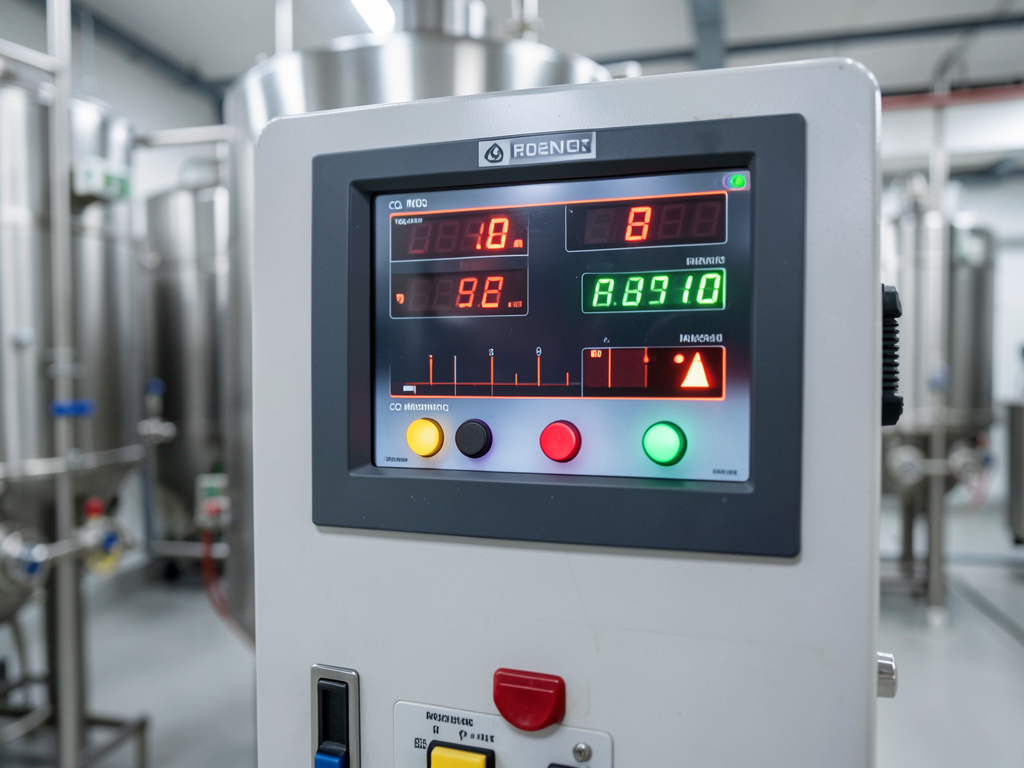
CO2 monitoring panel with digital readouts and alarm indicators for brewery safety systems
Energy recovery ventilator unit showing heat exchanger core and airflow direction indicators
Protect Your Brewery Investment
Your Crossroads brewery represents significant investment in equipment craftsmanship and community presence. Proper ventilation protects that investment by ensuring employee safety meeting code requirements and maintaining comfortable conditions for customers. Without professional ventilation design you risk costly code violations health hazards and structural damage that could force temporary closure.
Don’t wait for ventilation problems to force expensive emergency repairs or code violations. Call (816) 473-9177 today to schedule your brewery ventilation assessment. Our engineers will evaluate your current system identify improvement opportunities and provide a detailed plan to keep your Crossroads brewery operating safely and efficiently. Pick up the phone and call (816) 473-9177 before the next brewing cycle begins. Same day furnace repair services for families in Lee’s Summit.
{
“@context”: “https://schema.org”,
“@type”: “BlogPosting”,
“headline”: “Why Crossroads Brewery and Distillery Owners Need High Performance Ventilation Systems”,
“description”: “Crossroads brewery owners need proper ventilation to handle CO2, steam, and heat. Learn about safety, codes, and energy-efficient systems for your craft beverage business.”,
“wordCount”: 1830,
“datePublished”: “2026-05-02T11:00:00.000Z”,
“dateModified”: “2026-05-02T11:00:00.000Z”,
“inLanguage”: “en-US”,
“mainEntityOfPage”: {
“@type”: “WebPage”,
“@id”: “https://unitedhvackansascity.com”
},
“publisher”: {
“@type”: “LocalBusiness”,
“name”: “United HVAC Kansas City”,
“url”: “https://unitedhvackansascity.com”
},
“author”: {
“@type”: “Organization”,
“name”: “United HVAC Kansas City”,
“url”: “https://unitedhvackansascity.com”
},
“image”: {
“@type”: “ImageObject”,
“url”: “https://unitedhvackansascity.com/wp-content/uploads/2026/03/why-crossroads-brewery-and-distillery-owners-need-1.png”
}
}
{
“@context”: “https://schema.org”,
“@type”: “HVACBusiness”,
“name”: “United HVAC Kansas City”,
“url”: “https://unitedhvackansascity.com”,
“address”: {
“@type”: “PostalAddress”,
“addressLocality”: “Kansas City”
},
“areaServed”: {
“@type”: “City”,
“name”: “Kansas City”
}
}
{
“@context”: “https://schema.org”,
“@type”: “FAQPage”,
“mainEntity”: [
{
“@type”: “Question”,
“name”: “How much does a commercial brewery ventilation system cost?”,
“acceptedAnswer”: {
“@type”: “Answer”,
“text”: “Costs vary based on brewery size and system complexity. Small brewpubs typically invest $15000 to $30000 while large production breweries may spend $100000 or more. Factors affecting cost include equipment size energy recovery options and local code requirements.”
}
},
{
“@type”: “Question”,
“name”: “How long does installation take?”,
“acceptedAnswer”: {
“@type”: “Answer”,
“text”: “Most installations require one to two weeks for complete system replacement. Partial upgrades or additions may take less time. We work with your schedule to minimize business disruption often completing major work during off-hours or scheduled closures.”
}
},
{
“@type”: “Question”,
“name”: “Do I need permits for brewery ventilation upgrades?”,
“acceptedAnswer”: {
“@type”: “Answer”,
“text”: “Yes all commercial ventilation work requires permits from your local jurisdiction. KCMO and surrounding communities require mechanical permits plan reviews and inspections. We handle all permitting to ensure your project meets code requirements.”
}
},
{
“@type”: “Question”,
“name”: “What maintenance does a brewery ventilation system need?”,
“acceptedAnswer”: {
“@type”: “Answer”,
“text”: “Regular maintenance includes filter changes duct cleaning and system testing. Most systems require quarterly professional service and monthly basic maintenance. We offer maintenance agreements to keep your system running efficiently year-round.”
}
},
{
“@type”: “Question”,
“name”: “Can I upgrade my existing system instead of replacing it?”,
“acceptedAnswer”: {
“@type”: “Answer”,
“text”: “Many breweries can upgrade components rather than replace entire systems. Adding CO2 monitoring upgrading exhaust hoods or installing energy recovery units can improve performance without full replacement. We evaluate your current system to recommend cost-effective upgrades.”
}
}
]
}
{
“@context”: “https://schema.org”,
“@type”: “BreadcrumbList”,
“itemListElement”: [
{
“@type”: “ListItem”,
“position”: 1,
“name”: “Home”,
“item”: “https://unitedhvackansascity.com”
},
{
“@type”: “ListItem”,
“position”: 2,
“name”: “Blog”,
“item”: “https://unitedhvackansascity.com/blog”
},
{
“@type”: “ListItem”,
“position”: 3,
“name”: “Why Crossroads Brewery and Distillery Owners Need High Performance Ventilation Systems”
}
]
}
{
“@context”: “https://schema.org”,
“@type”: “Service”,
“serviceType”: “HVAC”,
“provider”: {
“@type”: “LocalBusiness”,
“name”: “United HVAC Kansas City”,
“url”: “https://unitedhvackansascity.com”
},
“areaServed”: {
“@type”: “City”,
“name”: “Kansas City”
},
“description”: “Crossroads brewery owners need proper ventilation to handle CO2, steam, and heat. Learn about safety, codes, and energy-efficient systems for your craft beverage business.”
}