
If your Shawnee home feels like an oven in July and your AC never stops running, the problem might not be your air conditioner at all. Poor attic ventilation can trap superheated air above your living space, forcing your AC to work overtime and sending your energy bills through the roof. In Kansas City’s climate, where summer temperatures regularly hit 100°F and humidity stays oppressive, that trapped heat can push attic temperatures to 150°F or higher. Energy Star ventilation recommendations.
The good news is that improving your attic ventilation can reduce cooling costs by 10-15% and extend your HVAC system’s lifespan by 3-5 years. It’s not just about comfort—it’s about protecting your investment and keeping your home healthy year-round.
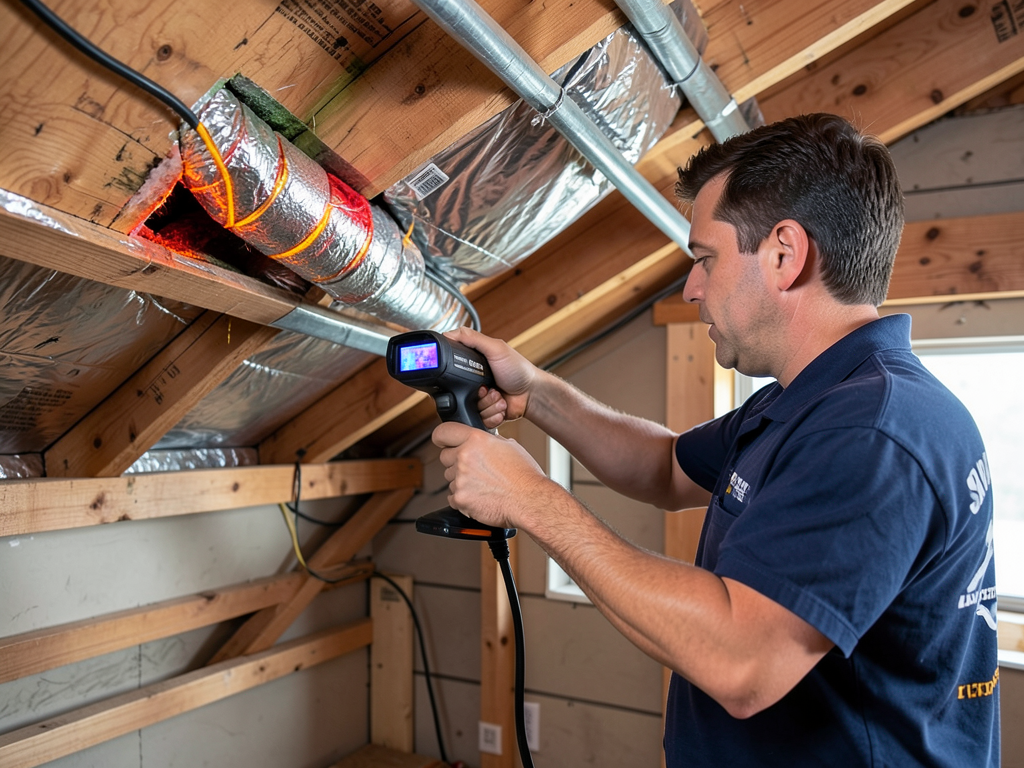
How Attic Ventilation Impacts AC Efficiency in Kansas City Homes
Your attic acts like a giant heat trap during Kansas City summers. When the sun beats down on your roof, heat transfers through the shingles and radiates into the attic space. Without proper ventilation, this superheated air has nowhere to go. It builds up pressure against your ceiling, radiating heat downward into your living spaces and making your AC work harder than necessary.
The physics are straightforward: heat rises and seeks equilibrium. In a poorly ventilated attic, that means hot air stays trapped, creating a thermal barrier between your AC and the rooms you’re trying to cool. Your system runs longer cycles, struggles to maintain temperature, and wears out faster.
In Shawnee and the surrounding Northland area, we see this pattern constantly. Homes built before the 2000s often lack adequate ventilation, and even newer homes can have design flaws that trap heat. The combination of our region’s high humidity and temperature extremes makes proper ventilation critical for both summer cooling and winter moisture control.
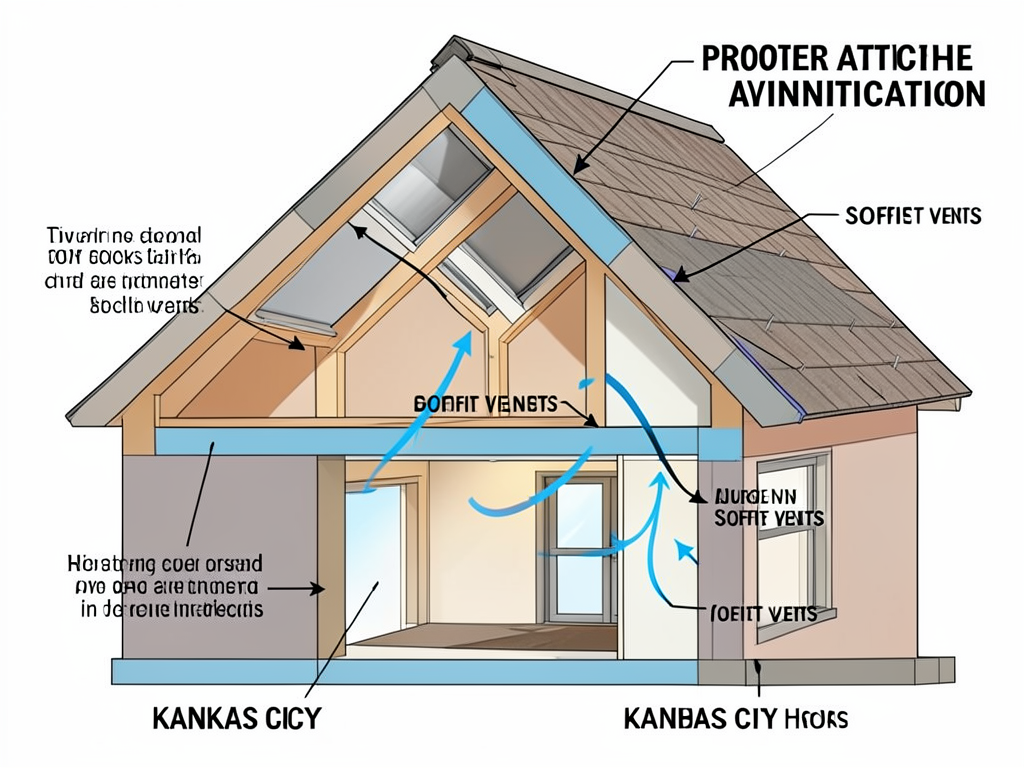
The Physics of Heat Transfer: Why Your AC is Working Overtime
Understanding how heat moves through your home helps explain why attic ventilation matters so much. Heat transfers through three mechanisms: conduction, convection, and radiation. In your attic, radiation from the hot roof deck is the primary culprit.
Your roof absorbs solar radiation throughout the day. On a 95°F Kansas City afternoon, that roof surface can reach 150-160°F. This heat radiates downward into the attic space, warming everything it touches—including your ceiling joists, insulation, and the drywall beneath.
Without ventilation to carry this heat away, it accumulates throughout the day. By late afternoon, your attic becomes a pressure cooker. The hot air presses against your ceiling, conducting heat through the drywall and into your living spaces. Your AC responds by running continuously, trying to overcome this constant heat gain.
This creates a vicious cycle. The longer your AC runs, the more it heats up itself, reducing its efficiency further. The compressor works harder, drawing more electricity and generating more heat. In extreme cases, we’ve seen attic temperatures cause AC units to shut down completely from overheating.
The solution isn’t just about cooling your attic—it’s about creating continuous airflow that carries heat away before it can build up. This is where proper ventilation design becomes critical.
Types of Attic Ventilation Systems (Passive vs. Active)
Attic ventilation falls into two categories: passive systems that rely on natural airflow, and active systems that use powered fans to move air. Each has its place in Kansas City homes, depending on your attic design and local conditions. Local HVAC experts for boiler maintenance and repair near the Country Club Plaza.
Passive ventilation works through the principle of convection. Hot air rises and exits through upper vents, creating negative pressure that draws cooler air in through lower vents. This continuous cycle requires no electricity but depends on proper vent sizing and placement.
The most effective passive system combines ridge vents along the peak of your roof with soffit vents under the eaves. This creates a natural airflow path from bottom to top. The ridge vent allows hot air to escape while the soffit vents draw in cooler outside air. When properly sized, this system can exchange the entire attic volume every few minutes.
Active ventilation uses powered fans to force air movement. Solar attic fans are popular in Kansas City because they run hardest when you need them most—on sunny days. These fans mount on the roof and can move 1,000-1,500 cubic feet of air per minute. The downside is they require direct sunlight and can pull conditioned air from your living space if not properly sealed.
Gable-mounted fans are another option for homes with gable ends. These electric fans mount in the wall at the end of the attic and can move significant air volume. However, they require wiring and can be noisy.
For Kansas City’s climate, we typically recommend a hybrid approach. Passive ridge and soffit vents provide continuous baseline ventilation, while a solar fan supplements during extreme heat waves. This combination handles our humidity and temperature extremes without the energy cost of running electric fans constantly.
Signs of Poor Attic Ventilation
How do you know if your attic ventilation needs improvement? Several warning signs indicate trouble, and many Kansas City homeowners are surprised to learn their symptoms point to ventilation issues rather than AC problems.
The most obvious sign is extreme heat upstairs. If your second floor feels 8-10°F warmer than downstairs on hot days, your attic is likely trapping heat. This temperature differential forces your AC to work much harder than necessary.
High energy bills during summer months often indicate ventilation problems. If your usage spikes while your thermostat setting stays the same, your system is running longer cycles to overcome heat gain from above.
Premature shingle aging is another red flag. Shingles baked by superheated attic air age faster and can curl or crack prematurely. In Kansas City’s hail-prone climate, this combination of heat and storm damage can destroy a roof years early. Storm Damage HVAC Repair.
Ice dams in winter might seem unrelated, but they’re actually a symptom of poor summer ventilation. When your attic stays hot in summer, it affects the entire roof structure. Come winter, uneven melting and freezing creates ice dams that damage gutters and roofing.
High indoor humidity levels, even with the AC running, suggest your system can’t keep up with moisture load. Poor ventilation allows humidity to build up in the attic, which then migrates into your living spaces.
AC short-cycling—where the system turns on and off rapidly without completing full cooling cycles—can indicate the system is overheating from trying to cool against a superheated attic barrier.
Estimated Savings: Real Data for Kansas City Homeowners
Homeowners who improve their attic ventilation typically see 10-15% reductions in cooling costs. For a typical Shawnee home spending $200 monthly on cooling during peak summer, that’s $20-30 in monthly savings. Over a five-month cooling season, you’re looking at $100-150 in direct energy savings.
The longevity benefit is harder to quantify but equally important. By reducing the workload on your AC, proper ventilation can extend system life by 3-5 years. Given that a new AC system costs $4,000-8,000 installed, that’s $800-1,600 in avoided replacement costs per year of extended life.
Local utility Evergy offers rebates for attic insulation and air sealing improvements. While ventilation itself isn’t always covered, the package deals that include ventilation improvements can qualify for incentives that offset 20-30% of the improvement costs.
The payback period varies by home. Homes with severe ventilation problems might see payback in 2-3 years through energy savings alone. For newer homes with minor issues, the benefits are more about comfort and system longevity than dramatic cost savings.
The Role of Insulation and Air Sealing
Ventilation alone isn’t enough. It works in concert with proper insulation and air sealing to create an effective thermal envelope. Think of it as a three-legged stool: ventilation removes heat, insulation blocks heat transfer, and air sealing prevents conditioned air from escaping.
For Kansas City’s climate zone (Zone 4), building codes recommend R-49 to R-60 insulation in attics. This translates to 15-20 inches of fiberglass batts or 12-16 inches of blown-in cellulose. Many older Shawnee homes have only R-19 to R-30, leaving them vulnerable to heat gain.
Air sealing is often overlooked but critical. Gaps around light fixtures, plumbing penetrations, and attic access hatches allow conditioned air to escape into the attic. This forces your AC to replace that lost air, wasting energy. A proper sealing job can reduce this infiltration by 30-50%.
The interaction between ventilation and insulation is crucial. Too much ventilation with inadequate insulation actually increases energy costs by allowing too much outside air exchange. The goal is balanced airflow that removes excess heat without creating drafts or moisture problems.
We use thermal imaging cameras to identify heat leaks and verify insulation coverage. This diagnostic tool shows exactly where your thermal envelope is compromised, allowing targeted improvements rather than guesswork.
During our inspections, we also check for proper baffle installation. Baffles maintain airflow channels from soffit vents to the attic space, preventing insulation from blocking ventilation paths. Without baffles, even the best ventilation system can’t function properly.
Local Building Codes and Standards
Kansas City and surrounding municipalities follow the International Residential Code (IRC), which requires 1 square foot of net free ventilating area (NFVA) for every 150 square feet of attic floor space. This can be reduced to 1:300 if certain conditions are met, such as balanced ventilation with vapor barriers.
The IRC also mandates that at least 40-50% of the required ventilation area be located in the upper portion of the attic, with the remainder in the lower portion. This ensures proper airflow stratification and prevents dead zones where heat can accumulate.
For homes in Shawnee and the Northland, we also consider local weather patterns. Our region’s high humidity means ventilation systems must handle moisture loads, not just heat. This affects vent selection and placement to prevent condensation issues.
ASHRAE Standard 62.2 provides additional guidance on ventilation rates for acceptable indoor air quality. While primarily focused on whole-house ventilation, it influences attic ventilation design by emphasizing the importance of proper air exchange rates. ASHRAE ventilation standards.
The EPA’s Energy Star program recommends specific ventilation improvements for existing homes, including sealing attic bypasses and ensuring proper insulation levels. Homes meeting these standards typically see 15-20% energy savings compared to standard construction.
Choosing the Right Ventilation Solution for Your Home
Not every home needs the same ventilation approach. The right solution depends on your attic design, roof configuration, and existing problems. Here’s how we evaluate different scenarios:
For homes with gable roofs and accessible attics, ridge and soffit ventilation is usually most effective. This passive system works well in our climate and requires minimal maintenance. The key is ensuring proper vent sizing—undersized vents won’t move enough air, while oversized vents can create drafts and moisture problems.
Homes with hip roofs or complex rooflines may need powered ventilation. These designs often create dead zones where hot air can accumulate. A combination of passive vents for baseline airflow and powered fans for targeted air movement typically works best.
Historic homes in areas like downtown Shawnee present unique challenges. These homes often have limited attic access and may contain asbestos or lead paint. Ventilation improvements must be done carefully to preserve the structure while improving efficiency. Why historic Brookside homes need specialized high velocity AC systems.
New construction gives you the opportunity to design optimal ventilation from the start. We recommend ridge and soffit vents sized at the 1:300 ratio rather than the minimum 1:150, providing extra capacity for our extreme weather.
The decision between passive and active systems often comes down to cost and complexity. Passive systems have higher upfront costs for materials but no operating costs. Active systems are cheaper to install but require electricity and maintenance.
We always recommend starting with a professional assessment. Using thermal imaging and airflow measurements, we can identify exactly where your ventilation is failing and recommend targeted improvements rather than blanket solutions.
Professional Installation vs. DIY
While some ventilation improvements are DIY-friendly, others require professional expertise. The difference often comes down to safety, code compliance, and long-term effectiveness.
Simple tasks like adding more insulation or sealing obvious air leaks can be done by homeowners. However, installing ridge vents, cutting soffit openings, or mounting powered fans involves working on your roof and potentially modifying structural elements.
Professional installation ensures compliance with building codes and manufacturer warranties. Improper vent installation can void roofing warranties and create new problems like roof leaks or inadequate ventilation.
We use specialized equipment for professional assessments. Blower door tests measure air leakage, while thermal imaging identifies heat patterns invisible to the naked eye. These diagnostics reveal problems that DIY inspections miss.
Safety is another consideration. Working in attics involves navigating tight spaces, avoiding electrical wiring, and dealing with insulation that can irritate skin and lungs. Professional technicians have the equipment and training to work safely.
Cost-wise, professional installation typically runs $1,500-3,000 for a complete ventilation upgrade, depending on your home’s size and existing conditions. While this seems expensive, it’s often less than the cost of an AC repair or the energy wasted over a single summer season. Same day furnace repair services for families in Lee’s Summit.
Maintenance and Long-Term Care
Once you’ve improved your attic ventilation, maintaining it ensures continued performance. Ventilation systems are relatively low-maintenance, but neglect can undo your improvements.
Annually inspect your vents for debris, bird nests, or damage. Soffit vents are particularly vulnerable to clogging from insulation or pest activity. A quick visual check from the ground can identify obvious problems.
After severe storms, check ridge vents and other roof-mounted components for damage. Kansas City’s frequent thunderstorms and occasional hail can damage vent covers or shift components out of alignment.
Every few years, consider having a professional inspect your ventilation system. They can measure airflow rates, check for moisture problems, and ensure your system is still meeting your home’s needs as it ages.
Watch for new warning signs. If you notice changes in your energy bills, comfort levels, or ice dam formation, your ventilation needs may have changed due to home improvements, aging insulation, or changing household patterns.
Document your improvements. Keep records of what was installed, when, and by whom. This information helps future technicians understand your system and can be valuable if you sell your home.
Consider integrating your ventilation with smart home technology. Some modern systems include humidity sensors and automatic fans that adjust based on attic conditions. While not necessary, these features can optimize performance and provide early warning of problems.
Environmental and Health Benefits
Beyond energy savings, proper attic ventilation offers environmental and health benefits that many homeowners don’t consider. These advantages add to the overall value of ventilation improvements.
Reduced energy consumption means lower carbon emissions. A 10-15% reduction in AC usage translates to approximately 1,000-1,500 pounds of CO2 emissions avoided annually for a typical home. Over the system’s lifetime, that’s several tons of greenhouse gases prevented.
Better moisture control prevents mold and mildew growth. Kansas City’s high humidity creates ideal conditions for these problems in poorly ventilated attics. Mold spores can migrate into living spaces, causing respiratory issues and allergic reactions.
Improved indoor air quality results from better moisture control and reduced AC cycling. When your system runs continuously, it can’t effectively filter and dehumidify your air. Proper ventilation allows for more efficient operation and better air quality.
Extended roof life reduces construction waste. Premature roof replacement generates significant waste—typically 2-3 tons of asphalt shingles per average home. By preventing heat damage, ventilation helps your roof reach its full lifespan.
Reduced noise pollution occurs when your AC doesn’t run constantly. The compressor and fan noise that many homeowners find annoying decreases significantly when the system can cool efficiently without continuous operation.
Enhanced home durability results from better moisture management. Water damage from condensation or ice dams can compromise structural elements, leading to costly repairs. Proper ventilation protects your home’s integrity over time. Who to call for 24 hour emergency AC repair in Shawnee when the heat index spikes.
Frequently Asked Questions
How do I know if my attic ventilation is inadequate?
Signs include extreme heat upstairs, high energy bills, premature shingle aging, ice dams in winter, high indoor humidity, and AC short-cycling. A professional assessment using thermal imaging can definitively identify ventilation problems.
Can I install attic ventilation myself?
Simple tasks like adding insulation or sealing air leaks are DIY-friendly. However, installing ridge vents, cutting soffit openings, or mounting powered fans involves roof work and may require permits. Professional installation ensures code compliance and proper function.
How much does professional attic ventilation improvement cost?
Professional installation typically ranges from $1,500 to $3,000 depending on your home’s size and existing conditions. This investment often pays for itself within 2-3 years through energy savings and extended AC life.
Will better attic ventilation make my home cooler in winter?
Ventilation helps year-round. In winter, it prevents moisture buildup that can lead to condensation and ice dams. While it doesn’t actively heat your home, it maintains a healthier attic environment that protects your roof and insulation year-round.
How long does it take to see results from ventilation improvements?
Most homeowners notice improved comfort within days of installation. Energy savings typically appear on the first full billing cycle after improvements. The full benefit of extended AC life accumulates over years of reduced system stress.
Ready to stop wasting money on cooling costs and start enjoying a more comfortable home? Better attic ventilation might be the solution you’ve been looking for. Call (816) 473-9177 today to schedule your professional attic assessment. Our experienced technicians will evaluate your current system, identify problems, and recommend targeted improvements that can reduce your cooling costs by 10-15% while extending your AC’s life. Don’t wait until the next heat wave hits—pick up the phone and call (816) 473-9177 before your AC works itself to death trying to cool a superheated attic.
You may also find this helpful. How to Finally Heat and Cool Your Garage in Lee’s Summit for a Year-Round Workshop.
{
“@context”: “https://schema.org”,
“@type”: “BlogPosting”,
“headline”: “Why Better Attic Ventilation Might Be the Secret to Lowering Your Shawnee Cooling Bills”,
“description”: “Discover how proper attic ventilation can cut your Shawnee cooling costs by 10-15% and extend your AC’s life. Learn local solutions for Kansas City’s extreme heat and humidity.”,
“wordCount”: 2975,
“datePublished”: “2026-03-26T15:18:00.000Z”,
“dateModified”: “2026-03-26T15:18:00.000Z”,
“inLanguage”: “en-US”,
“mainEntityOfPage”: {
“@type”: “WebPage”,
“@id”: “https://unitedhvackansascity.com”
},
“publisher”: {
“@type”: “LocalBusiness”,
“name”: “United HVAC Kansas City”,
“url”: “https://unitedhvackansascity.com”
},
“author”: {
“@type”: “Organization”,
“name”: “United HVAC Kansas City”,
“url”: “https://unitedhvackansascity.com”
},
“image”: {
“@type”: “ImageObject”,
“url”: “https://unitedhvackansascity.com/wp-content/uploads/2026/03/why-better-attic-ventilation-might-be-the-secret-t-1.png”
}
}
{
“@context”: “https://schema.org”,
“@type”: “HVACBusiness”,
“name”: “United HVAC Kansas City”,
“url”: “https://unitedhvackansascity.com”,
“address”: {
“@type”: “PostalAddress”,
“addressLocality”: “Kansas City”
},
“areaServed”: {
“@type”: “City”,
“name”: “Kansas City”
}
}
{
“@context”: “https://schema.org”,
“@type”: “FAQPage”,
“mainEntity”: [
{
“@type”: “Question”,
“name”: “How do I know if my attic ventilation is inadequate?”,
“acceptedAnswer”: {
“@type”: “Answer”,
“text”: “Signs include extreme heat upstairs, high energy bills, premature shingle aging, ice dams in winter, high indoor humidity, and AC short-cycling. A professional assessment using thermal imaging can definitively identify ventilation problems.”
}
},
{
“@type”: “Question”,
“name”: “Can I install attic ventilation myself?”,
“acceptedAnswer”: {
“@type”: “Answer”,
“text”: “Simple tasks like adding insulation or sealing air leaks are DIY-friendly. However, installing ridge vents, cutting soffit openings, or mounting powered fans involves roof work and may require permits. Professional installation ensures code compliance and proper function.”
}
},
{
“@type”: “Question”,
“name”: “How much does professional attic ventilation improvement cost?”,
“acceptedAnswer”: {
“@type”: “Answer”,
“text”: “Professional installation typically ranges from $1,500 to $3,000 depending on your home’s size and existing conditions. This investment often pays for itself within 2-3 years through energy savings and extended AC life.”
}
},
{
“@type”: “Question”,
“name”: “Will better attic ventilation make my home cooler in winter?”,
“acceptedAnswer”: {
“@type”: “Answer”,
“text”: “Ventilation helps year-round. In winter, it prevents moisture buildup that can lead to condensation and ice dams. While it doesn’t actively heat your home, it maintains a healthier attic environment that protects your roof and insulation year-round.”
}
}
]
}
{
“@context”: “https://schema.org”,
“@type”: “BreadcrumbList”,
“itemListElement”: [
{
“@type”: “ListItem”,
“position”: 1,
“name”: “Home”,
“item”: “https://unitedhvackansascity.com”
},
{
“@type”: “ListItem”,
“position”: 2,
“name”: “Blog”,
“item”: “https://unitedhvackansascity.com/blog”
},
{
“@type”: “ListItem”,
“position”: 3,
“name”: “Why Better Attic Ventilation Might Be the Secret to Lowering Your Shawnee Cooling Bills”
}
]
}
{
“@context”: “https://schema.org”,
“@type”: “Service”,
“serviceType”: “HVAC”,
“provider”: {
“@type”: “LocalBusiness”,
“name”: “United HVAC Kansas City”,
“url”: “https://unitedhvackansascity.com”
},
“areaServed”: {
“@type”: “City”,
“name”: “Kansas City”
},
“description”: “Discover how proper attic ventilation can cut your Shawnee cooling costs by 10-15% and extend your AC’s life. Learn local solutions for Kansas City’s extreme heat and humidity.”
}