
How to Finally Heat and Cool Your Garage in Lee’s Summit for a Year-Round Workshop
Lee’s Summit summers hit 90 degrees with humidity that feels like a sauna. Winters drop below freezing with wind chills that make your tools feel like ice picks. That’s why your garage sits unused half the year. A properly sized HVAC system turns that wasted space into a year-round workshop, home gym, or classic car haven. The right solution depends on your garage size, insulation, and how you use the space.
Why Condition Your Lee’s Summit Garage
Unconditioned garages waste square footage and risk damage to stored items. Missouri’s temperature swings cause condensation that rusts tools and warps wood. Freezing pipes in attached garages can burst and flood your home. A heated garage keeps your workshop productive during winter weekends. A cooled garage protects your classic car’s interior from cracking and prevents your home gym equipment from overheating in July. Storm Damage HVAC Repair.
Top Garage Heating and Cooling Options
Ductless mini-splits work best for most Lee’s Summit garages. These wall-mounted units heat and cool without ductwork. A 12,000 BTU model handles a standard two-car garage up to 500 square feet. Installation takes one day and costs less than extending your home’s ductwork. The inverter technology adjusts output to maintain exact temperatures while using less electricity than traditional systems.
Gas-fired unit heaters excel in large workshops or three-car garages. These ceiling-mounted units produce 30,000 to 100,000 BTUs of heat. They work when power fails if you add a battery backup. The initial cost runs higher than mini-splits, but operating costs stay lower for spaces used daily during Missouri winters.
Heat pumps offer the most efficient option for year-round comfort. Modern cold-climate heat pumps work down to -15 degrees Fahrenheit. They cost more upfront but qualify for federal tax credits and local utility rebates. The reversing valve switches between heating and cooling automatically. Local HVAC experts for boiler maintenance and repair near the Country Club Plaza.
The Importance of Insulation and Sizing
Without proper insulation, even the best HVAC system wastes energy. Lee’s Summit falls in Zone 4 for insulation requirements. Walls need R-13 to R-15 fiberglass batts. Ceilings require R-30 to R-38 depending on your truss height. Garage doors need insulated panels with R-8 minimum. The concrete slab loses heat through the ground. Adding foam board under your workbench prevents cold feet in winter.
BTU calculations matter more in garages than living spaces. A two-car garage needs 18,000 to 24,000 BTUs for heating in Lee’s Summit’s climate zone. Three-car garages require 30,000 BTUs minimum. Cooling loads run 20% lower than heating loads. Oversized units short cycle, causing humidity problems and reducing equipment life.
Proper ventilation prevents carbon monoxide buildup from vehicles and workshop fumes. Fresh air intakes meet IMC Section 403 requirements. Exhaust fans remove paint fumes and sawdust. The system should exchange air four times per hour for workshop use.
Our Local Installation Process
We start with a site assessment at your Lee’s Summit home. Our NATE-certified technicians measure your garage, check electrical capacity, and evaluate insulation. They calculate heat loss using Manual J methods specific to Missouri’s climate. The assessment includes checking for gas line availability if you choose a unit heater.
Permit requirements vary by Lee’s Summit address. Most garage HVAC installs need mechanical permits under the International Mechanical Code. Gas line extensions require additional permits. We handle all paperwork and inspections. The city typically approves permits within 48 hours for garage projects.
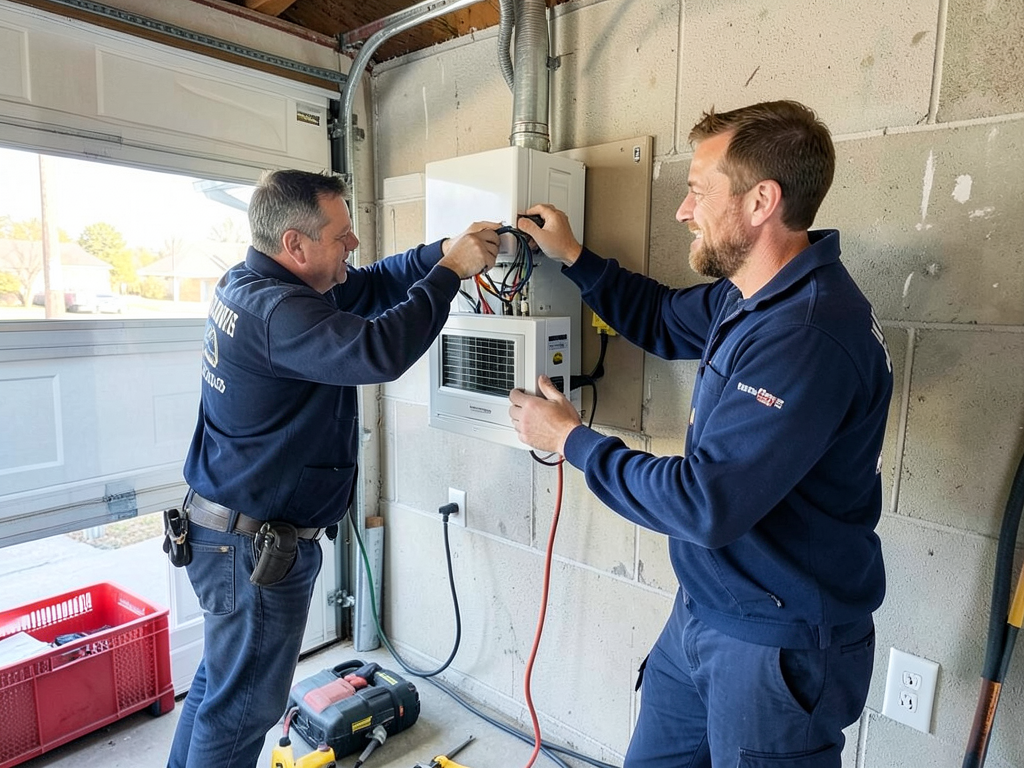
Installation day arrives with all materials on-site. Mini-split installs take 6 to 8 hours. Unit heaters require 2 days including gas line work. We protect your vehicles and workshop items during installation. The final walkthrough includes system operation training and maintenance schedule.
Maintenance keeps your system running efficiently. Annual tune-ups prevent breakdowns during extreme weather. Filter changes every three months improve airflow and reduce energy costs. We offer maintenance agreements with priority scheduling for Lee’s Summit customers.. Read more about Building a Custom Wine Cellar with Specialized Climate Control in Loch Lloyd.
What Our Lee’s Summit Neighbors Say
Mark from Lakewood installed a mini-split last winter. “My workshop stays 70 degrees even when it’s 20 outside. The best investment I made for my hobby business.” Sarah in Raintree Lake chose a heat pump for her home gym. “It’s quiet, efficient, and I use it every day now.”
Tom from Lee’s Summit proper needed heating for his classic car collection. “The unit heater keeps humidity at 45% year-round. No more musty smells or rust on chrome.” These real installations show how the right system transforms garage space.
Project spotlights include a 24×24 garage in Greenwood Hills with a 18,000 BTU mini-split. Another in The Hamps with a 30,000 BTU unit heater for a woodworking shop. Each install considered the specific use case and local building requirements.
Energy Efficiency and Cost Factors
SEER2 ratings measure cooling efficiency. Mini-splits range from SEER2 18 to 24. Higher numbers mean lower electricity bills. HSPF2 ratings measure heating efficiency. Cold-climate heat pumps achieve HSPF2 9.5 or higher. These ratings qualify for federal tax credits up to $2,000.
Operating costs depend on usage patterns. A workshop used 20 hours weekly costs $30 to $50 monthly to heat in winter. Cooling runs $20 to $35 monthly during summer. Unit heaters using natural gas cost less to operate but require gas line installation.
Energy Star certified equipment meets strict efficiency guidelines. The EPA mandates minimum SEER2 15 for split systems. Our installations exceed these minimums by 10% to 20%. This efficiency reduces your carbon footprint while saving money. EPA Energy Star HVAC standards.
Moisture Control in Missouri’s Humidity
Lee’s Summit humidity averages 70% in summer. Unconditioned garages reach 85% to 90% relative humidity. This moisture causes mold growth, rust, and wood warping. HVAC systems with proper dehumidification maintain 45% to 55% humidity year-round.
Dehumidification mode on mini-splits removes 2 to 3 pints of water per hour. This prevents the “cold and damp” feeling common in unconditioned spaces. Desiccant dehumidifiers work as backup for extremely humid periods.
Ventilation strategies matter in Missouri’s climate. Energy recovery ventilators transfer heat between incoming and outgoing air. This pre-conditions fresh air while removing stale air. The systems reduce HVAC load by 15% to 20%.
Comparing Your Options
| System Type | Best For | Installation Time | Operating Cost |
|---|---|---|---|
| Ductless Mini-Split | Standard garages, occasional use | 1 day | $35-$50/month |
| Gas Unit Heater | Large workshops, daily use | 2 days | $25-$40/month |
| Heat Pump | Year-round comfort, efficiency focus | 1-2 days | $30-$45/month |
Making Your Decision
Start by measuring your garage. Length times width times height gives cubic feet. A standard two-car garage measures 20x20x8 feet or 3,200 cubic feet. This needs 18,000 BTUs for heating.
Consider your usage. Weekend hobbyists need less capacity than daily workshop users. Home gyms require cooling priority. Classic car collectors need humidity control. Your primary use determines the best system type.
Budget factors include equipment, installation, and operating costs. Mini-splits cost $3,500 to $5,000 installed. Unit heaters run $4,000 to $6,500 with gas line work. Heat pumps cost $5,000 to $7,000 but qualify for more rebates.
Next Steps for Lee’s Summit Homeowners
Schedule a free assessment to determine your exact needs. We measure your space, evaluate insulation, and calculate loads. The assessment takes 30 minutes and includes a written quote with equipment options.
Permitting happens after you approve the quote. We submit applications to Lee’s Summit Building Safety. Most permits approve within two business days. We coordinate inspections so your project stays on schedule.
Installation typically completes within two weeks of approval. We work around your schedule and protect your belongings. The final system includes warranty registration and maintenance planning.
Call (816) 473-9177 today to schedule your garage HVAC assessment. Stop letting Missouri’s weather control when you can use your garage. Transform that space into comfortable, usable square footage you’ll enjoy all year.
Frequently Asked Questions
How much does it cost to heat and cool a garage in Lee’s Summit?
Installation costs range from $3,500 to $7,000 depending on system type and garage size. Operating costs average $30 to $50 monthly. We provide free quotes specific to your garage dimensions and usage needs.
Do I need a permit for garage HVAC installation?
Yes, Lee’s Summit requires mechanical permits for garage HVAC systems. Gas line extensions need additional permits. We handle all permitting and inspections as part of our service.
What size HVAC system do I need for my garage?
A standard two-car garage needs 18,000 to 24,000 BTUs for heating. Three-car garages require 30,000 BTUs minimum. We calculate exact loads based on your garage dimensions, insulation, and local climate factors.
Can I install HVAC myself in my garage?
Missouri law requires licensed HVAC contractors for system installation. DIY installs void warranties and may violate building codes. Professional installation ensures safety, efficiency, and code compliance.
How long does garage HVAC installation take?
Mini-split installations complete in one day. Unit heaters require two days including gas line work. Most projects finish within two weeks of permit approval. We protect your belongings during installation. For more information, visit Energy.gov heat pump guide.
{
“@context”: “https://schema.org”,
“@type”: “BlogPosting”,
“headline”: “How to Finally Heat and Cool Your Garage in Lee’s Summit for a Year-Round Workshop”,
“description”: “Stop wasting garage space. Learn Lee’s Summit’s best HVAC solutions for workshops, from mini-splits to unit heaters, with local codes and insulation tips.”,
“wordCount”: 1501,
“datePublished”: “2026-03-17T15:59:00.000Z”,
“dateModified”: “2026-03-17T15:59:00.000Z”,
“inLanguage”: “en-US”,
“mainEntityOfPage”: {
“@type”: “WebPage”,
“@id”: “https://unitedhvackansascity.com”
},
“publisher”: {
“@type”: “LocalBusiness”,
“name”: “United HVAC Kansas City”,
“url”: “https://unitedhvackansascity.com”
},
“author”: {
“@type”: “Organization”,
“name”: “United HVAC Kansas City”,
“url”: “https://unitedhvackansascity.com”
},
“image”: {
“@type”: “ImageObject”,
“url”: “https://unitedhvackansascity.com/wp-content/uploads/2026/03/how-to-finally-heat-and-cool-your-garage-in-lee-s-1.png”
}
}
{
“@context”: “https://schema.org”,
“@type”: “HVACBusiness”,
“name”: “United HVAC Kansas City”,
“url”: “https://unitedhvackansascity.com”,
“address”: {
“@type”: “PostalAddress”,
“addressLocality”: “Kansas City”
},
“areaServed”: {
“@type”: “City”,
“name”: “Kansas City”
}
}
{
“@context”: “https://schema.org”,
“@type”: “FAQPage”,
“mainEntity”: [
{
“@type”: “Question”,
“name”: “How much does it cost to heat and cool a garage in Lee’s Summit?”,
“acceptedAnswer”: {
“@type”: “Answer”,
“text”: “Installation costs range from $3,500 to $7,000 depending on system type and garage size. Operating costs average $30 to $50 monthly. We provide free quotes specific to your garage dimensions and usage needs.”
}
},
{
“@type”: “Question”,
“name”: “Do I need a permit for garage HVAC installation?”,
“acceptedAnswer”: {
“@type”: “Answer”,
“text”: “Yes, Lee’s Summit requires mechanical permits for garage HVAC systems. Gas line extensions need additional permits. We handle all permitting and inspections as part of our service.”
}
},
{
“@type”: “Question”,
“name”: “What size HVAC system do I need for my garage?”,
“acceptedAnswer”: {
“@type”: “Answer”,
“text”: “A standard two-car garage needs 18,000 to 24,000 BTUs for heating. Three-car garages require 30,000 BTUs minimum. We calculate exact loads based on your garage dimensions, insulation, and local climate factors.”
}
},
{
“@type”: “Question”,
“name”: “Can I install HVAC myself in my garage?”,
“acceptedAnswer”: {
“@type”: “Answer”,
“text”: “Missouri law requires licensed HVAC contractors for system installation. DIY installs void warranties and may violate building codes. Professional installation ensures safety, efficiency, and code compliance.”
}
},
{
“@type”: “Question”,
“name”: “How long does garage HVAC installation take?”,
“acceptedAnswer”: {
“@type”: “Answer”,
“text”: “Mini-split installations complete in one day. Unit heaters require two days including gas line work. Most projects finish within two weeks of permit approval. We protect your belongings during installation. For more information, visit Energy.gov heat pump guide.”
}
}
]
}
{
“@context”: “https://schema.org”,
“@type”: “BreadcrumbList”,
“itemListElement”: [
{
“@type”: “ListItem”,
“position”: 1,
“name”: “Home”,
“item”: “https://unitedhvackansascity.com”
},
{
“@type”: “ListItem”,
“position”: 2,
“name”: “Blog”,
“item”: “https://unitedhvackansascity.com/blog”
},
{
“@type”: “ListItem”,
“position”: 3,
“name”: “How to Finally Heat and Cool Your Garage in Lee’s Summit for a Year-Round Workshop”
}
]
}
{
“@context”: “https://schema.org”,
“@type”: “Service”,
“serviceType”: “HVAC”,
“provider”: {
“@type”: “LocalBusiness”,
“name”: “United HVAC Kansas City”,
“url”: “https://unitedhvackansascity.com”
},
“areaServed”: {
“@type”: “City”,
“name”: “Kansas City”
},
“description”: “Stop wasting garage space. Learn Lee’s Summit’s best HVAC solutions for workshops, from mini-splits to unit heaters, with local codes and insulation tips.”
}