
Geothermal heating and cooling systems are transforming how Parkville homeowners manage their energy costs and comfort. With Missouri’s extreme seasonal temperature swings and Parkville’s unique clay-heavy soil composition, ground-source heat pumps offer a proven solution that delivers 30-70% lower utility bills compared to traditional HVAC systems. Energy Star ground source heat pumps.
The technology works by tapping into the earth’s constant underground temperature, which stays around 55°F year-round in the Kansas City region. This stability means your system doesn’t fight against outdoor air temperature extremes, reducing wear and tear while maximizing efficiency. For Parkville residents dealing with summer humidity that regularly exceeds 70% and winter lows that can drop below zero, this consistent performance translates to real comfort and savings.. Read more about Slash your winter energy bills in Bonner Springs with a hybrid dual fuel heating system.
Beyond the immediate financial benefits, geothermal systems qualify for the federal 30% tax credit under Section 25D, making the upfront investment more accessible. Combined with local utility rebates from Evergy and Spire, many Parkville homeowners are seeing payback periods of just 5-7 years on systems that last 25+ years for the ground loop and 15-20 years for the heat pump unit. Federal tax credits for geothermal systems.
Understanding the local geology is crucial for proper system design. Parkville’s clay soil has specific thermal conductivity properties that affect loop sizing and installation depth. Our IGSHPA-certified technicians conduct detailed soil analysis before any drilling begins, ensuring your system is optimized for maximum efficiency in your specific property conditions. Local HVAC experts for boiler maintenance and repair near the Country Club Plaza.
How geothermal systems work in Parkville’s climate
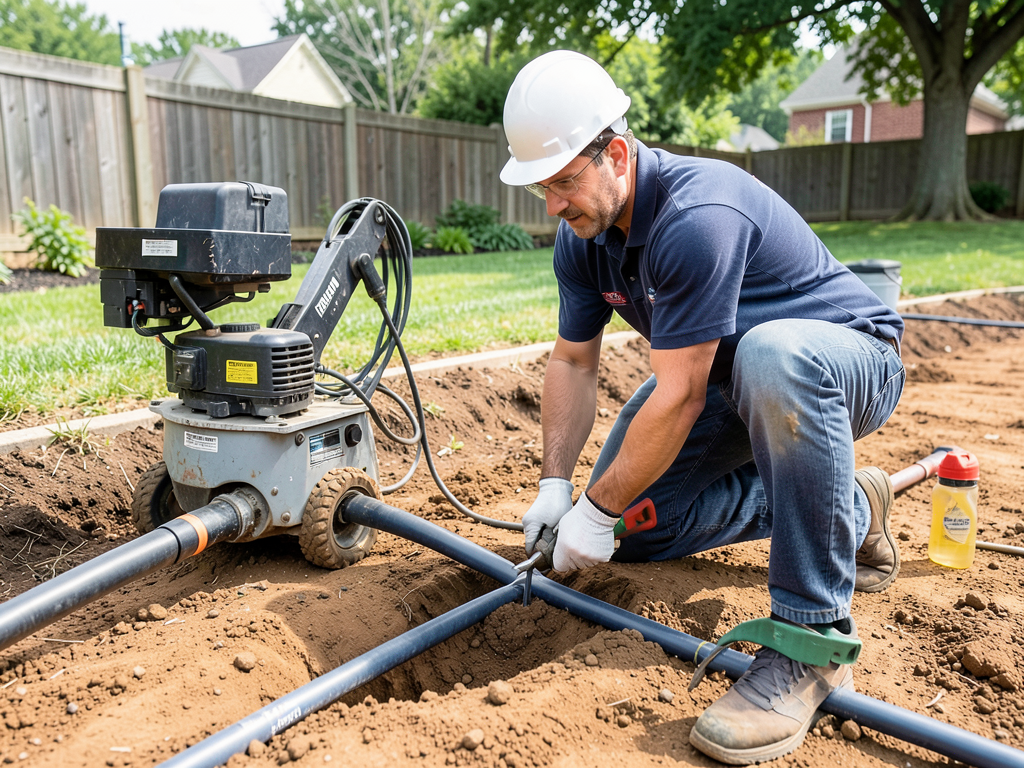
Ground-source heat pumps transfer heat between your home and the earth using a closed-loop system buried in your yard. In winter, the system extracts heat from the ground to warm your home. In summer, it reverses the process, dumping heat from your home back into the cooler earth. This exchange happens through a network of high-density polyethylene pipes filled with water or antifreeze solution.
Parkville’s soil composition presents both opportunities and challenges for geothermal installation. The clay content provides good thermal mass for heat exchange, but it also requires specific drilling techniques and loop designs to prevent settling issues. Our team uses horizontal trenching for properties with adequate yard space, or vertical drilling for smaller lots where minimal surface disruption is preferred.
The installation process begins with a comprehensive site assessment that includes soil thermal conductivity testing, available yard space evaluation, and existing HVAC system analysis. We then design a custom loop field configuration that meets your home’s heating and cooling demands while complying with Platte County building codes and setback requirements.
Comparing geothermal to traditional HVAC in Missouri
| Feature | Geothermal System | Traditional HVAC |
|---|---|---|
| Efficiency (COP) | 3.5-5.0 | 2.0-3.0 |
| Lifespan (Ground Loop) | 25-50 years | N/A |
| Lifespan (Heat Pump) | 15-20 years | 10-15 years |
| Annual Operating Cost | 30-70% less | Standard |
| Noise Level | Very quiet | Moderate to loud |
The efficiency difference becomes most apparent during Parkville’s peak demand months. When summer temperatures hit 95°F with high humidity, traditional air conditioners work overtime, consuming significant electricity. Geothermal systems maintain their efficiency because they’re exchanging heat with the constant 55°F earth temperature rather than the 95°F outside air.
Winter performance shows similar advantages. When temperatures drop below freezing, conventional heat pumps struggle to extract enough heat from the outside air. Geothermal systems continue operating at peak efficiency because the ground temperature remains stable, providing consistent heating even during the coldest Missouri winters.
Installation process and timeline for Parkville homes
- Site Assessment and Design
Our technicians conduct soil testing, heat load calculations, and property evaluation. This phase typically takes 1-2 days and determines the optimal loop configuration for your specific property.
- Permit Acquisition
We handle all Platte County permits and ensure compliance with local building codes. This process takes 1-3 weeks depending on seasonal demand and project complexity.
- Loop Field Installation
Drilling or trenching begins, with horizontal systems taking 2-3 days and vertical systems requiring 1-2 days. Clay soil conditions in Parkville may extend this timeline slightly.
- Heat Pump Integration
The indoor unit is installed and connected to your existing ductwork or new duct system if needed. This phase takes 1-2 days.
- System Commissioning
We test, balance, and optimize the system for your home’s specific needs. This includes checking refrigerant levels, airflow, and thermostat programming. Smart Thermostat Benefits.
The entire installation typically takes 2-4 weeks from start to finish, with actual on-site work requiring 5-7 days depending on weather conditions and property specifics. Clay soil in Parkville can affect excavation times, particularly during wet seasons when the ground becomes more challenging to work with.
During installation, we maintain strict EPA Section 608 compliance for refrigerant handling and follow all International Mechanical Code (IMC) standards for equipment placement and venting. Our IGSHPA certification ensures every system meets industry best practices for loop design and installation.
Financial incentives making geothermal accessible
The federal geothermal tax credit covers 30% of your total system cost, including equipment, installation, and labor. This credit has no maximum limit and can be claimed on your federal income taxes for the year the system is placed in service. For a typical Parkville home, this translates to $8,000-$15,000 in tax savings depending on system size.
Evergy offers additional rebates for geothermal installations, typically ranging from $500-$1,500 based on system efficiency ratings. Spire provides similar incentives for homes converting from natural gas heating. These utility rebates can be combined with the federal tax credit, significantly reducing your net investment.
Many Parkville homeowners also benefit from increased home values after geothermal installation. Energy-efficient upgrades typically add 3-5% to property values, and the long-term utility savings make homes more attractive to buyers. Some lenders now offer specialized geothermal financing with terms that match the system’s expected lifespan.
Maintenance and longevity considerations
Geothermal systems require minimal maintenance compared to traditional HVAC equipment. The ground loop itself needs no regular service and carries warranties of 25-50 years from most manufacturers. The heat pump unit requires annual professional maintenance similar to conventional systems, including filter changes, coil cleaning, and performance checks.
Annual maintenance typically costs $150-$300 and includes checking refrigerant levels, inspecting electrical connections, cleaning coils, and verifying system efficiency. This preventive care helps ensure your system operates at peak performance and can identify potential issues before they become costly repairs. Same day furnace repair services for families in Lee’s Summit.
The indoor components of geothermal systems have fewer moving parts than traditional HVAC equipment, reducing the likelihood of mechanical failure. With proper maintenance, heat pump units typically last 15-20 years, while the ground loop continues functioning for decades beyond that timeframe.
Is geothermal right for your Parkville home?
Geothermal heating and cooling makes the most sense for Parkville homeowners who plan to stay in their homes for at least 5-7 years, have adequate yard space for loop installation, and want to reduce their environmental impact while saving on utility costs. The technology works particularly well for larger homes where the energy savings compound across more square footage.
Properties with existing ductwork can often integrate geothermal systems with minimal modifications. Homes without ductwork may require additional investment in duct installation or consideration of ductless geothermal options. Our team evaluates each property individually to determine the most cost-effective approach for your specific situation.
The upfront investment for geothermal installation typically ranges from $20,000-$40,000 depending on home size and system complexity. When factoring in the 30% federal tax credit and local rebates, the net cost becomes much more competitive with high-efficiency conventional systems, especially when considering the significantly lower operating costs over the system’s lifetime.
Ready to explore how geothermal heating and cooling can transform your Parkville home’s comfort and efficiency? Call (816) 473-9177 today to schedule your free site assessment and learn about current incentives that could make your investment even more affordable.
Frequently Asked Questions
How long does it take to install a geothermal system in Parkville?
The complete installation process takes 2-4 weeks from start to finish, with actual on-site work requiring 5-7 days. Permit acquisition typically takes 1-3 weeks, and the installation itself depends on soil conditions and weather factors specific to Parkville’s clay soil composition.
What is the typical payback period for geothermal in Missouri?
Most Parkville homeowners see complete payback on their geothermal investment within 5-7 years when factoring in the 30% federal tax credit, local utility rebates, and monthly energy savings of 30-70% compared to traditional HVAC systems.
Does geothermal work in Parkville’s cold winters?
Yes, geothermal systems excel in Missouri’s climate because they exchange heat with the earth’s constant 55°F temperature rather than outdoor air. This means consistent heating performance even when temperatures drop below zero, with no backup heating needed in most Parkville homes.
{
“@context”: “https://schema.org”,
“@type”: “BlogPosting”,
“headline”: “Why Parkville homeowners are investing in geothermal heating and cooling systems”,
“description”: “Parkville homeowners are switching to geothermal for 30% lower energy bills. Learn how Missouri clay soil and federal tax credits make it the smart investment.”,
“wordCount”: 1440,
“datePublished”: “2026-02-28T09:45:00.000Z”,
“dateModified”: “2026-02-28T09:45:00.000Z”,
“inLanguage”: “en-US”,
“mainEntityOfPage”: {
“@type”: “WebPage”,
“@id”: “https://unitedhvackansascity.com”
},
“publisher”: {
“@type”: “LocalBusiness”,
“name”: “United HVAC Kansas City”,
“url”: “https://unitedhvackansascity.com”
},
“author”: {
“@type”: “Organization”,
“name”: “United HVAC Kansas City”,
“url”: “https://unitedhvackansascity.com”
},
“image”: {
“@type”: “ImageObject”,
“url”: “https://unitedhvackansascity.com/wp-content/uploads/2026/03/why-parkville-homeowners-are-investing-in-geotherm-1.png”
}
}
{
“@context”: “https://schema.org”,
“@type”: “HVACBusiness”,
“name”: “United HVAC Kansas City”,
“url”: “https://unitedhvackansascity.com”,
“address”: {
“@type”: “PostalAddress”,
“addressLocality”: “Kansas City”
},
“areaServed”: {
“@type”: “City”,
“name”: “Kansas City”
}
}
{
“@context”: “https://schema.org”,
“@type”: “FAQPage”,
“mainEntity”: [
{
“@type”: “Question”,
“name”: “Is geothermal right for your Parkville home?”,
“acceptedAnswer”: {
“@type”: “Answer”,
“text”: “Geothermal heating and cooling makes the most sense for Parkville homeowners who plan to stay in their homes for at least 5-7 years, have adequate yard space for loop installation, and want to reduce their environmental impact while saving on utility costs. The technology works particularly well for larger homes where the energy savings compound across more square footage.”
}
},
{
“@type”: “Question”,
“name”: “How long does it take to install a geothermal system in Parkville?”,
“acceptedAnswer”: {
“@type”: “Answer”,
“text”: “The complete installation process takes 2-4 weeks from start to finish, with actual on-site work requiring 5-7 days. Permit acquisition typically takes 1-3 weeks, and the installation itself depends on soil conditions and weather factors specific to Parkville’s clay soil composition.”
}
},
{
“@type”: “Question”,
“name”: “What is the typical payback period for geothermal in Missouri?”,
“acceptedAnswer”: {
“@type”: “Answer”,
“text”: “Most Parkville homeowners see complete payback on their geothermal investment within 5-7 years when factoring in the 30% federal tax credit, local utility rebates, and monthly energy savings of 30-70% compared to traditional HVAC systems.”
}
},
{
“@type”: “Question”,
“name”: “Does geothermal work in Parkville’s cold winters?”,
“acceptedAnswer”: {
“@type”: “Answer”,
“text”: “Yes, geothermal systems excel in Missouri’s climate because they exchange heat with the earth’s constant 55°F temperature rather than outdoor air. This means consistent heating performance even when temperatures drop below zero, with no backup heating needed in most Parkville homes.”
}
}
]
}
{
“@context”: “https://schema.org”,
“@type”: “HowTo”,
“name”: “Geothermal Installation Process”,
“step”: [
{
“@type”: “HowToStep”,
“position”: 1,
“name”: “Site Assessment and Design”,
“text”: “Our technicians conduct soil testing, heat load calculations, and property evaluation. This phase typically takes 1-2 days and determines the optimal loop configuration for your specific property.”
},
{
“@type”: “HowToStep”,
“position”: 2,
“name”: “Permit Acquisition”,
“text”: “We handle all Platte County permits and ensure compliance with local building codes. This process takes 1-3 weeks depending on seasonal demand and project complexity.”
},
{
“@type”: “HowToStep”,
“position”: 3,
“name”: “Loop Field Installation”,
“text”: “Drilling or trenching begins, with horizontal systems taking 2-3 days and vertical systems requiring 1-2 days. Clay soil conditions in Parkville may extend this timeline slightly.”
},
{
“@type”: “HowToStep”,
“position”: 4,
“name”: “Heat Pump Integration”,
“text”: “The indoor unit is installed and connected to your existing ductwork or new duct system if needed. This phase takes 1-2 days.”
},
{
“@type”: “HowToStep”,
“position”: 5,
“name”: “System Commissioning”,
“text”: “We test, balance, and optimize the system for your home’s specific needs. This includes checking refrigerant levels, airflow, and thermostat programming. Smart Thermostat Benefits.”
}
],
“image”: “https://unitedhvackansascity.com/wp-content/uploads/2026/03/why-parkville-homeowners-are-investing-in-geotherm-1.png”
}
{
“@context”: “https://schema.org”,
“@type”: “BreadcrumbList”,
“itemListElement”: [
{
“@type”: “ListItem”,
“position”: 1,
“name”: “Home”,
“item”: “https://unitedhvackansascity.com”
},
{
“@type”: “ListItem”,
“position”: 2,
“name”: “Blog”,
“item”: “https://unitedhvackansascity.com/blog”
},
{
“@type”: “ListItem”,
“position”: 3,
“name”: “Why Parkville homeowners are investing in geothermal heating and cooling systems”
}
]
}
{
“@context”: “https://schema.org”,
“@type”: “Service”,
“serviceType”: “HVAC”,
“provider”: {
“@type”: “LocalBusiness”,
“name”: “United HVAC Kansas City”,
“url”: “https://unitedhvackansascity.com”
},
“areaServed”: {
“@type”: “City”,
“name”: “Kansas City”
},
“description”: “Parkville homeowners are switching to geothermal for 30% lower energy bills. Learn how Missouri clay soil and federal tax credits make it the smart investment.”
}