
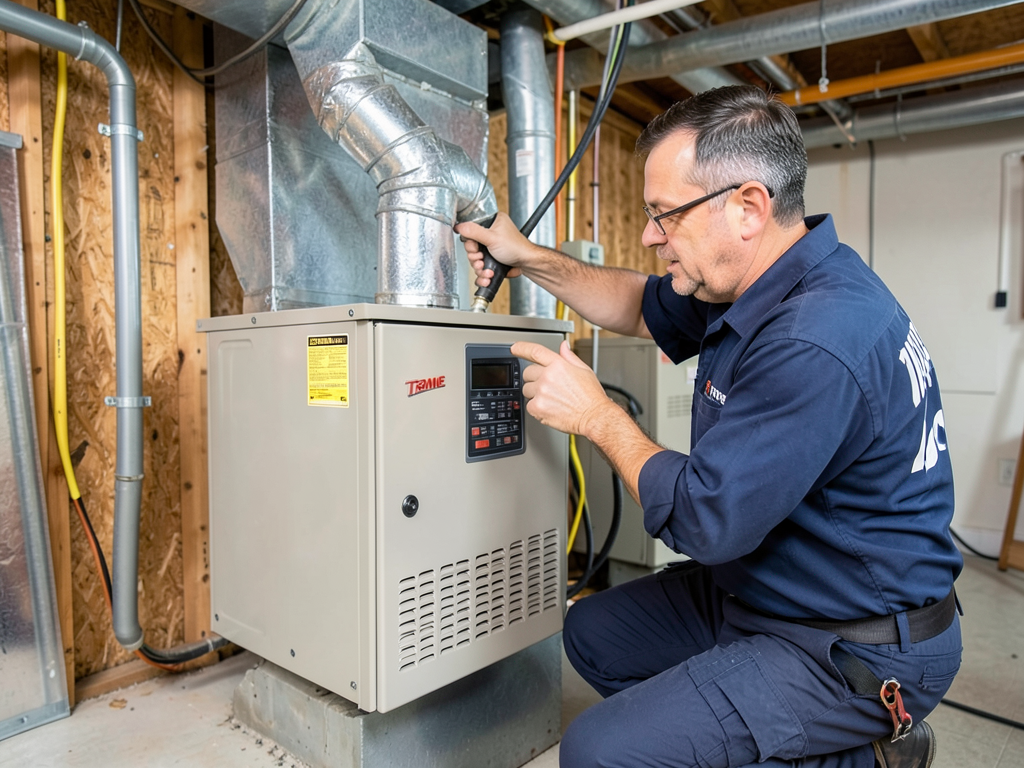
Introduction: Trane vs. Goodman in the Kansas City Market
Choosing between Trane and Goodman furnaces in Kansas City comes down to a simple equation: premium reliability versus upfront savings. Homeowners here face brutal winters where the right furnace means the difference between comfort and constant service calls. Trane builds with proprietary technology like Spine Fin coils and Climatuff compressors that resist Kansas City’s humidity swings and sub-zero spikes. Goodman focuses on standardized, easy-to-source components that keep initial costs lower but may require more frequent maintenance. This comparison cuts through the marketing to show you exactly what you’re paying for and what you’ll get in return. Same day furnace repair services for families in Lee’s Summit.
Both brands offer 80% and 95%+ AFUE models, but the real differences show up during Liberty’s polar vortex events when temperatures plummet. Trane’s variable-speed blowers maintain steady temperatures without the temperature swings that strain Goodman’s single-stage units. Goodman’s parts cost less and are available same-day at local supply houses. Trane’s proprietary parts require ordering through authorized dealers. The choice depends on whether you plan to stay in your Kansas City Northland home for five years or twenty. Local HVAC experts for boiler maintenance and repair near the Country Club Plaza.
Call (816) 473-9177 today to schedule your inspection and get a side-by-side comparison for your specific home.
Reliability and Build Quality Comparison
Trane furnaces feature heavy-gauge steel cabinets and their patented Climatuff compressors that handle Kansas City’s rapid temperature swings without short cycling. The company builds everything in-house, from the heat exchangers to the control boards. This vertical integration means fewer compatibility issues but also means you’re locked into Trane’s supply chain. When a component fails during a January cold snap, you’ll need an authorized dealer to source the exact replacement part.
Goodman takes the opposite approach. They use off-the-shelf components from multiple suppliers, which means parts are available at any HVAC supply house in the metro area. A failed control board on a Goodman furnace can be replaced same-day from any distributor in Kansas City. The trade-off is that Goodman’s standardized parts don’t always match the exact specifications of your specific model, which can lead to slightly reduced efficiency over time.
Heat exchanger durability shows the biggest difference. Trane uses stainless steel primary heat exchangers with a lifetime warranty on many models. Goodman typically uses aluminized steel with a 10-year warranty. In Kansas City’s climate, where humidity levels fluctuate wildly between summer and winter, stainless steel resists corrosion better and maintains efficiency longer. Goodman’s aluminized steel works fine but may require replacement after 12-15 years of heavy use.
Noise levels tell another story. Trane’s variable-speed units operate at 40-50 decibels, about the volume of a quiet conversation. Goodman’s single-stage models run at 55-65 decibels, similar to a normal speaking voice. In basement installations common in Liberty’s mid-century ranch homes, that difference matters when the furnace kicks on at 2 AM.
Diagnostic testing reveals performance gaps. Trane’s ComfortLink II communicating system constantly monitors itself and can predict failures before they happen. Goodman’s basic control boards simply report error codes when something goes wrong. A technician can plug into a Trane unit and see exactly which component is degrading, while Goodman requires more trial-and-error troubleshooting.
Call (816) 473-9177 to schedule a diagnostic test on your current system and see which brand would work best in your home.
Efficiency Ratings (AFUE) & Technology
Both brands offer 80% and 95%+ AFUE furnaces, but the technology inside makes the real difference in Kansas City’s climate. Trane’s modulating gas valves can adjust output in 1% increments, maintaining your home at exactly 72 degrees without the temperature swings that plague single-stage units. Goodman’s two-stage models jump between 40% and 100% capacity, which works but creates more noticeable temperature variations.
Variable-speed blowers in Trane units move air continuously at low speeds, improving filtration and eliminating hot and cold spots. Goodman’s standard blowers run at full speed or not at all, which means less consistent air distribution throughout your Kansas City home. During humidity spikes common in August, Trane’s continuous air movement helps dehumidify better than Goodman’s on-off cycling.
AFUE ratings don’t tell the whole story in the Midwest. A 95% efficient furnace that short cycles constantly wastes more energy than an 80% unit that runs steadily. Trane’s modulating technology maintains steady-state efficiency, while Goodman’s single-stage units often cycle on and off more frequently, especially in homes with poor duct design common in older Kansas City neighborhoods. ENERGY STAR furnace efficiency guidelines.
Smart thermostat compatibility varies significantly. Trane’s proprietary communicating thermostats integrate seamlessly with their furnaces for optimal performance. Goodman works with any standard thermostat but loses some efficiency benefits without their specific control system. In homes with smart home systems, Trane’s integration means your furnace can respond to occupancy sensors and weather forecasts automatically. Smart Thermostat Benefits.
Installation quality affects efficiency more than brand. Both Trane and Goodman require proper sizing, sealed ducts, and correct venting to achieve rated efficiency. In Kansas City’s older homes, retrofitting proper return air paths often costs more than the furnace itself but determines whether you actually get the efficiency you’re paying for.
Call (816) 473-9177 for a comprehensive home energy audit to determine which efficiency level makes sense for your specific situation.
Warranty and Parts Availability in Kansas City
Trane offers lifetime heat exchanger warranties on many models, with 10-year parts coverage and 10-year labor warranties available through authorized dealers. The catch is that warranty work must go through Trane’s network, which means scheduling delays during peak winter months. In Kansas City, where January temperatures can drop below zero, waiting three days for a warranty repair isn’t acceptable for many families. EPA refrigerant handling requirements.
Goodman provides 10-year parts warranties and lifetime heat exchanger coverage on select models. The advantage is that any licensed HVAC contractor can perform warranty work, not just authorized dealers. During the January 2024 polar vortex, Goodman warranty calls were completed within 24 hours because parts were available locally and any qualified technician could make the repair. Who to call for 24 hour emergency AC repair in Shawnee when the heat index spikes.
Parts availability becomes critical during Kansas City’s severe weather seasons. Trane’s proprietary components mean lead times of 2-5 days for common failures. Goodman’s standardized parts are stocked at every HVAC supply house in the metro area. When your furnace fails on Christmas Eve, that difference determines whether you’ll be warm tonight or waiting until after the holiday.
Service technician familiarity varies by brand. Most Kansas City HVAC companies are equally comfortable with both brands, but some specialize in one or the other. Trane-authorized dealers have specific training and access to proprietary diagnostic tools. General contractors handle Goodman units regularly but may not have the latest training on new features.
Cost of ownership includes more than warranty length. Trane parts typically cost 20-30% more than comparable Goodman components. A control board that costs $400 for Goodman might be $550 for Trane. Over a 15-year lifespan, the higher parts costs can offset the longer warranty coverage, especially if you rarely need warranty service.
Call (816) 473-9177 to discuss our maintenance plans that keep both Trane and Goodman units running reliably year-round.
Cost Analysis: Upfront Price vs. Long-term Value
Installation costs for a standard 2,000 square foot Kansas City home typically range from $4,500 to $8,500 for Goodman furnaces, while comparable Trane units run $6,500 to $11,000. The price difference reflects not just the equipment but also the installation quality. Trane dealers invest in better training and often include more comprehensive ductwork modifications in their quotes.
Energy savings calculations show that high-efficiency units pay for themselves over time, but the math depends on your usage patterns. A family of four in Liberty running their furnace constantly through January will save more with a 95% efficient unit than a single person who keeps the thermostat at 65 degrees. Goodman’s 80% models cost less upfront but waste more energy over their lifespan.
Maintenance costs average $150-300 annually for both brands when properly maintained. However, Trane’s variable-speed units often require less frequent filter changes because they move air more consistently. Goodman’s single-stage units may need quarterly filter replacements in homes with pets or allergies, adding $100-200 to annual costs.
Resale value considerations matter in Kansas City’s competitive housing market. Buyers recognize Trane as a premium brand and often factor that into their offers. A home with a new Trane furnace might sell $2,000-4,000 faster than one with a Goodman unit, though the difference isn’t dramatic enough to justify the price premium for most sellers.
Financing options vary by dealer. Most Trane-authorized contractors offer longer terms and lower interest rates through Trane’s financing partners. Goodman units qualify for more general HVAC financing but often at higher rates. For homeowners who need to spread payments over several years, the financing difference can be as significant as the equipment price difference.
Insurance considerations rarely come up but matter in extreme cases. Some insurance companies offer small discounts for high-efficiency units that reduce fire risk and carbon monoxide emissions. Trane’s better safety features and monitoring systems might qualify for slightly better rates, though the savings are minimal compared to the equipment cost.
Call (816) 473-9177 to get a detailed cost-benefit analysis for your specific home and usage patterns.
Local Rebates and Incentives
Evergy offers rebates up to $450 for high-efficiency furnaces with 95%+ AFUE ratings in both Missouri and Kansas service areas. The program requires installation by a participating contractor and submission of efficiency documentation. Trane’s higher-end modulating units often qualify for the maximum rebate, while Goodman’s base models may not meet the efficiency thresholds.
Spire Energy provides rebates up to $300 for natural gas furnaces that meet specific efficiency criteria. The program focuses on reducing peak demand during winter months when natural gas usage spikes across the Kansas City metro area. Both Trane and Goodman qualify, but the application process differs slightly between the two utilities.
Federal tax credits for 2026 include up to $600 for qualifying high-efficiency furnaces, regardless of brand. The credit applies to both primary and secondary residences and can be claimed on your federal tax return. Installation costs are not eligible, only the equipment itself qualifies for the credit.
Local utility programs sometimes offer additional incentives for specific neighborhoods. The Kansas City Power & Light Cool Homes rebate program occasionally extends to high-efficiency heating equipment in pilot areas. Check with your specific utility provider, as these programs change frequently and may not be widely advertised.
Manufacturer rebates fluctuate throughout the year. Trane typically offers seasonal promotions during fall and spring that can reduce equipment costs by $500-1,000. Goodman runs similar promotions but often with lower maximum values. Timing your purchase with these promotions can significantly reduce the price difference between the two brands.
Utility rebate processing times vary. Evergy typically processes applications within 4-6 weeks, while Spire can take up to 8 weeks. Plan accordingly when budgeting for your furnace replacement, as you’ll need to pay the full installation cost upfront and receive the rebate as a check months later.
Call (816) 473-9177 to learn about current rebate programs and how to maximize your savings on a new furnace installation.
Conclusion: Which is right for your home?
The choice between Trane and Goodman ultimately depends on your timeline and priorities. If you plan to stay in your Kansas City home for more than ten years and value quiet operation, consistent temperatures, and minimal service calls, Trane’s premium technology justifies the higher upfront cost. The proprietary components and better diagnostics mean fewer middle-of-the-night failures during polar vortex events.
If you need to replace a furnace quickly, have budget constraints, or plan to move within five years, Goodman offers excellent value. The standardized parts mean same-day repairs, and the lower initial investment frees up cash for other home improvements. In Kansas City’s climate, a properly installed Goodman unit will keep your family warm through winter just fine.
Consider your home’s specific characteristics. Older Kansas City homes with narrow ductwork often benefit from Trane’s variable-speed technology that can adjust airflow precisely. Newer construction with modern duct design works well with either brand. Homes with smart home systems get more value from Trane’s communicating technology, while basic setups don’t need the premium features.
Think about your comfort tolerance. If you notice temperature swings and want your home at exactly 72 degrees all winter, Trane’s modulating technology delivers that consistency. If you’re okay with your house varying between 70 and 74 degrees and saving $2,000 upfront, Goodman provides reliable heating without the premium features. How to find a reliable air conditioning repair technician in Overland Park.
Maintenance commitment matters too. Trane’s advanced systems need professional servicing to maintain their efficiency benefits. Goodman’s simpler designs are more forgiving of missed maintenance appointments. If you’re diligent about annual tune-ups, Trane rewards that care with better performance. If maintenance sometimes slips your mind, Goodman’s robust design handles that better.
Call (816) 473-9177 today to schedule your inspection and get personalized recommendations based on your home, budget, and comfort preferences. Don’t wait until your current furnace fails during the next cold snap.
Frequently Asked Questions
Which brand lasts longer in Kansas City’s climate?
Trane typically lasts 18-25 years with proper maintenance, while Goodman averages 12-18 years. The difference comes from Trane’s stainless steel heat exchangers and better humidity control, which matter during Kansas City’s extreme seasonal changes.
Are Trane furnaces worth the extra cost?
Yes, if you value consistent temperatures, quiet operation, and plan to stay in your home long-term. The premium features justify the cost for homeowners who notice temperature swings or have smart home systems.
Can any HVAC company service both brands?
Yes, most licensed contractors handle both brands. However, Trane-authorized dealers have specific training and diagnostic tools for their proprietary systems, while general contractors may have more experience with Goodman’s standardized designs.
You may also find this helpful. Why the R-410A Refrigerant Phase Out Matters for Kansas City Homeowners.
{
“@context”: “https://schema.org”,
“@type”: “BlogPosting”,
“headline”: “Trane vs Goodman — Choosing between long term reliability and upfront savings”,
“description”: “Compare Trane’s premium reliability against Goodman’s budget-friendly value for Kansas City homes. Learn local rebates, efficiency ratings, and which furnace fits your needs.”,
“wordCount”: 2319,
“datePublished”: “2026-05-23T14:49:00.000Z”,
“dateModified”: “2026-05-23T14:49:00.000Z”,
“inLanguage”: “en-US”,
“mainEntityOfPage”: {
“@type”: “WebPage”,
“@id”: “https://unitedhvackansascity.com”
},
“publisher”: {
“@type”: “LocalBusiness”,
“name”: “United HVAC Kansas City”,
“url”: “https://unitedhvackansascity.com”
},
“author”: {
“@type”: “Organization”,
“name”: “United HVAC Kansas City”,
“url”: “https://unitedhvackansascity.com”
},
“image”: {
“@type”: “ImageObject”,
“url”: “https://unitedhvackansascity.com/wp-content/uploads/2026/03/trane-vs-goodman-choosing-between-long-term-reliab-1.png”
}
}
{
“@context”: “https://schema.org”,
“@type”: “HVACBusiness”,
“name”: “United HVAC Kansas City”,
“url”: “https://unitedhvackansascity.com”,
“address”: {
“@type”: “PostalAddress”,
“addressLocality”: “Kansas City”
},
“areaServed”: {
“@type”: “City”,
“name”: “Kansas City”
}
}
{
“@context”: “https://schema.org”,
“@type”: “FAQPage”,
“mainEntity”: [
{
“@type”: “Question”,
“name”: “Conclusion: Which is right for your home?”,
“acceptedAnswer”: {
“@type”: “Answer”,
“text”: “The choice between Trane and Goodman ultimately depends on your timeline and priorities. If you plan to stay in your Kansas City home for more than ten years and value quiet operation, consistent temperatures, and minimal service calls, Trane’s premium technology justifies the higher upfront cost. The proprietary components and better diagnostics mean fewer middle-of-the-night failures during polar vortex events.”
}
},
{
“@type”: “Question”,
“name”: “Which brand lasts longer in Kansas City’s climate?”,
“acceptedAnswer”: {
“@type”: “Answer”,
“text”: “Trane typically lasts 18-25 years with proper maintenance, while Goodman averages 12-18 years. The difference comes from Trane’s stainless steel heat exchangers and better humidity control, which matter during Kansas City’s extreme seasonal changes.”
}
},
{
“@type”: “Question”,
“name”: “Are Trane furnaces worth the extra cost?”,
“acceptedAnswer”: {
“@type”: “Answer”,
“text”: “Yes, if you value consistent temperatures, quiet operation, and plan to stay in your home long-term. The premium features justify the cost for homeowners who notice temperature swings or have smart home systems.”
}
},
{
“@type”: “Question”,
“name”: “Can any HVAC company service both brands?”,
“acceptedAnswer”: {
“@type”: “Answer”,
“text”: “Yes, most licensed contractors handle both brands. However, Trane-authorized dealers have specific training and diagnostic tools for their proprietary systems, while general contractors may have more experience with Goodman’s standardized designs.”
}
}
]
}
{
“@context”: “https://schema.org”,
“@type”: “BreadcrumbList”,
“itemListElement”: [
{
“@type”: “ListItem”,
“position”: 1,
“name”: “Home”,
“item”: “https://unitedhvackansascity.com”
},
{
“@type”: “ListItem”,
“position”: 2,
“name”: “Blog”,
“item”: “https://unitedhvackansascity.com/blog”
},
{
“@type”: “ListItem”,
“position”: 3,
“name”: “Trane vs Goodman — Choosing between long term reliability and upfront savings”
}
]
}
{
“@context”: “https://schema.org”,
“@type”: “Service”,
“serviceType”: “HVAC”,
“provider”: {
“@type”: “LocalBusiness”,
“name”: “United HVAC Kansas City”,
“url”: “https://unitedhvackansascity.com”
},
“areaServed”: {
“@type”: “City”,
“name”: “Kansas City”
},
“description”: “Compare Trane’s premium reliability against Goodman’s budget-friendly value for Kansas City homes. Learn local rebates, efficiency ratings, and which furnace fits your needs.”
}