
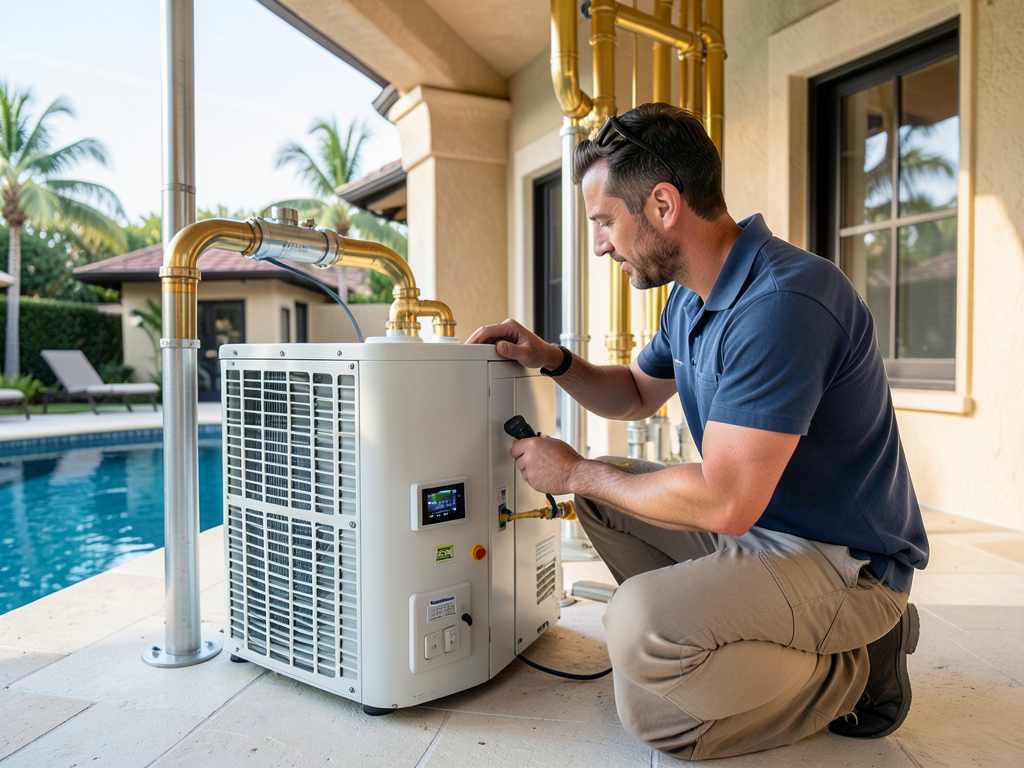
The best ways to heat and cool a detached pool house in Loch Lloyd
Detached pool houses in Loch Lloyd face unique climate control challenges. The combination of outdoor exposure, indoor humidity from pool water, and Kansas City’s extreme seasonal swings creates a perfect storm for comfort problems. You need specialized HVAC solutions that manage both temperature and moisture levels to protect your structure and create a comfortable space year-round. Storm Damage HVAC Repair.
The first step is understanding that a pool house is not just a small room with a window unit. The constant evaporation from pool water creates humidity levels that standard cooling systems cannot handle. Without proper dehumidification, you risk mold growth, structural damage, and that unpleasant chlorine smell that lingers in poorly ventilated spaces.
The Unique Challenges of Heating and Cooling a KC Pool House
Kansas City’s climate zone 4A means hot, humid summers and cold winters with freeze-thaw cycles. Loch Lloyd’s location near the Missouri-Kansas border exposes pool houses to rapid weather changes. Summer humidity often exceeds 70%, while winter temperatures can drop below zero. These extremes stress standard HVAC equipment.
Pool water chemistry adds another layer of complexity. Chlorine and bromine off-gas create corrosive vapors that attack metal components in standard air handlers. The water vapor carries these chemicals, accelerating coil degradation and shortening equipment lifespan. You need corrosion-resistant components specifically rated for natatorium environments.
Local building codes in Jackson County require specific ventilation rates for enclosed pool spaces. The International Mechanical Code Section 511 mandates minimum air changes per hour based on pool surface area. Many Loch Lloyd homeowners discover their pool houses were built before these requirements existed, creating compliance issues. International Mechanical Code Section 511.
Soil conditions around Loch Lloyd also matter. The area’s clay soil expands and contracts with moisture changes, potentially shifting foundation pads where outdoor HVAC units sit. This movement can stress refrigerant lines and electrical connections, leading to leaks and system failures.
Top HVAC Options for Pool Houses
Ductless mini-split systems offer the most flexible solution for pool houses up to 1,500 square feet. These units separate the indoor air handler from the outdoor compressor, eliminating ductwork that can harbor moisture and mold. Mitsubishi Electric and Daikin both manufacture corrosion-resistant models with gold-fin coils that withstand pool chemical exposure. EPA Section 608 certification.
Packaged terminal air conditioners (PTACs) work well for smaller pool houses or guest suites. These through-the-wall units combine heating and cooling in one package. However, standard PTACs lack the dehumidification capacity needed for pool environments. You must pair them with dedicated dehumidifiers to prevent moisture damage.
Specialized dehumidification systems from manufacturers like Dectron or Desert Aire provide commercial-grade moisture control. These units integrate with your pool’s water treatment system, maintaining precise humidity levels while recovering heat to warm pool water. They cost more upfront but prevent the expensive mold remediation that results from inadequate moisture control.
Heat pump technology has improved significantly for zone 4 climates. Modern cold-climate heat pumps maintain efficiency down to -15°F, eliminating the need for separate heating systems in most pool houses. The initial investment pays off through lower operating costs compared to electric resistance heating.
Energy recovery ventilators (ERVs) complement any pool house HVAC system. These units exchange stale indoor air with fresh outdoor air while transferring heat and moisture between airstreams. In Loch Lloyd’s climate, ERVs reduce the load on your cooling system during summer and help maintain indoor air quality year-round.
Why Moisture Control is More Important Than Temperature
Temperature control without humidity management creates comfort problems. A room at 75°F with 65% relative humidity feels much warmer than the same temperature at 45% humidity. More importantly, high humidity promotes mold growth, wood rot, and paint failure in pool houses.
Dew point management prevents condensation on cool surfaces. When warm, humid air contacts cold walls, windows, or HVAC components, water vapor condenses into liquid. This moisture feeds mold colonies and causes structural damage. Proper HVAC design maintains surface temperatures above the dew point through adequate air circulation.
Corrosion-resistant coils use epoxy coatings or gold-fin treatments to withstand chemical exposure. Standard aluminum coils corrode within 2-3 years in pool environments, causing refrigerant leaks and system failure. The additional cost for corrosion-resistant equipment typically pays for itself through extended equipment life.
Vapor barriers in pool house construction prevent moisture migration through walls and ceilings. Building codes require Class I vapor retarders on the warm side of insulation in climate zone 4A. Without these barriers, moisture from pool evaporation penetrates building materials, causing hidden damage that appears as peeling paint or warped wood.
Psychrometric charts help HVAC designers select equipment for pool environments. These charts plot temperature against humidity, showing the conditions where condensation occurs. Professional pool house HVAC design uses these charts to ensure equipment maintains safe humidity levels across all operating conditions.
Local Regulations and Efficiency Standards in MO/KS
Missouri follows the 2021 International Energy Conservation Code, which mandates minimum SEER2 ratings of 15 for cooling equipment. Heat pumps must achieve HSPF2 ratings of 8.5 or higher. These standards apply to pool house installations, though many older structures lack the insulation levels required by current codes.
Jackson County building permits require HVAC plans stamped by licensed mechanical contractors for pool house installations. The plans must show equipment sizing calculations, ventilation rates, and condensate drainage. Skipping permits can result in fines and insurance claim denials if moisture damage occurs.
EPA Section 608 certification is mandatory for technicians handling refrigerants in pool house equipment. The regulations cover recovery, recycling, and reclamation procedures to prevent atmospheric release. Violations carry fines up to $37,500 per day, making proper certification essential for any HVAC contractor.
Local electrical codes require GFCI protection for all pool house outlets and dedicated circuits for HVAC equipment. The National Electrical Code Article 680 covers pool-related electrical requirements, including minimum distances between equipment and water sources. Many Loch Lloyd pool houses need electrical upgrades to meet these standards. Local HVAC experts for boiler maintenance and repair near the Country Club Plaza.
Energy efficiency rebates through Evergy and Spire can offset HVAC upgrade costs. Current programs offer rebates for high-efficiency equipment, smart thermostats, and variable-speed systems. These incentives change annually, so timing your installation with available rebates can save thousands of dollars. Smart Thermostat Benefits.
Case Study: Recent Pool House Installation in Loch Lloyd
A Loch Lloyd homeowner contacted us last summer about persistent mold problems in their 800-square-foot pool house. The existing window units couldn’t control humidity, and the cedar walls showed signs of moisture damage. We conducted a psychrometric analysis and discovered the space needed 3.5 air changes per hour, far exceeding the 1-2 changes the window units provided.
We installed a 24,000 BTU Daikin mini-split with a dedicated 70-pint dehumidifier. The system maintains 50% relative humidity year-round while recovering heat to warm the pool during spring and fall. The corrosion-resistant coils have gold-fin treatment, protecting against chlorine exposure. One year later, the mold is gone, and the homeowner reports significantly lower energy bills despite running the system continuously.
The installation required upgrading the electrical service from 60 to 100 amps to handle the new equipment. We coordinated with the homeowner’s electrician to ensure code compliance. The total project cost $8,200, but available rebates reduced the net cost to $6,400. The homeowner estimates they’ve already saved $1,200 in energy costs and avoided thousands in potential mold remediation.
Maintenance Requirements for Pool House HVAC Systems
Pool house HVAC systems need more frequent maintenance than standard residential equipment. The corrosive environment accelerates wear on components. Quarterly filter changes prevent dust and chemical particles from accumulating on coils. Annual professional cleaning removes scale buildup that reduces efficiency.
Condensate drain lines require special attention in pool environments. The constant moisture flow can create algae growth that clogs drains. We recommend pouring a cup of white vinegar through the drain line monthly to prevent biological growth. This simple step prevents water damage from overflow.
Coil cleaning should occur twice yearly in pool houses. The combination of moisture and chemicals creates scale deposits that insulate coils and reduce heat transfer. Professional coil cleaning uses specialized chemicals that remove buildup without damaging protective coatings.
Refrigerant charge checks are critical for pool house systems. Small leaks in corrosion-resistant coils can go unnoticed until system performance drops significantly. Annual pressure tests catch leaks early, preventing compressor damage from low refrigerant levels.
Thermostat placement affects system performance in pool houses. Avoid installing thermostats near windows, doors, or the pool itself. These locations create false readings that cause the system to run too long or short-cycle, reducing efficiency and comfort.
Cost Considerations and ROI Analysis
Pool house HVAC installation costs range from $4,500 to $15,000 depending on size and equipment selection. Mini-splits for spaces under 1,000 square feet typically cost $5,000 to $7,500 installed. Larger spaces needing commercial-grade dehumidification can exceed $12,000.
Energy costs for pool houses often surprise homeowners. A poorly designed system can cost $200 to $400 monthly to operate. High-efficiency equipment with proper sizing typically reduces these costs by 40% to 60%. The energy savings alone can justify the investment within 3 to 5 years.
Mold remediation costs provide another compelling ROI argument. Professional mold removal in pool houses ranges from $2,000 to $10,000 depending on extent. Preventing a single mold outbreak pays for much of the HVAC upgrade cost.
Property value impacts matter for Loch Lloyd homeowners. A properly climate-controlled pool house adds usable square footage and prevents the moisture damage that reduces home values. Real estate agents report that pool houses with professional HVAC systems sell faster and command premium prices.
Financing options make pool house HVAC upgrades accessible. Many homeowners use home equity lines of credit or specialized home improvement loans. The monthly payments often equal or fall below the energy savings, creating immediate positive cash flow.
Choosing the Right HVAC Contractor
Not all HVAC contractors have experience with pool house environments. Look for companies that understand psychrometrics, corrosion-resistant equipment, and natatorium ventilation requirements. Ask about specific pool house installations they’ve completed in the Kansas City area.
Proper load calculations are essential for pool house HVAC design. Contractors should perform Manual J calculations that account for pool evaporation rates, occupancy, and equipment heat gain. Guesswork sizing leads to systems that cannot maintain proper humidity levels.
Warranty coverage varies significantly between manufacturers and contractors. Look for at least 5-year parts warranties on pool house equipment. Some manufacturers offer extended warranties when certified contractors perform installation and maintenance.
Emergency service availability matters for pool houses. Equipment failures during summer heat waves or winter cold snaps can damage pool equipment and create uncomfortable conditions. Choose contractors offering 24/7 service with guaranteed response times. Who to call for 24 hour emergency AC repair in Shawnee when the heat index spikes.
References from other Loch Lloyd pool house owners provide valuable insight. Ask about system performance, energy costs, and contractor responsiveness. Local experience with similar installations predicts success with your project.
Future Trends in Pool House Climate Control
Smart HVAC technology is transforming pool house management. Wi-Fi enabled thermostats allow remote monitoring and control through smartphone apps. These systems can alert homeowners to humidity spikes or equipment failures before damage occurs.
Variable refrigerant flow (VRF) systems offer improved efficiency for larger pool houses. These systems adjust refrigerant flow based on demand, maintaining precise temperature and humidity control while minimizing energy consumption. VRF technology continues to improve for cold-climate applications.
Solar-assisted heating reduces energy costs for pool houses. Photovoltaic panels can power HVAC equipment, while solar thermal systems provide pool heating. The combination significantly reduces utility costs, especially during peak summer months.
Advanced air purification removes chloramines and other pool chemical byproducts. UV light systems and activated carbon filters improve indoor air quality while reducing chemical odors. These systems are becoming standard in high-end pool house installations.
Building envelope improvements complement HVAC upgrades. Spray foam insulation, high-performance windows, and improved vapor barriers reduce heating and cooling loads. The combination of better building science and efficient HVAC creates optimal pool house environments.
Frequently Asked Questions
How much does it cost to install HVAC in a pool house?
Installation costs range from $4,500 to $15,000 depending on size and equipment. Mini-splits for spaces under 1,000 square feet typically cost $5,000 to $7,500 installed. Larger spaces needing commercial-grade dehumidification can exceed $12,000.
Do I need a permit for pool house HVAC installation?
Yes, Jackson County requires permits for pool house HVAC installations. The permit process ensures proper equipment sizing, ventilation rates, and electrical safety. Skipping permits can result in fines and insurance claim denials.
How often should pool house HVAC be serviced?
Pool house systems need quarterly filter changes and annual professional maintenance. The corrosive environment accelerates wear, making more frequent service essential compared to standard residential equipment.
Can I use a standard air conditioner in my pool house?
Standard air conditioners lack the dehumidification capacity needed for pool environments. Without proper moisture control, you risk mold growth and structural damage. Specialized pool house equipment with integrated dehumidification is essential.
What size HVAC system do I need for my pool house?
System sizing depends on square footage, pool surface area, and local climate conditions. A professional Manual J calculation accounts for pool evaporation rates and occupancy to determine the proper equipment size.
Call (816) 473-9177 today to schedule your pool house HVAC consultation. Our experienced technicians understand the unique challenges of Loch Lloyd pool houses and can design a system that provides years of reliable comfort and moisture control. How to find a reliable air conditioning repair technician in Overland Park.
{
“@context”: “https://schema.org”,
“@type”: “BlogPosting”,
“headline”: “The best ways to heat and cool a detached pool house in Loch Lloyd”,
“description”: “Expert HVAC solutions for pool houses in Loch Lloyd. Learn how to control humidity, prevent mold, and maintain comfort year-round with specialized equipment.”,
“wordCount”: 2266,
“datePublished”: “2026-05-24T11:09:00.000Z”,
“dateModified”: “2026-05-24T11:09:00.000Z”,
“inLanguage”: “en-US”,
“mainEntityOfPage”: {
“@type”: “WebPage”,
“@id”: “https://unitedhvackansascity.com”
},
“publisher”: {
“@type”: “LocalBusiness”,
“name”: “United HVAC Kansas City”,
“url”: “https://unitedhvackansascity.com”
},
“author”: {
“@type”: “Organization”,
“name”: “United HVAC Kansas City”,
“url”: “https://unitedhvackansascity.com”
},
“image”: {
“@type”: “ImageObject”,
“url”: “https://unitedhvackansascity.com/wp-content/uploads/2026/03/the-best-ways-to-heat-and-cool-a-detached-pool-hou-1.png”
}
}
{
“@context”: “https://schema.org”,
“@type”: “HVACBusiness”,
“name”: “United HVAC Kansas City”,
“url”: “https://unitedhvackansascity.com”,
“address”: {
“@type”: “PostalAddress”,
“addressLocality”: “Kansas City”
},
“areaServed”: {
“@type”: “City”,
“name”: “Kansas City”
}
}
{
“@context”: “https://schema.org”,
“@type”: “FAQPage”,
“mainEntity”: [
{
“@type”: “Question”,
“name”: “How much does it cost to install HVAC in a pool house?”,
“acceptedAnswer”: {
“@type”: “Answer”,
“text”: “Installation costs range from $4,500 to $15,000 depending on size and equipment. Mini-splits for spaces under 1,000 square feet typically cost $5,000 to $7,500 installed. Larger spaces needing commercial-grade dehumidification can exceed $12,000.”
}
},
{
“@type”: “Question”,
“name”: “Do I need a permit for pool house HVAC installation?”,
“acceptedAnswer”: {
“@type”: “Answer”,
“text”: “Yes, Jackson County requires permits for pool house HVAC installations. The permit process ensures proper equipment sizing, ventilation rates, and electrical safety. Skipping permits can result in fines and insurance claim denials.”
}
},
{
“@type”: “Question”,
“name”: “How often should pool house HVAC be serviced?”,
“acceptedAnswer”: {
“@type”: “Answer”,
“text”: “Pool house systems need quarterly filter changes and annual professional maintenance. The corrosive environment accelerates wear, making more frequent service essential compared to standard residential equipment.”
}
},
{
“@type”: “Question”,
“name”: “Can I use a standard air conditioner in my pool house?”,
“acceptedAnswer”: {
“@type”: “Answer”,
“text”: “Standard air conditioners lack the dehumidification capacity needed for pool environments. Without proper moisture control, you risk mold growth and structural damage. Specialized pool house equipment with integrated dehumidification is essential.”
}
},
{
“@type”: “Question”,
“name”: “What size HVAC system do I need for my pool house?”,
“acceptedAnswer”: {
“@type”: “Answer”,
“text”: “System sizing depends on square footage, pool surface area, and local climate conditions. A professional Manual J calculation accounts for pool evaporation rates and occupancy to determine the proper equipment size.”
}
}
]
}
{
“@context”: “https://schema.org”,
“@type”: “BreadcrumbList”,
“itemListElement”: [
{
“@type”: “ListItem”,
“position”: 1,
“name”: “Home”,
“item”: “https://unitedhvackansascity.com”
},
{
“@type”: “ListItem”,
“position”: 2,
“name”: “Blog”,
“item”: “https://unitedhvackansascity.com/blog”
},
{
“@type”: “ListItem”,
“position”: 3,
“name”: “The best ways to heat and cool a detached pool house in Loch Lloyd”
}
]
}
{
“@context”: “https://schema.org”,
“@type”: “Service”,
“serviceType”: “HVAC”,
“provider”: {
“@type”: “LocalBusiness”,
“name”: “United HVAC Kansas City”,
“url”: “https://unitedhvackansascity.com”
},
“areaServed”: {
“@type”: “City”,
“name”: “Kansas City”
},
“description”: “Expert HVAC solutions for pool houses in Loch Lloyd. Learn how to control humidity, prevent mold, and maintain comfort year-round with specialized equipment.”
}