
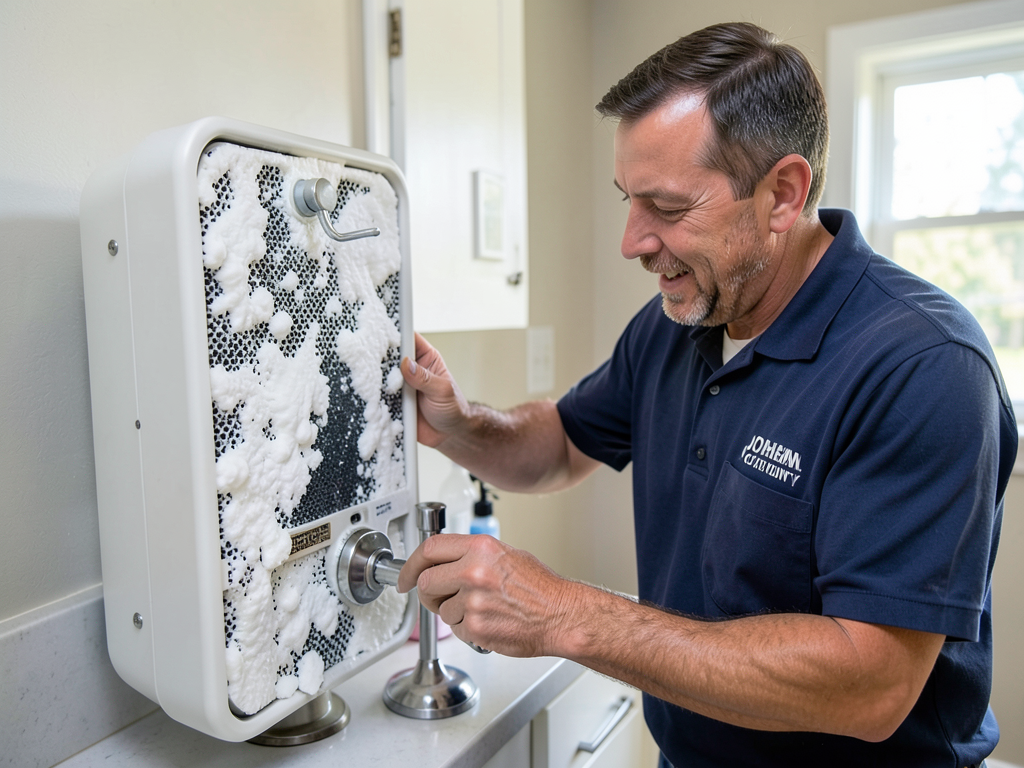
Your whole home humidifier is working overtime fighting Johnson County’s notoriously hard water. The calcium and magnesium in our local water supply creates a silent killer for your humidification system. Every gallon flowing through your HVAC equipment leaves behind microscopic mineral deposits that build up over time. Local HVAC experts for boiler maintenance and repair near the Country Club Plaza.
Hard water in Johnson County typically measures 15-20 grains per gallon (gpg) according to the Kansas City Water Services 2024 water quality report. This level of mineral content means your humidifier’s evaporator pad or water panel needs replacement every 6-12 months instead of the standard 2-3 years in areas with softer water. Kansas City Water Services water quality report.
The impact goes beyond simple maintenance. Hard water scale buildup reduces your humidifier’s efficiency by up to 40%, forcing your HVAC system to work harder and increasing your energy bills. The white dust you see on furniture? That’s mineral residue from ultrasonic humidifiers struggling with our local water chemistry.
Why Johnson County water is considered ‘hard’
Johnson County’s water hardness stems from the limestone bedrock beneath our feet. As rainwater percolates through limestone formations, it dissolves calcium carbonate and magnesium, creating the mineral-rich water that flows from your tap.
The Kansas Department of Health and Environment classifies Johnson County water as “very hard” with readings consistently above 15 gpg. For comparison, water under 3 gpg is considered soft, while 7-10 gpg falls in the moderately hard range. EPA WaterSense program.
Local geology plays a crucial role. The region’s limestone deposits, formed millions of years ago when this area was covered by an ancient sea, create the perfect conditions for mineral-rich groundwater. Municipal treatment plants remove bacteria and other contaminants but cannot remove dissolved minerals without specialized filtration.
Water hardness varies slightly by neighborhood. Areas closer to the Missouri River tend to have slightly lower readings, while communities in the southern and western parts of Johnson County often see the highest mineral content. This variation means your specific location within the county affects your humidifier’s lifespan more than you might expect.
4 ways hard water damages your humidifying system
Hard water creates multiple failure points in your humidification equipment. Understanding these damage mechanisms helps you spot problems before they become expensive repairs. Same day furnace repair services for families in Lee’s Summit.
The ‘white dust’ phenomenon (ultrasonic issues)
Ultrasonic humidifiers face a unique challenge in Johnson County. These units use high-frequency vibrations to create a fine mist, but they also aerosolize dissolved minerals. The result is a fine white powder that settles on furniture, electronics, and floors.
This white dust isn’t just a cleaning nuisance. The mineral particles become airborne and can irritate respiratory systems, especially for people with asthma or allergies. Children and pets are particularly vulnerable to inhaling these microscopic mineral fragments.
The dust also indicates mineral buildup inside the unit. Over time, calcium deposits form on the ultrasonic membrane, reducing mist output and forcing the motor to work harder. This extra strain often leads to premature motor failure within 12-18 months instead of the expected 3-5 year lifespan.
Calcification and scale buildup on pads
Evaporative humidifiers, the most common type in whole-home systems, use water panels or evaporator pads to add moisture to your air. Hard water creates a calcium carbonate crust on these pads that blocks water absorption.
A technician can spot scale buildup by examining the pad’s surface. Instead of the uniform gray color of a healthy pad, you’ll see white or off-white deposits that feel rough to the touch. This calcification reduces the pad’s surface area, limiting moisture output.
The scale also creates an insulating layer that prevents proper heat transfer. Your humidifier must run longer cycles to achieve the same humidity levels, increasing energy consumption and wear on components. A pad that should last 2-3 years in soft water areas often fails within 6 months in Johnson County.. Read more about What to do When Your AC Condensate Pump Fails and Floods Your Finished Basement.
Bacterial growth and air quality risks
Hard water creates ideal conditions for bacterial growth in your humidification system. The mineral deposits provide surface area for microorganisms to colonize, while the warm, moist environment inside your HVAC system encourages their multiplication.
Common bacteria found in scaled humidifiers include Legionella, Pseudomonas, and various molds. These organisms can cause respiratory infections, especially in people with compromised immune systems. The bacteria often produce a musty odor that indicates contamination.
Scale buildup also interferes with your humidifier’s antimicrobial features. Many modern units include silver-ion technology or UV lights to prevent bacterial growth, but mineral deposits block these protective mechanisms. The result is a system that actually reduces your indoor air quality instead of improving it.
Reduced energy efficiency and mechanical failure
Hard water scale acts as an insulator, forcing your humidifier’s heating elements to work harder. A scaled heating element can use 25-30% more electricity to achieve the same output as a clean one.
The extra heat generated by struggling components also affects nearby parts. Solenoid valves, which control water flow, can overheat and fail. The valve’s rubber seals deteriorate faster in mineral-rich water, leading to leaks that damage your HVAC system. Storm Damage HVAC Repair.
Water level sensors become less accurate when coated with scale. This inaccuracy causes the humidifier to either run dry, damaging the heating element, or overflow, creating water damage. The cumulative effect reduces your humidifier’s lifespan by 50-70% compared to units in areas with softer water.
Solutions: How to protect your indoor air quality
Protecting your humidifier from hard water damage requires a multi-pronged approach. The right combination of maintenance and equipment upgrades can extend your system’s life while improving your home’s air quality.. Read more about Protecting your piano and acoustic guitars from Kansas City humidity swings.
Maintenance tips: Cleaning with vinegar vs. citric acid
Regular cleaning prevents scale from becoming a major problem. For most homeowners, a monthly cleaning schedule works best. The cleaning solution you choose matters as much as the frequency.
Vinegar, a weak acetic acid, dissolves calcium carbonate effectively. Mix equal parts white vinegar and water, then soak removable parts for 30-60 minutes. The vinegar smell dissipates within a few hours, and the solution costs less than $2 per cleaning.
Citric acid offers a more powerful cleaning action for severe scale. Dissolve 2 tablespoons of citric acid powder in a quart of warm water. This solution works faster than vinegar but costs more at about $5 per cleaning. The citrus smell is more pleasant than vinegar’s sharp odor.
Never use bleach or harsh chemicals. These can damage rubber seals and plastic components while leaving harmful residues. After cleaning, rinse all parts thoroughly with clean water to remove any remaining cleaning solution.
Professional descaling services use specialized equipment to clean your entire humidification system. Technicians can reach areas you cannot access, removing scale from water lines, valves, and internal passages. This deep cleaning typically costs $150-250 but can extend your system’s life by several years.
The whole-home solution: Water softeners & inline filters
Water softeners address the root cause of hard water problems. These systems use ion exchange to replace calcium and magnesium ions with sodium or potassium ions. A properly sized softener can reduce water hardness to near-zero levels.
Installation costs range from $1,500-3,500 depending on your home’s size and water usage. Operating costs include salt or potassium pellets ($5-10 monthly) and occasional maintenance. The investment typically pays for itself through extended appliance life and reduced cleaning product usage.
Inline filters offer a more targeted solution for your humidification system. These cartridge filters install on the water line feeding your humidifier, removing minerals before they enter the unit. They cost $100-300 and need replacement every 6-12 months.
Reverse osmosis systems provide the purest water for humidification. These units remove 95-99% of dissolved minerals, producing water similar to distilled water. The downside is higher installation costs ($2,000-5,000) and the need for a storage tank since RO units produce water slowly.
Combination systems often work best. A whole-house softener protects all your appliances, while an additional inline filter on your humidifier’s water line provides extra protection for the most vulnerable component.
When to call a Kansas City HVAC professional
Some humidifier problems require professional diagnosis and repair. Recognizing these situations early can prevent costly damage to your HVAC system. Who to call for 24 hour emergency AC repair in Shawnee when the heat index spikes.
Strange noises from your humidifier often indicate mechanical problems. A humming sound might mean a failing solenoid valve, while clicking noises suggest electrical issues. These sounds rarely improve on their own and usually worsen until the component fails completely.
Water leaks around your humidifier require immediate attention. Even small leaks can cause significant water damage to your furnace, ductwork, and surrounding structures. The leak might come from a cracked water panel, failed valve seal, or clogged drain line.
Reduced humidity output despite normal operation suggests internal scaling or component failure. If your humidifier runs constantly but your home feels dry, the water panel might be completely scaled over or the humidistat might be malfunctioning.
Unusual odors from your vents when the humidifier runs indicate bacterial growth or mold. These smells often have a musty, earthy quality and suggest contamination that requires professional cleaning and sanitization.
Professional inspection should include water quality testing, component examination, and system performance evaluation. A qualified technician can identify problems you might miss and recommend solutions specific to your home’s needs and your local water conditions.. Read more about Passing your HVAC home inspection when selling your Mission property.
Regular professional maintenance extends your humidifier’s life and prevents emergency repairs. Most manufacturers recommend annual service, but Johnson County’s hard water often requires biannual maintenance to keep systems operating efficiently.
Cost comparison: DIY vs. professional solutions
Understanding the true cost of hard water damage helps you make informed decisions about prevention and maintenance. The numbers might surprise you.
| Solution Type | Initial Cost | Annual Maintenance | Expected Lifespan | Total 5-Year Cost |
|---|---|---|---|---|
| Basic Humidifier Only | $200-400 | $100-200 | 2-3 years | $1,200-1,600 |
| Humidifier + Inline Filter | $400-600 | $150-250 | 4-5 years | $1,450-1,850 |
| Water Softener + Humidifier | $3,000-4,500 | $300-400 | 8-10 years |
The data shows that while water softeners require higher upfront investment, they often provide the best long-term value. The extended equipment life and improved efficiency offset the initial cost over time.
DIY cleaning represents the lowest immediate cost but requires consistent effort and doesn’t address underlying water quality issues. Many homeowners find that the time commitment and inconsistent results make professional solutions more attractive.
Professional maintenance agreements typically cost $150-300 annually but include priority service, discounted repairs, and regular inspections that catch problems early. These agreements often pay for themselves through prevented breakdowns and extended equipment life.
Energy savings from properly maintained humidification systems can offset 15-25% of maintenance costs. Scale-free operation means your HVAC system doesn’t work as hard, reducing both electricity and gas consumption throughout the year.
Health benefits from improved air quality are harder to quantify but often represent the most significant value. Reduced respiratory irritation, fewer allergy symptoms, and better sleep quality make professional solutions worthwhile for many families.. Read more about Essential HVAC Safety Tips for Families with Toddlers and Crawling Babies in Lenexa.
Frequently Asked Questions
How often should I replace my humidifier’s water panel in Johnson County?
Most Johnson County homeowners need to replace water panels every 6-12 months due to hard water scale. Homes with water softeners or inline filters might extend this to 18-24 months. Check your panel monthly for white scale buildup as an indicator.
Can I use distilled water in my whole home humidifier?
Distilled water eliminates mineral problems but isn’t practical for whole-home systems. A typical home humidifier uses 10-20 gallons daily, making distilled water cost-prohibitive at $1-2 per gallon. Point-of-use filters or water softeners offer better solutions for whole-house applications.
Does hard water affect my furnace efficiency?
Hard water primarily affects the humidifier, not the furnace itself. However, mineral dust from ultrasonic humidifiers can accumulate on furnace components, potentially reducing efficiency. The main impact is on the humidifier’s ability to add moisture, forcing your furnace to work harder to maintain comfort.
What’s the white powder on my furniture?
That white dust is mineral residue from ultrasonic humidifiers aerosolizing dissolved calcium and magnesium. It’s not harmful but indicates your water is too hard for ultrasonic operation. Consider switching to an evaporative humidifier or installing a demineralization cartridge.
How do I know if my humidifier has scale buildup?
Look for white or off-white deposits on visible components, reduced mist or evaporation output, longer run times, and unusual noises. A qualified technician can perform a thorough inspection using specialized tools to detect internal scale you cannot see.
Is hard water covered by HVAC warranties?
Most HVAC warranties exclude damage from water quality issues, including hard water scale. Some manufacturers offer extended warranties that include water treatment, but these typically require professional installation of water softeners or filters.
Don’t let Johnson County’s hard water destroy your humidification system. The constant battle against mineral scale reduces efficiency, increases energy costs, and shortens equipment life. Regular maintenance helps, but the most effective solution addresses the water quality itself.
Professional water testing can determine your exact hardness level and recommend the best protection strategy for your home. Whether you need a simple inline filter or a complete water softening system, the right solution saves money and improves your indoor air quality.
Call (816) 473-9177 today to schedule your humidifier inspection. Our technicians understand Johnson County’s unique water challenges and can recommend solutions that protect your investment while keeping your home comfortable year-round.
Pick up the phone and call (816) 473-9177 before the next scale buildup damages your system. We serve homeowners throughout Johnson County with fast, reliable service that addresses your specific water quality concerns. How to find a reliable air conditioning repair technician in Overland Park.
{
“@context”: “https://schema.org”,
“@type”: “BlogPosting”,
“headline”: “How the hard water in Johnson County affects your whole home humidifier lifespan”,
“description”: “Hard water in Johnson County shortens humidifier life by 50%. Learn how scale buildup affects your HVAC system and what local solutions exist.”,
“wordCount”: 2265,
“datePublished”: “2026-05-25T07:09:00.000Z”,
“dateModified”: “2026-05-25T07:09:00.000Z”,
“inLanguage”: “en-US”,
“mainEntityOfPage”: {
“@type”: “WebPage”,
“@id”: “https://unitedhvackansascity.com”
},
“publisher”: {
“@type”: “LocalBusiness”,
“name”: “United HVAC Kansas City”,
“url”: “https://unitedhvackansascity.com”
},
“author”: {
“@type”: “Organization”,
“name”: “United HVAC Kansas City”,
“url”: “https://unitedhvackansascity.com”
},
“image”: {
“@type”: “ImageObject”,
“url”: “https://unitedhvackansascity.com/wp-content/uploads/2026/03/how-the-hard-water-in-johnson-county-affects-your-1.png”
}
}
{
“@context”: “https://schema.org”,
“@type”: “HVACBusiness”,
“name”: “United HVAC Kansas City”,
“url”: “https://unitedhvackansascity.com”,
“address”: {
“@type”: “PostalAddress”,
“addressLocality”: “Kansas City”
},
“areaServed”: {
“@type”: “City”,
“name”: “Kansas City”
}
}
{
“@context”: “https://schema.org”,
“@type”: “FAQPage”,
“mainEntity”: [
{
“@type”: “Question”,
“name”: “How often should I replace my humidifier’s water panel in Johnson County?”,
“acceptedAnswer”: {
“@type”: “Answer”,
“text”: “Most Johnson County homeowners need to replace water panels every 6-12 months due to hard water scale. Homes with water softeners or inline filters might extend this to 18-24 months. Check your panel monthly for white scale buildup as an indicator.”
}
},
{
“@type”: “Question”,
“name”: “Can I use distilled water in my whole home humidifier?”,
“acceptedAnswer”: {
“@type”: “Answer”,
“text”: “Distilled water eliminates mineral problems but isn’t practical for whole-home systems. A typical home humidifier uses 10-20 gallons daily, making distilled water cost-prohibitive at $1-2 per gallon. Point-of-use filters or water softeners offer better solutions for whole-house applications.”
}
},
{
“@type”: “Question”,
“name”: “Does hard water affect my furnace efficiency?”,
“acceptedAnswer”: {
“@type”: “Answer”,
“text”: “Hard water primarily affects the humidifier, not the furnace itself. However, mineral dust from ultrasonic humidifiers can accumulate on furnace components, potentially reducing efficiency. The main impact is on the humidifier’s ability to add moisture, forcing your furnace to work harder to maintain comfort.”
}
},
{
“@type”: “Question”,
“name”: “What’s the white powder on my furniture?”,
“acceptedAnswer”: {
“@type”: “Answer”,
“text”: “That white dust is mineral residue from ultrasonic humidifiers aerosolizing dissolved calcium and magnesium. It’s not harmful but indicates your water is too hard for ultrasonic operation. Consider switching to an evaporative humidifier or installing a demineralization cartridge.”
}
},
{
“@type”: “Question”,
“name”: “How do I know if my humidifier has scale buildup?”,
“acceptedAnswer”: {
“@type”: “Answer”,
“text”: “Look for white or off-white deposits on visible components, reduced mist or evaporation output, longer run times, and unusual noises. A qualified technician can perform a thorough inspection using specialized tools to detect internal scale you cannot see.”
}
},
{
“@type”: “Question”,
“name”: “Is hard water covered by HVAC warranties?”,
“acceptedAnswer”: {
“@type”: “Answer”,
“text”: “Most HVAC warranties exclude damage from water quality issues, including hard water scale. Some manufacturers offer extended warranties that include water treatment, but these typically require professional installation of water softeners or filters.”
}
}
]
}
{
“@context”: “https://schema.org”,
“@type”: “BreadcrumbList”,
“itemListElement”: [
{
“@type”: “ListItem”,
“position”: 1,
“name”: “Home”,
“item”: “https://unitedhvackansascity.com”
},
{
“@type”: “ListItem”,
“position”: 2,
“name”: “Blog”,
“item”: “https://unitedhvackansascity.com/blog”
},
{
“@type”: “ListItem”,
“position”: 3,
“name”: “How the hard water in Johnson County affects your whole home humidifier lifespan”
}
]
}
{
“@context”: “https://schema.org”,
“@type”: “Service”,
“serviceType”: “HVAC”,
“provider”: {
“@type”: “LocalBusiness”,
“name”: “United HVAC Kansas City”,
“url”: “https://unitedhvackansascity.com”
},
“areaServed”: {
“@type”: “City”,
“name”: “Kansas City”
},
“description”: “Hard water in Johnson County shortens humidifier life by 50%. Learn how scale buildup affects your HVAC system and what local solutions exist.”
}